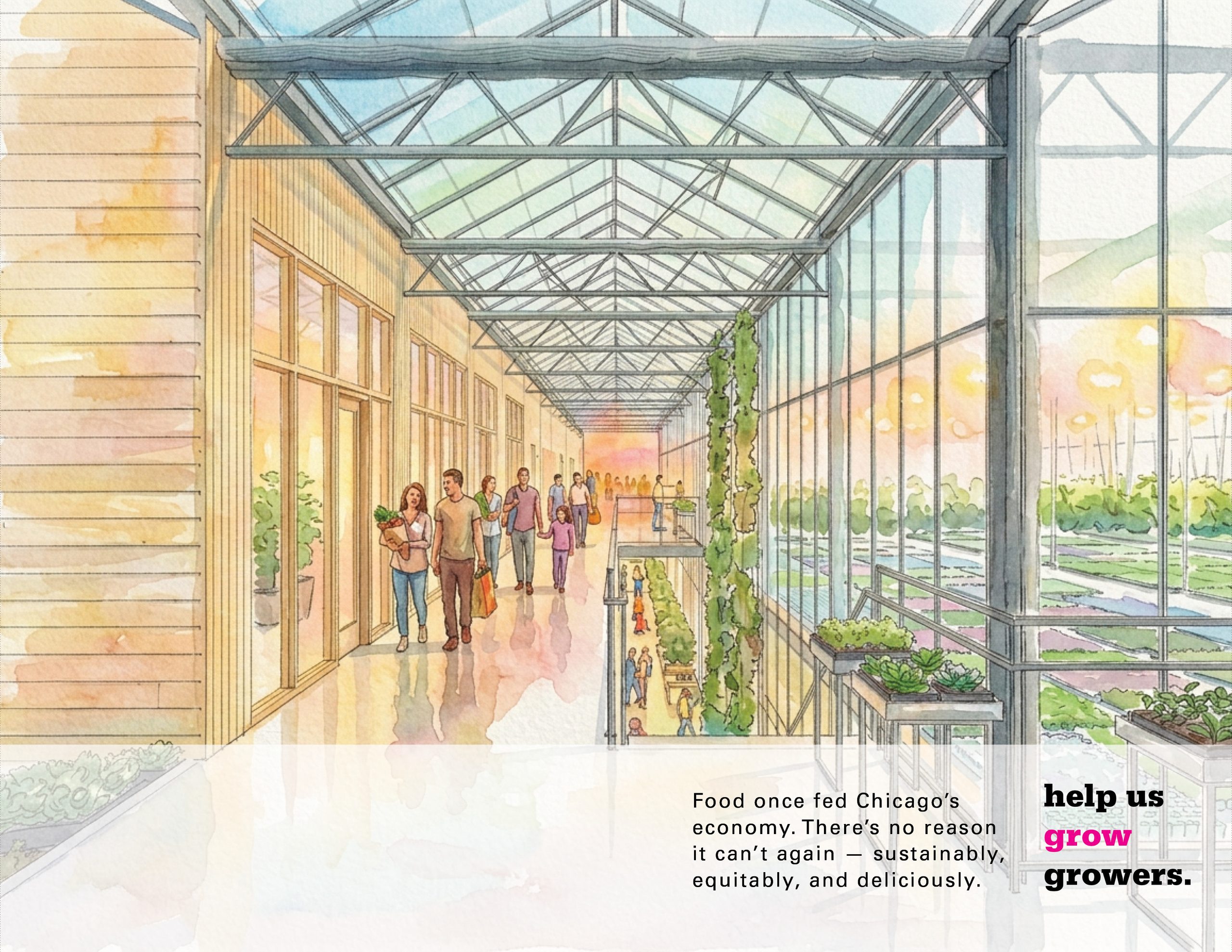
AgriFlats doesn’t just grow food. It grows community.
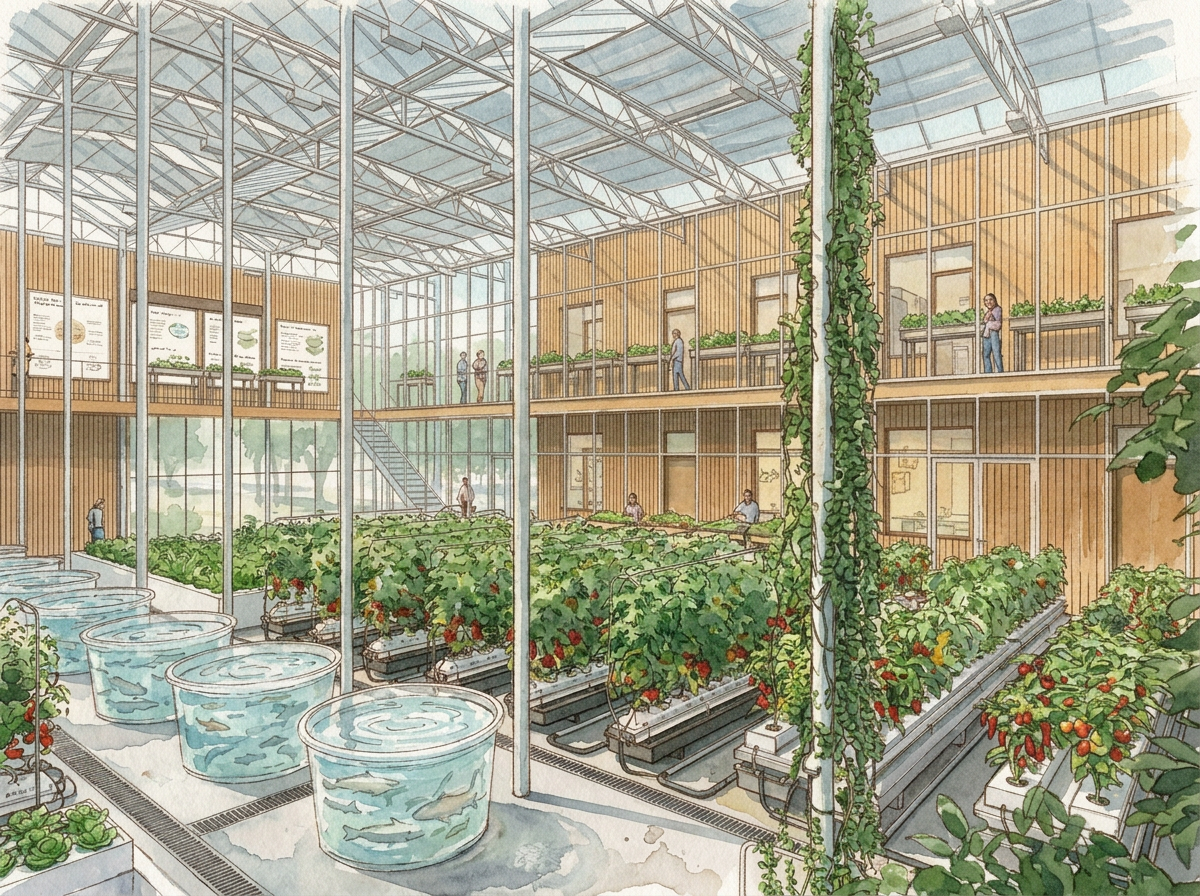
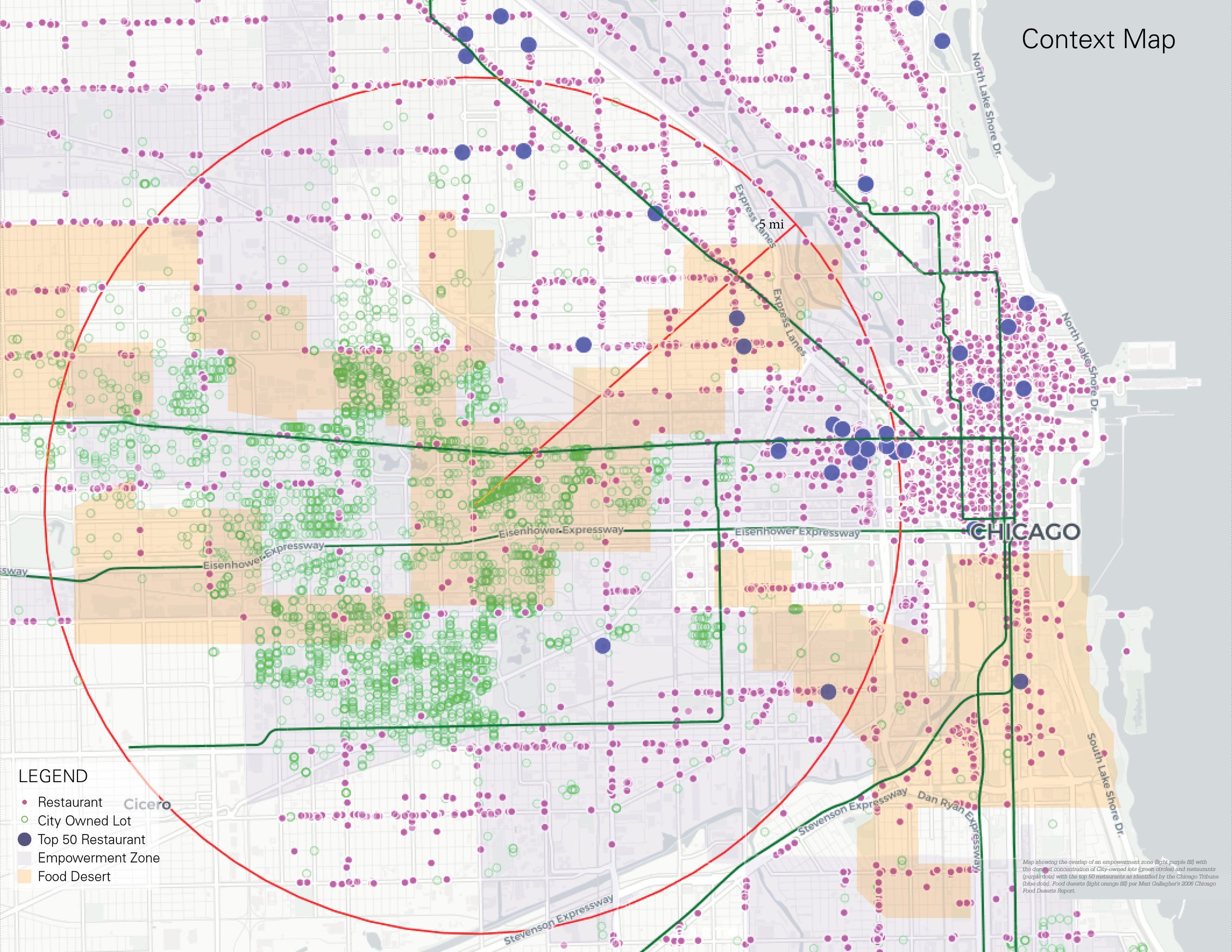
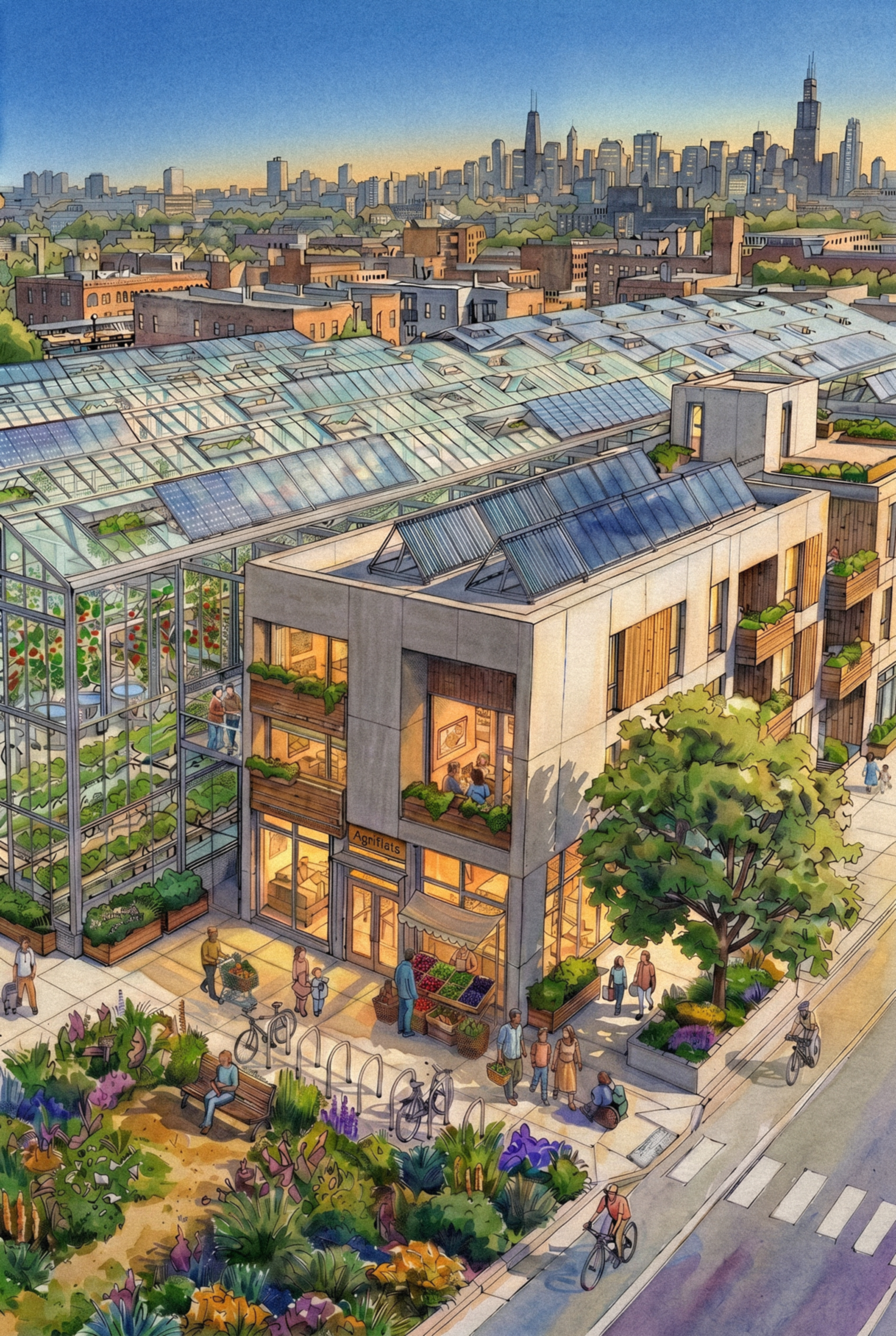
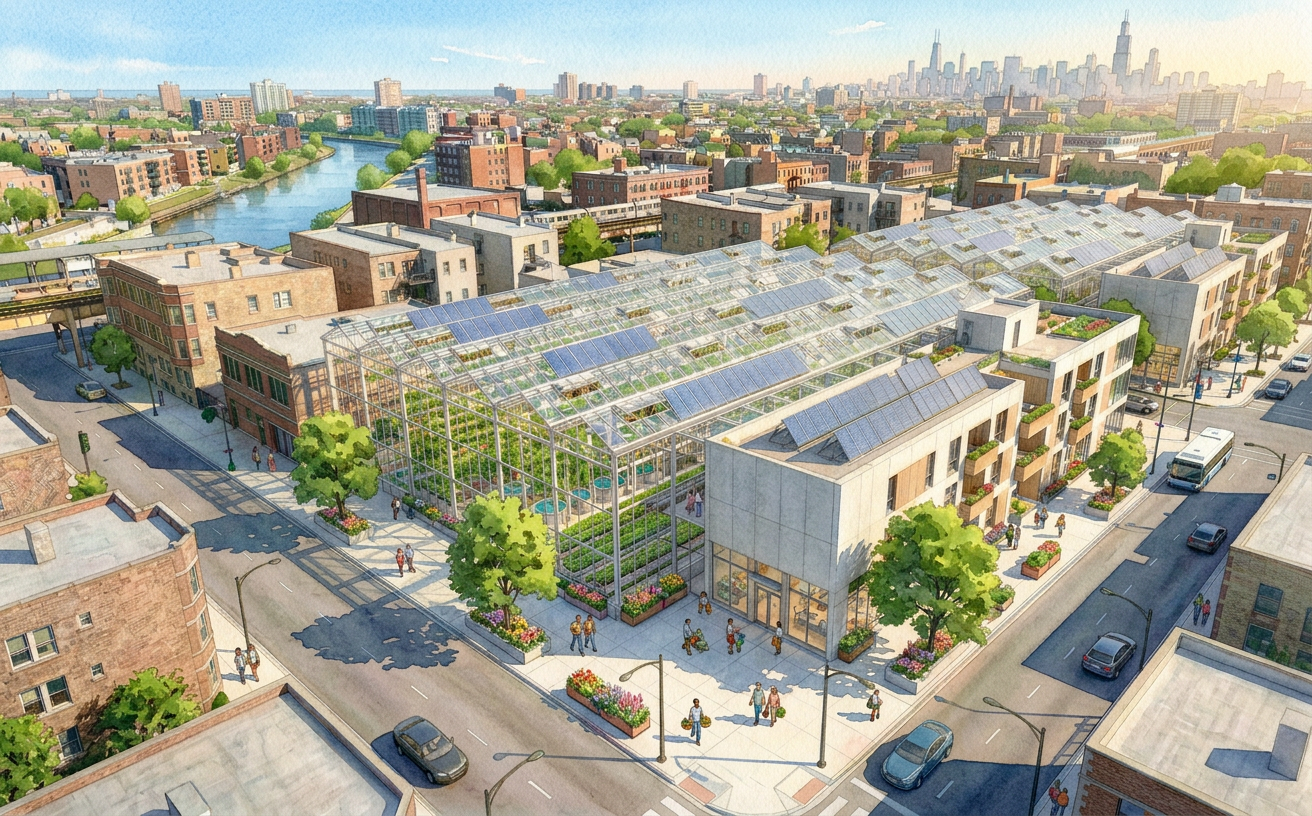
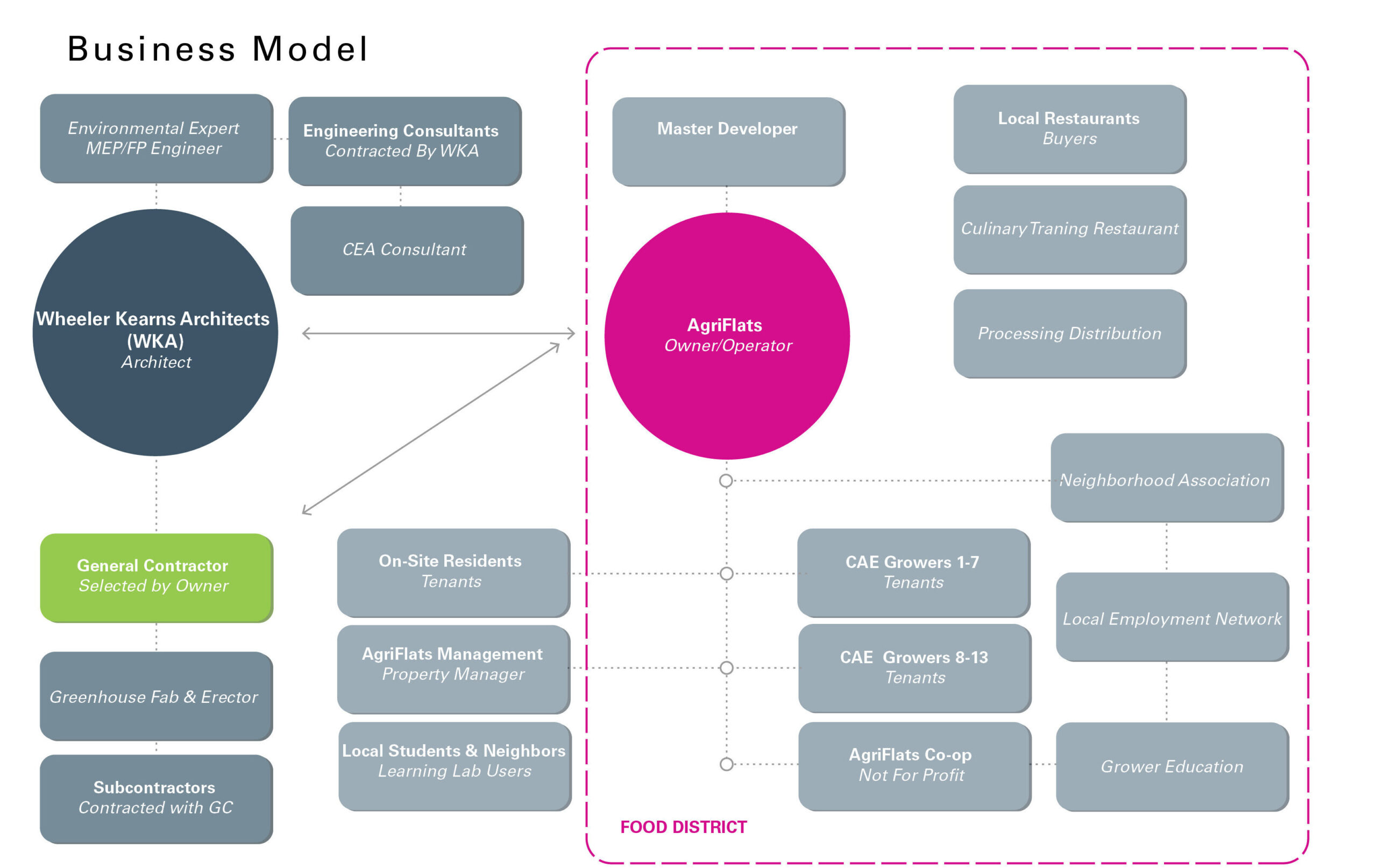
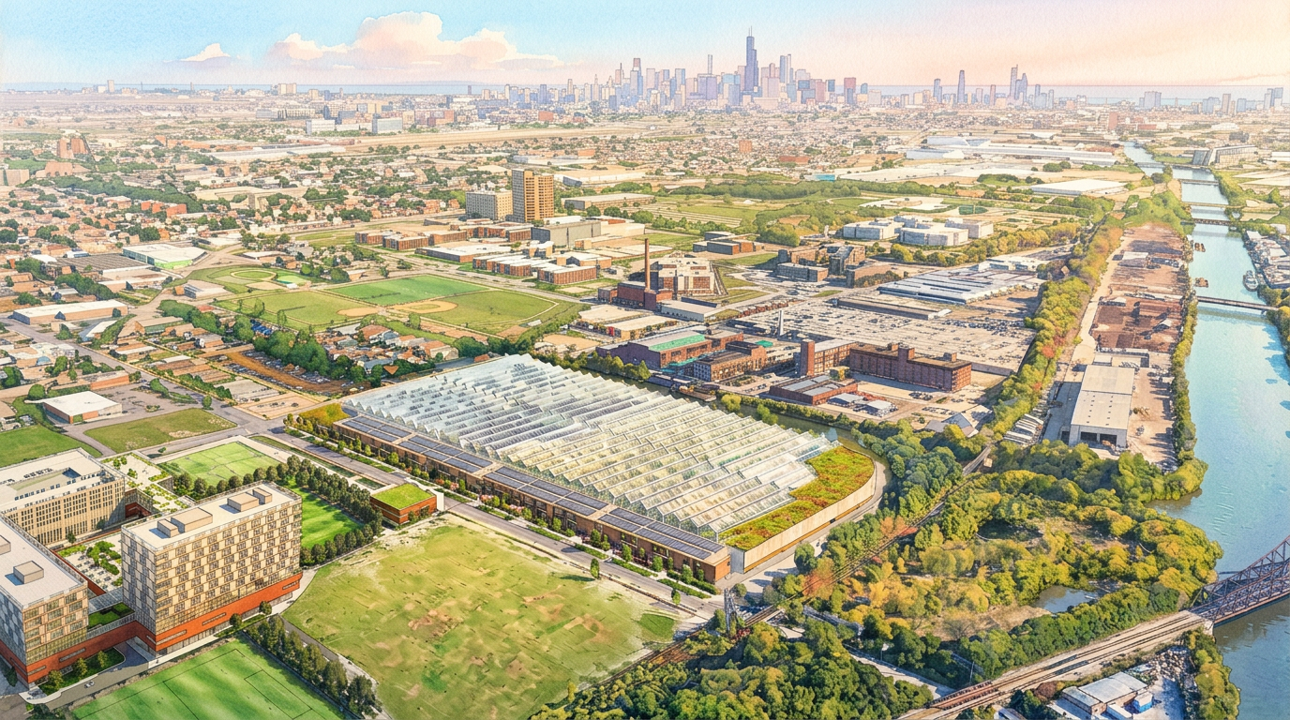
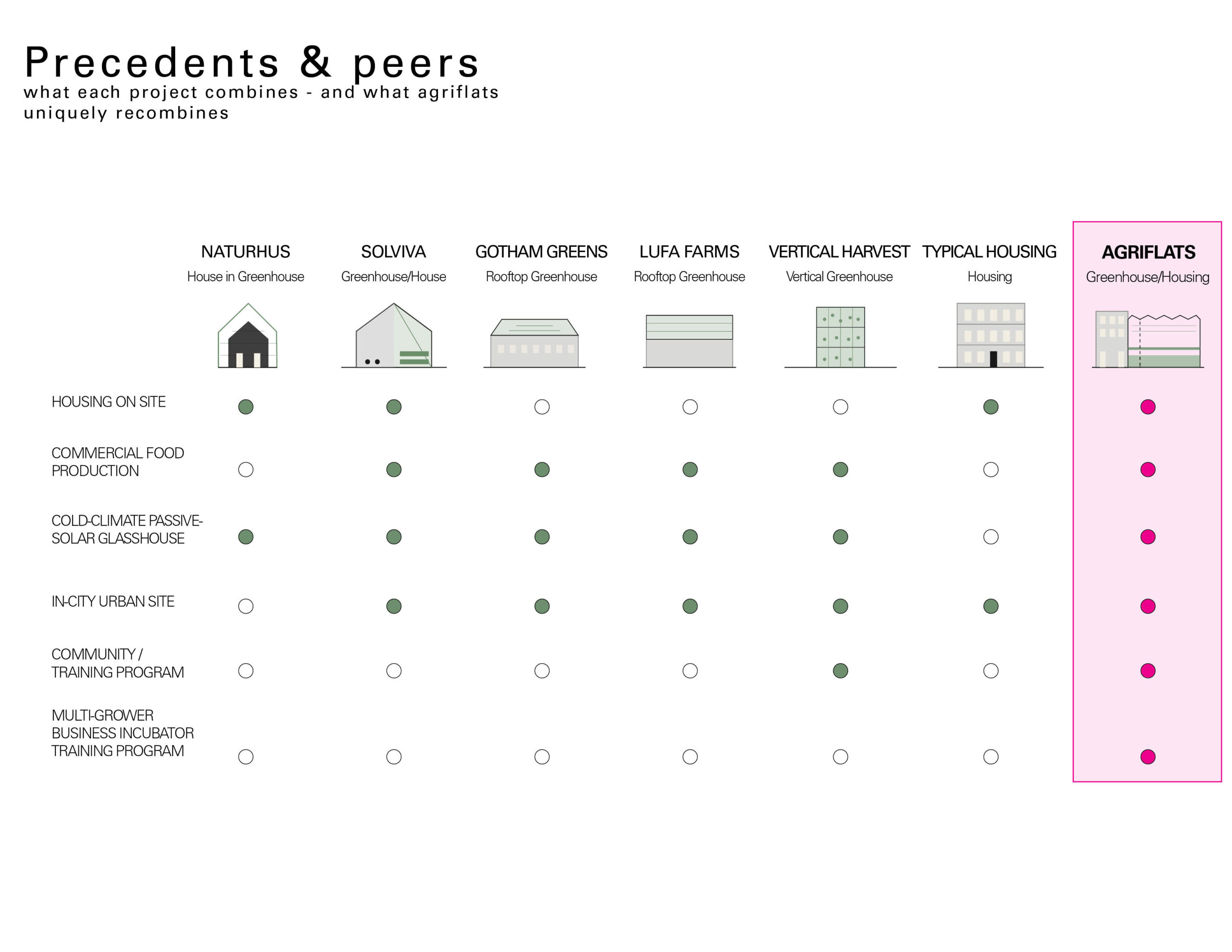
Within miles of Chicago’s top restaurant corridors, AgriFlats combines a business incubator with Dutch-style Controlled Environment Agriculture (CEA) to provide 13 aspiring growers with one-acre greenhouses sheltered by attached live-work units. Together, they form a puzzle piece in Chicago’s first Food District, known for growing and serving delicious local food.
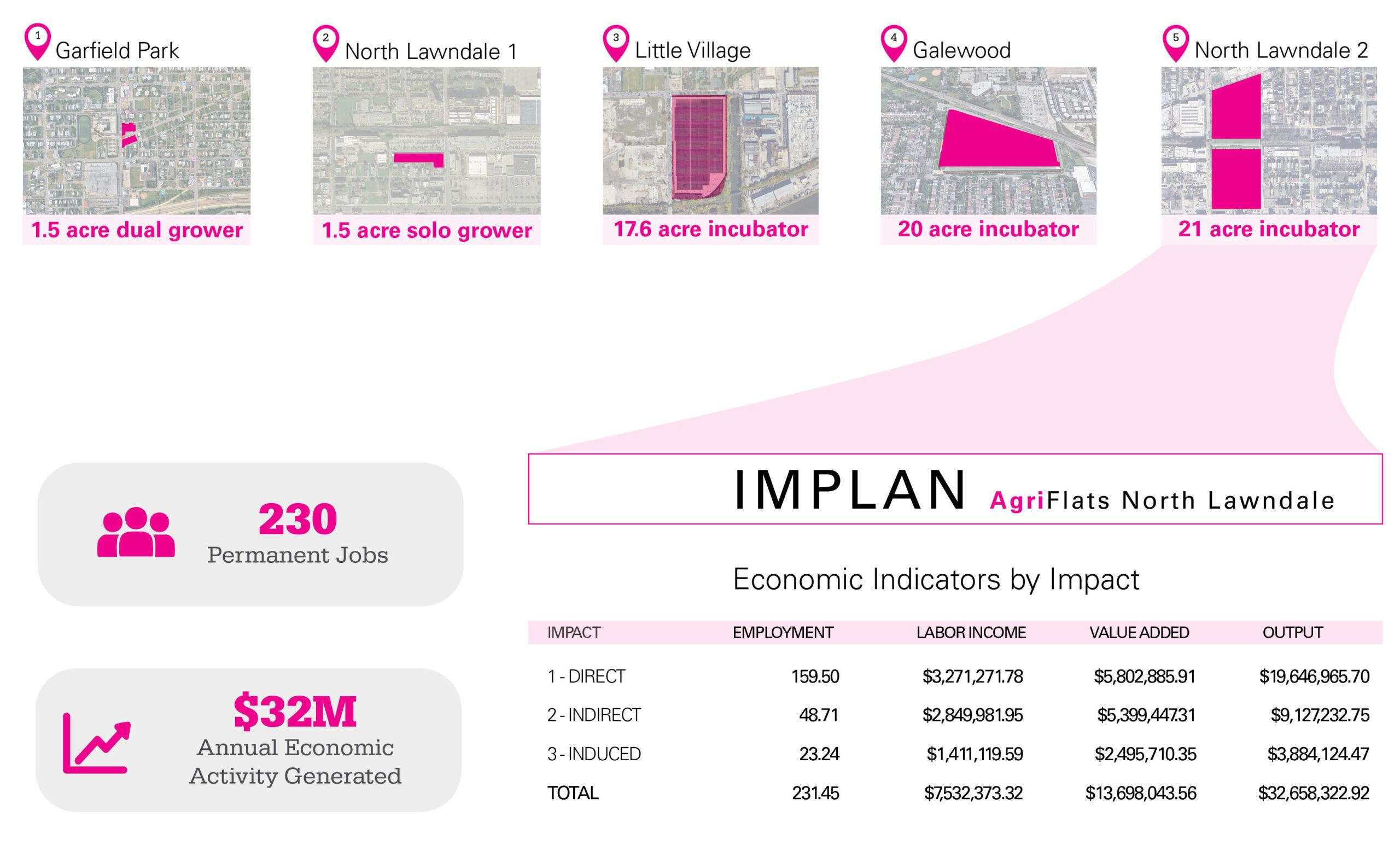
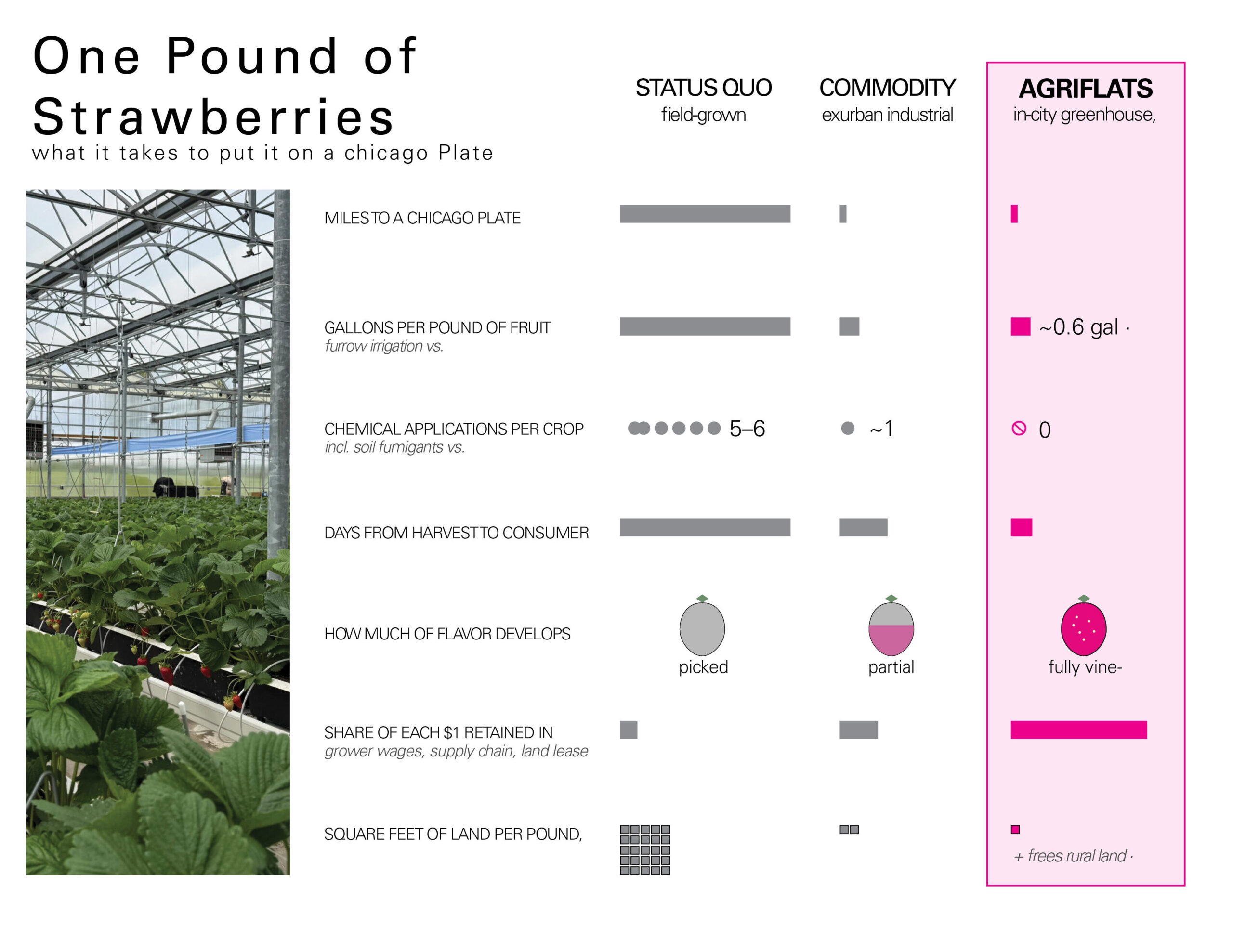
Produce cultivated year-round at AgriFlats will be 100% pesticide-free, harvested and delivered to market within a day, and grown using 90% less water than field-grown vegetables. The project will create 230 permanent, nonseasonal jobs in the community — roles immune to AI disruption and accessible to locally trained residents.
AgriFlats functions as both an incubator and accelerator. After 5–7 years of modest-scale success, growers scale operations elsewhere to expand profitability and reach. A newly formed Cooperative provides meeting, learning, and living spaces to support farmers and residents alike. Researchers will develop new varieties unique to Chicago.
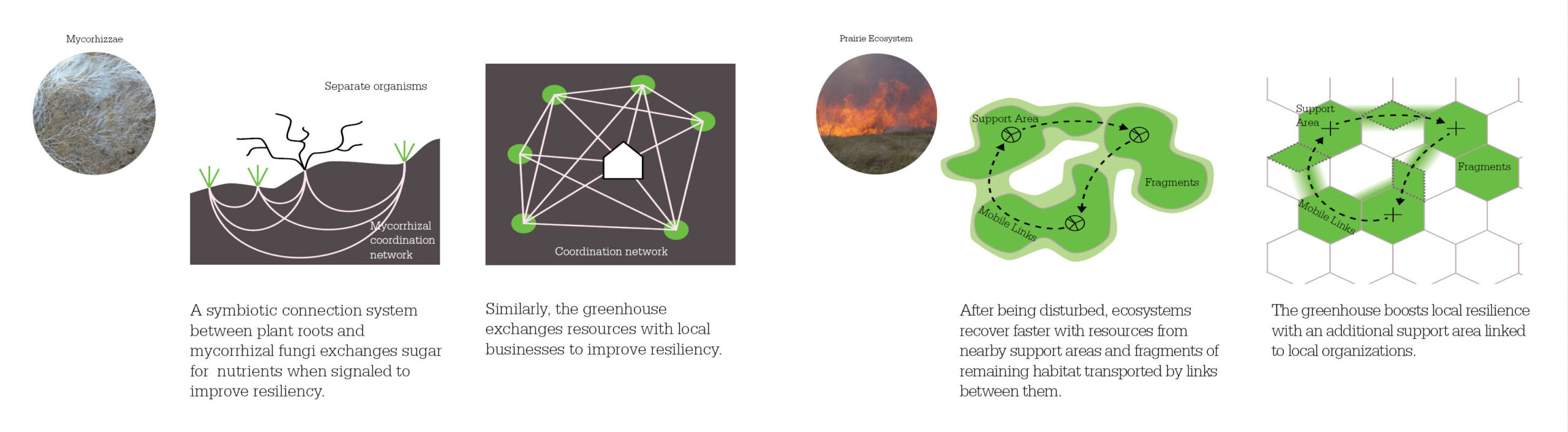
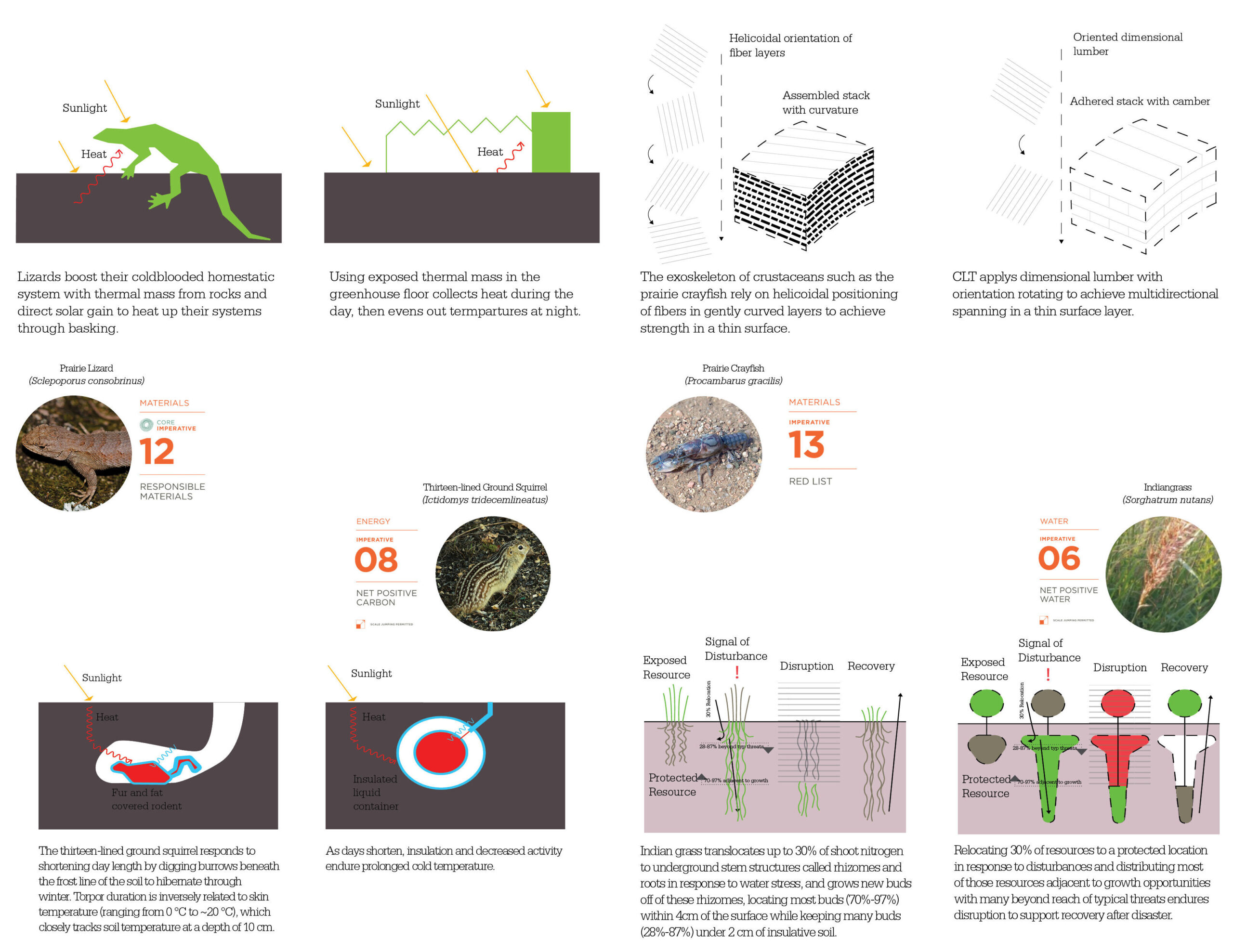
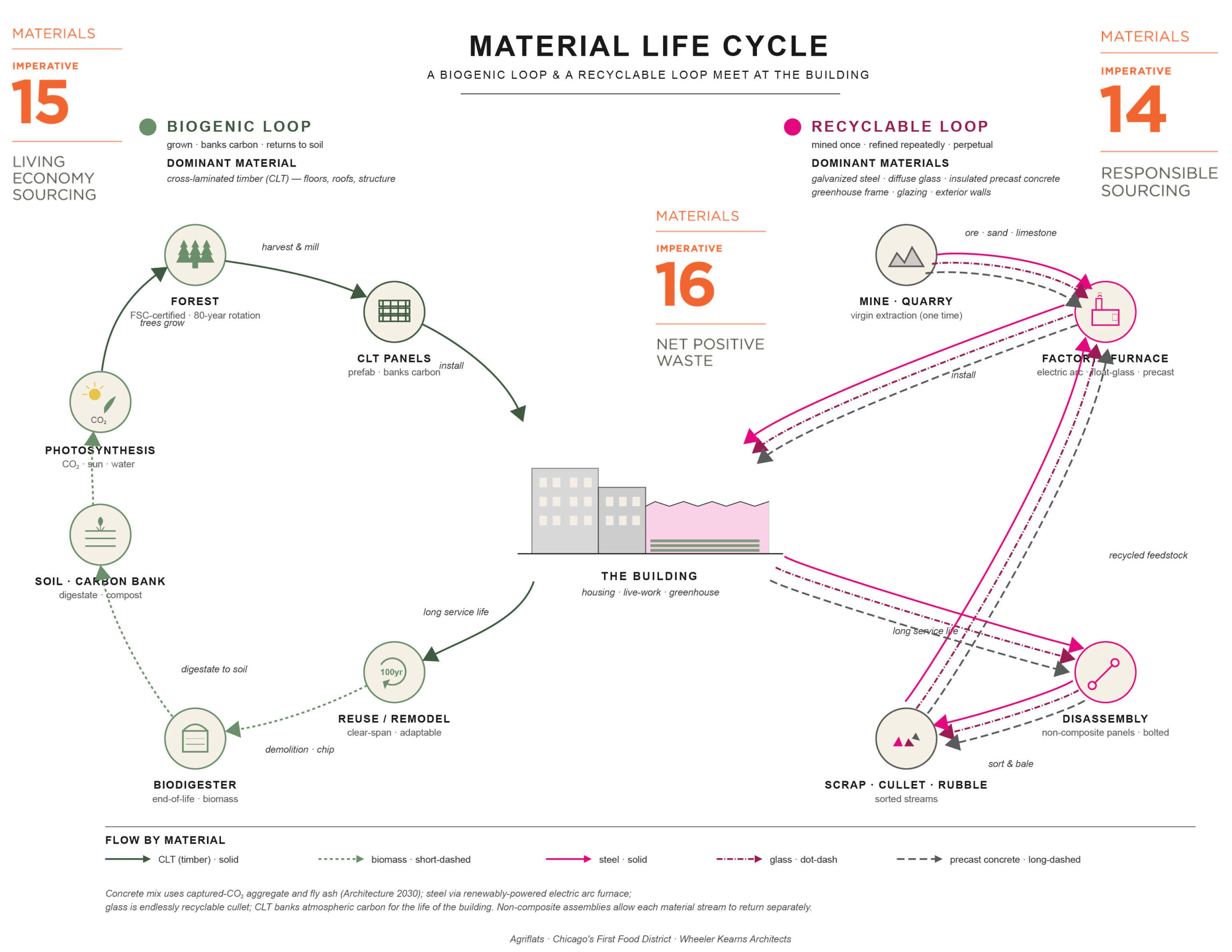
Agriflats goes beyond traditional sustainable methods by looking to natural systems for 3.8 billion years of R&D in our local ecosystem: the prairie. From resilience strategies to building systems, material ecologies to community building, Agriflats aspires to Living Building Challenge levels of regenerative design using Biomimicry, or emulation of nature in design.
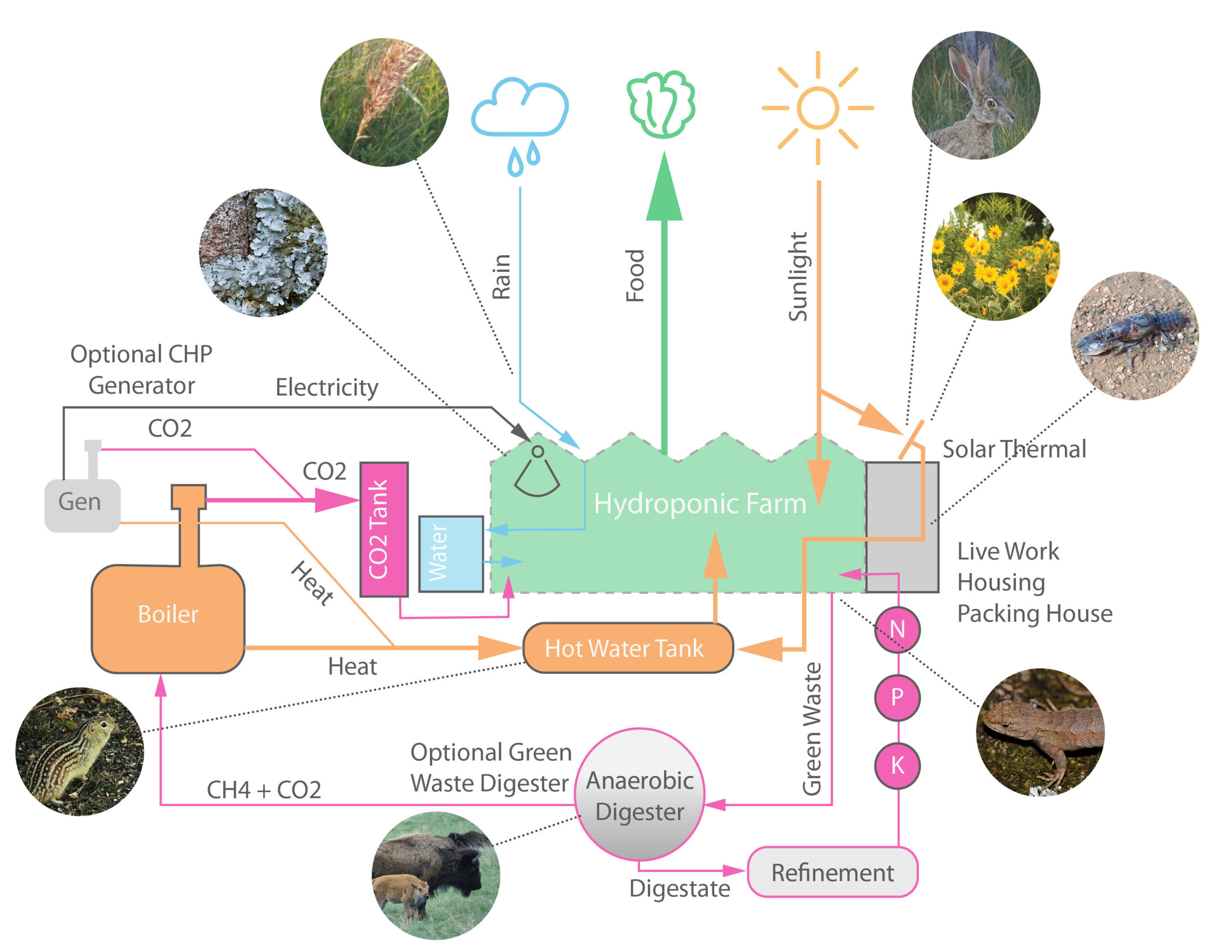
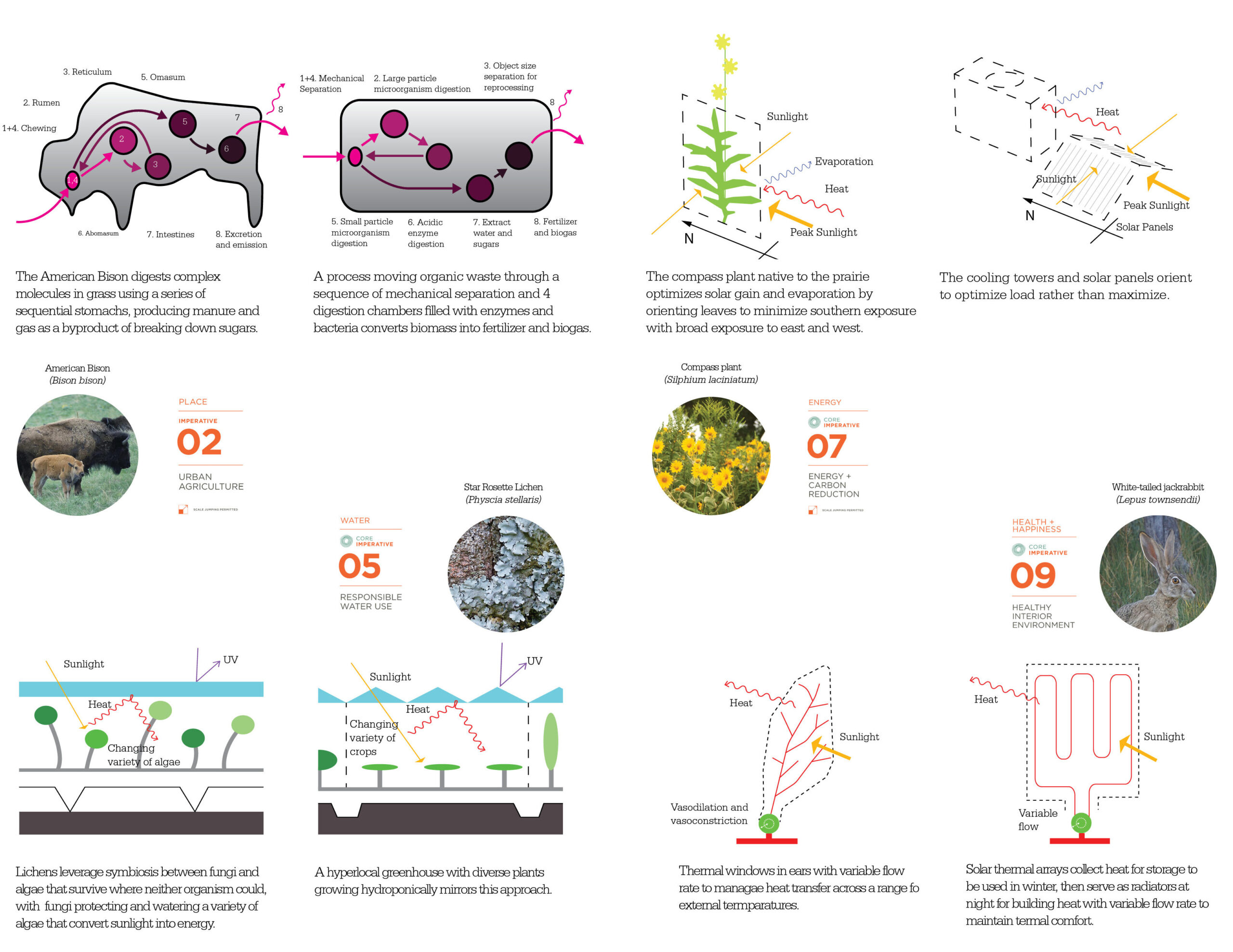
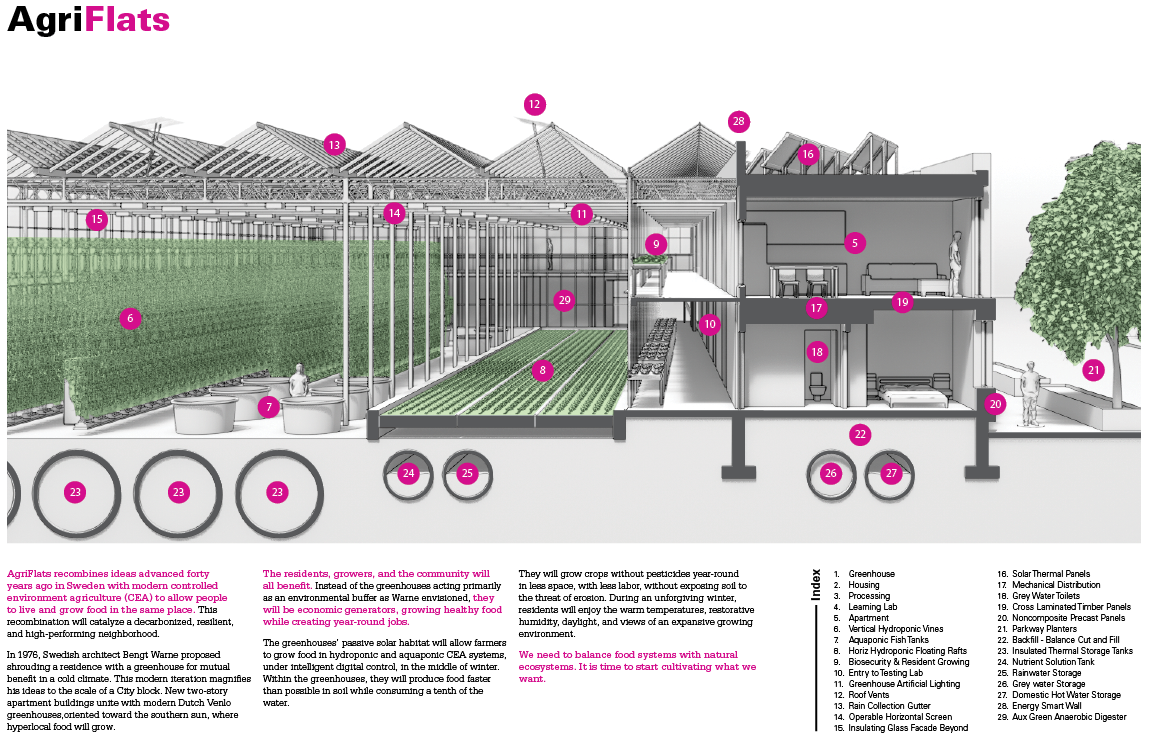
Decarbonization is a priority. AgriFlats obviates cross-country transport. Passive solar greenhouses, supplemented by solar thermal collectors, store heat in underground insulated tanks. A Combined Heat and Power (CHP) system, fed by an anaerobic biomass digester, produces both electricity and natural gas on-site. CO₂ captured from combustion is redirected into the greenhouse, where growing plants sequester it.
Resilience is embedded at every level — underground water reservoirs sized for 100-year drought conditions, rainwater collection for greywater use, and a cooperative structure that allows growers to share risk, resources, data, and distribution to consumers and chefs.