
Catholic Charities Summit Welcome Center
After more than two decades of operating a food pantry at St. Blasé Church, Catholic Charities recognized the need for a larger, purpose-built facility in Summit, IL.
The Summit Welcome Center transformed an underperforming commercial building into a multi-generational hub that invites neighbors in, accompanies families through moments of uncertainty, and serves the community with dignity. The facility weaves together food access, social services, mentorship, job training, mental-health counseling, and spaces for community gathering.
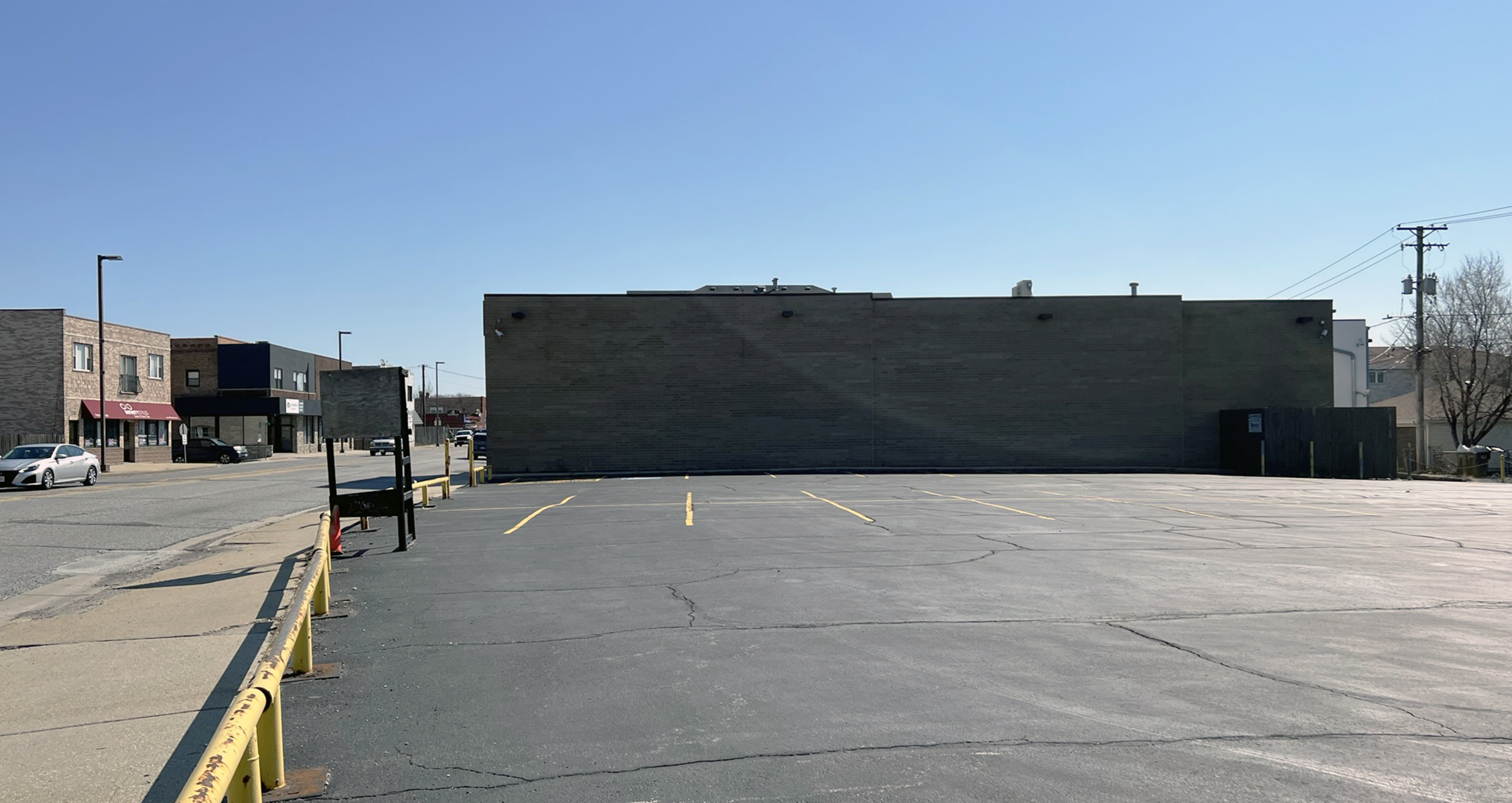
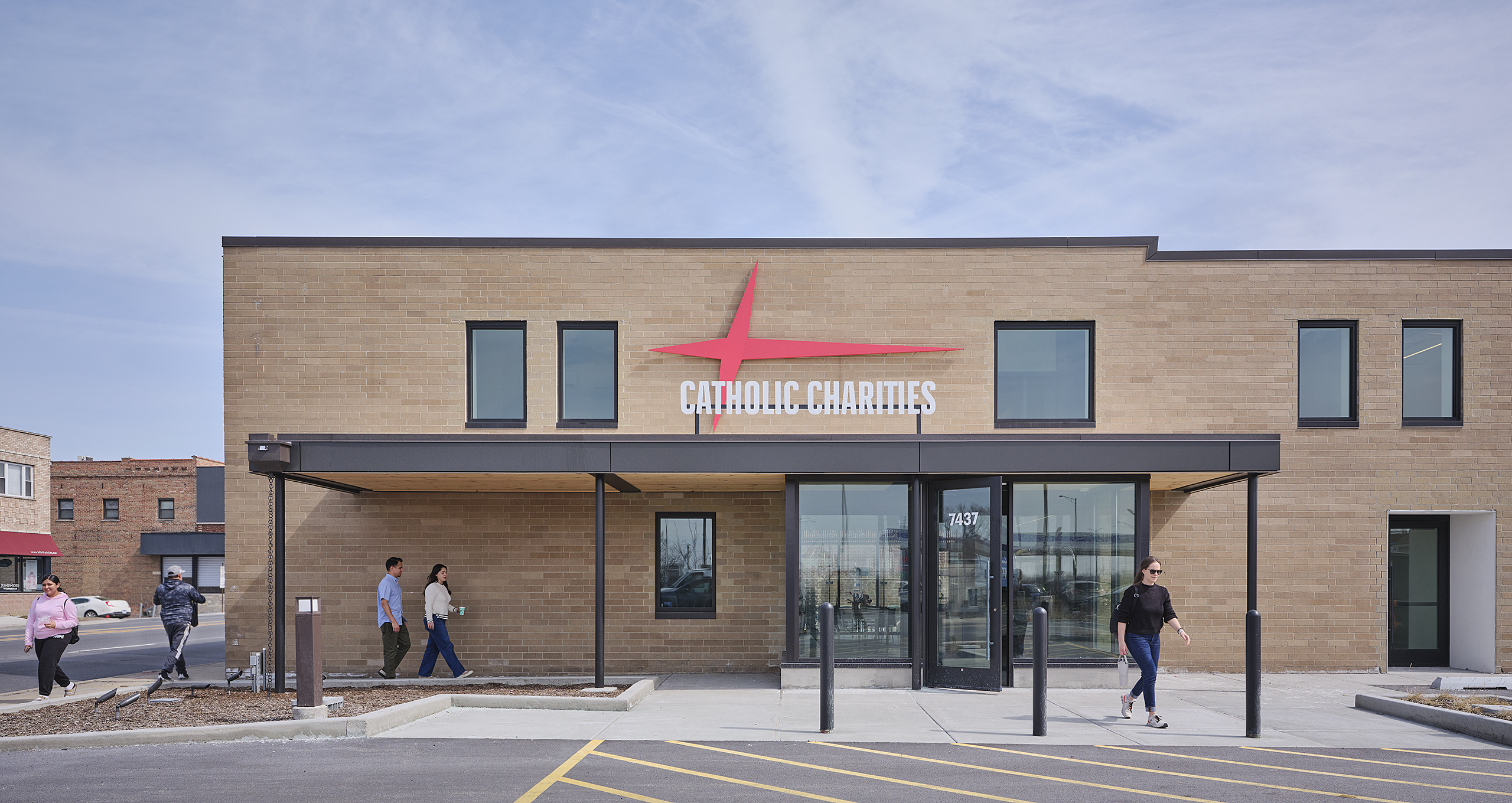
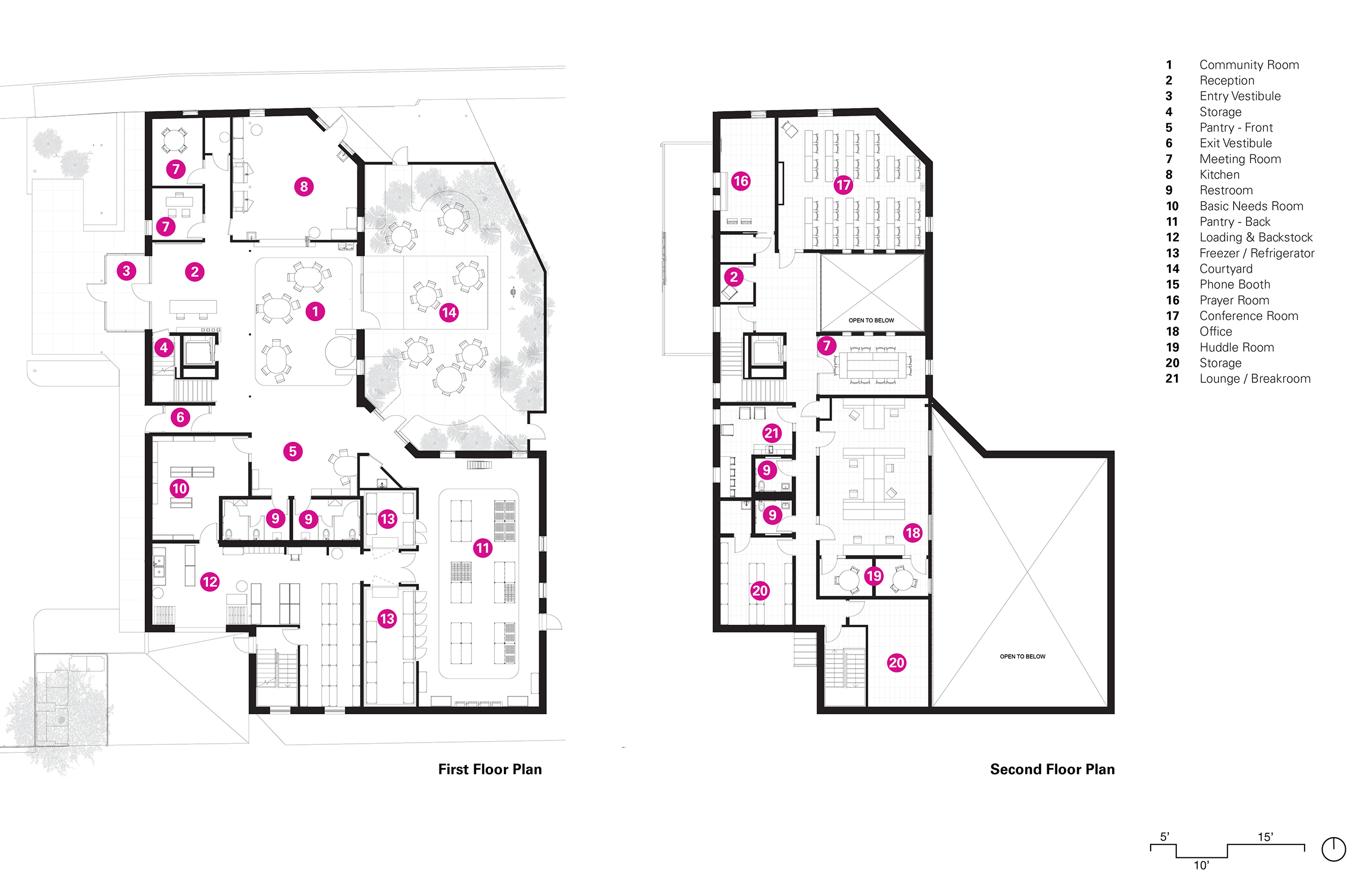
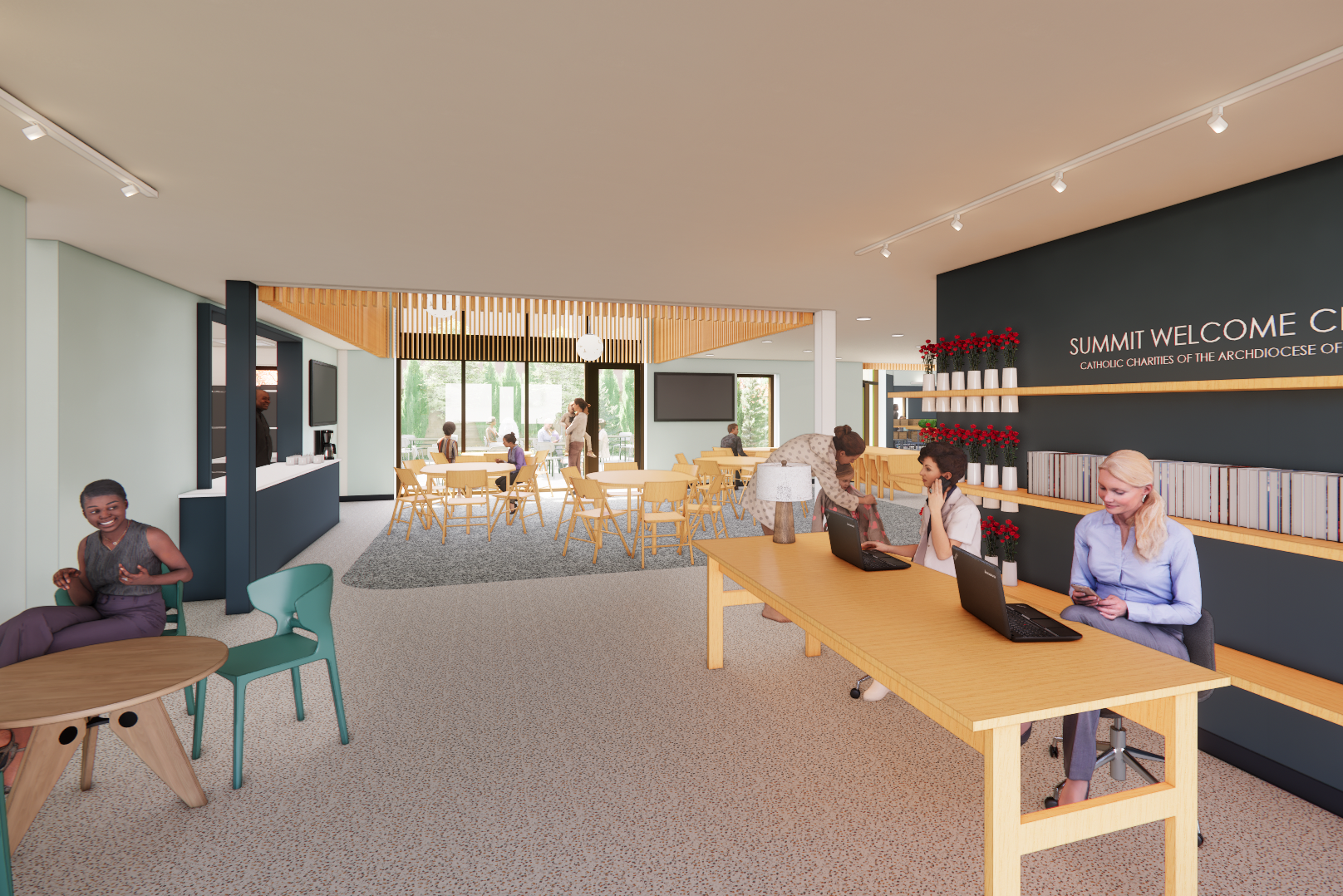
Trauma-informed design principles guided the spatial organization. The plan is knowable, connected, and choice-driven: visitors encounter a visible greeter and clear sightlines, understand circulation before committing to spaces, and can choose how and where to engage.
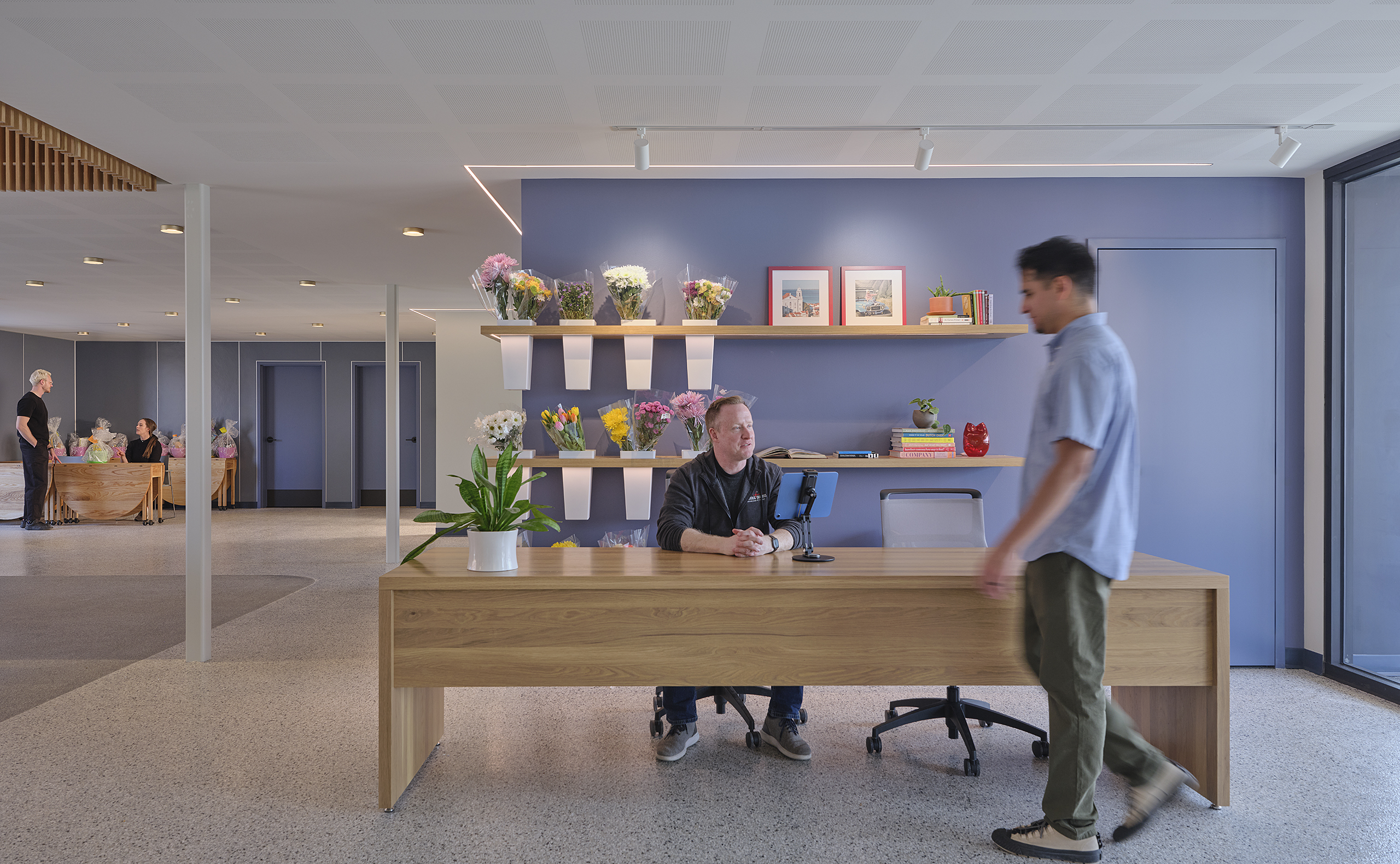
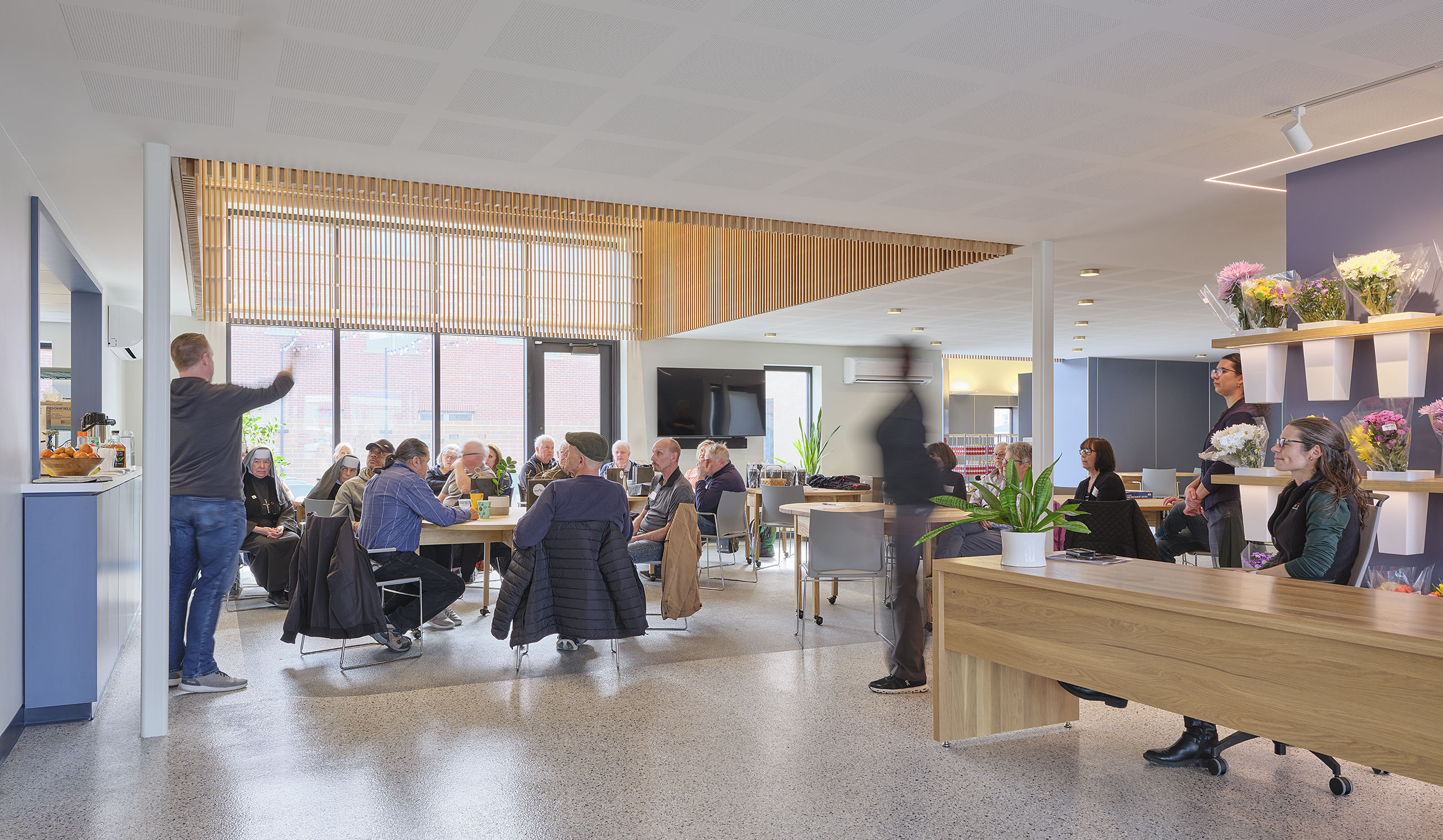
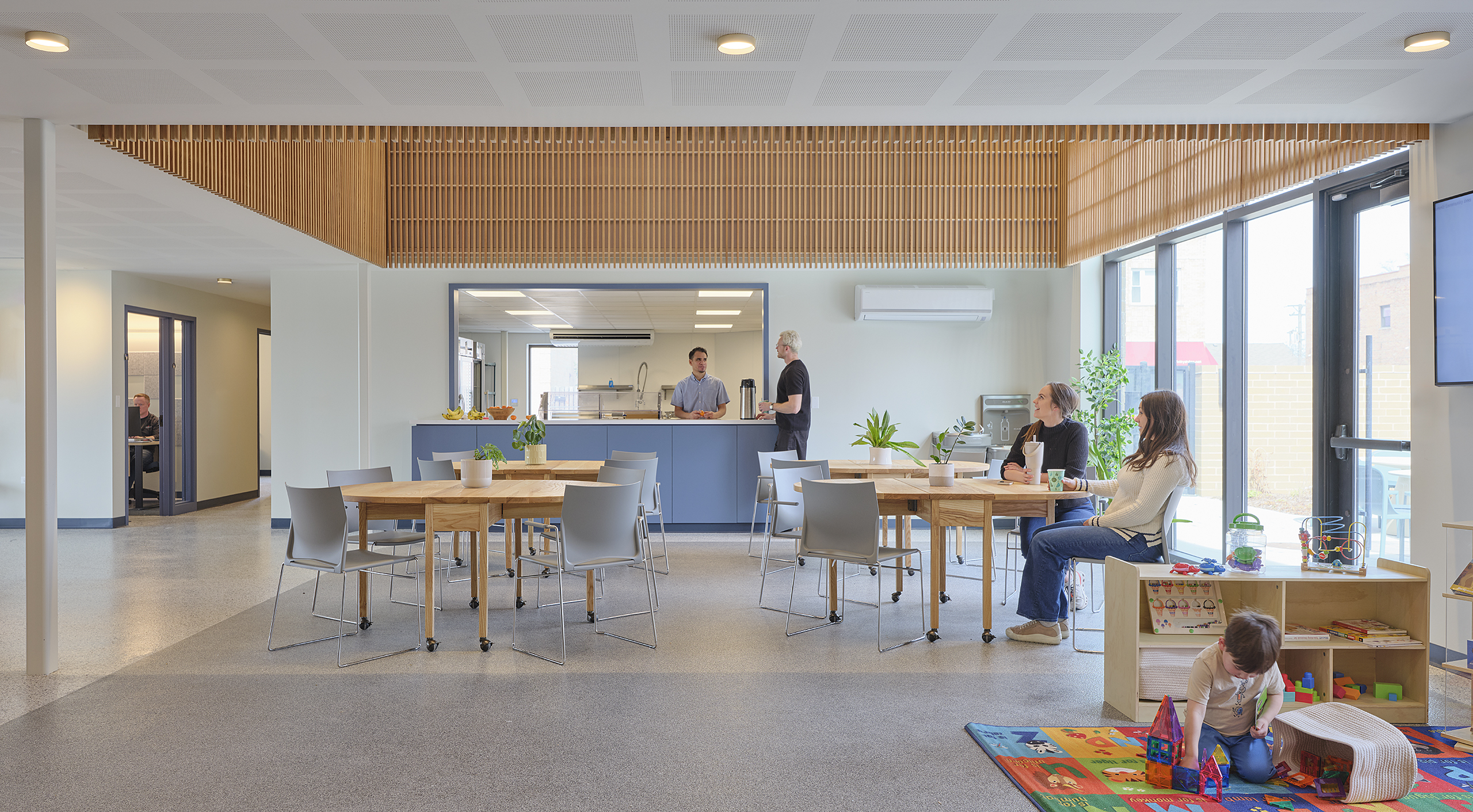
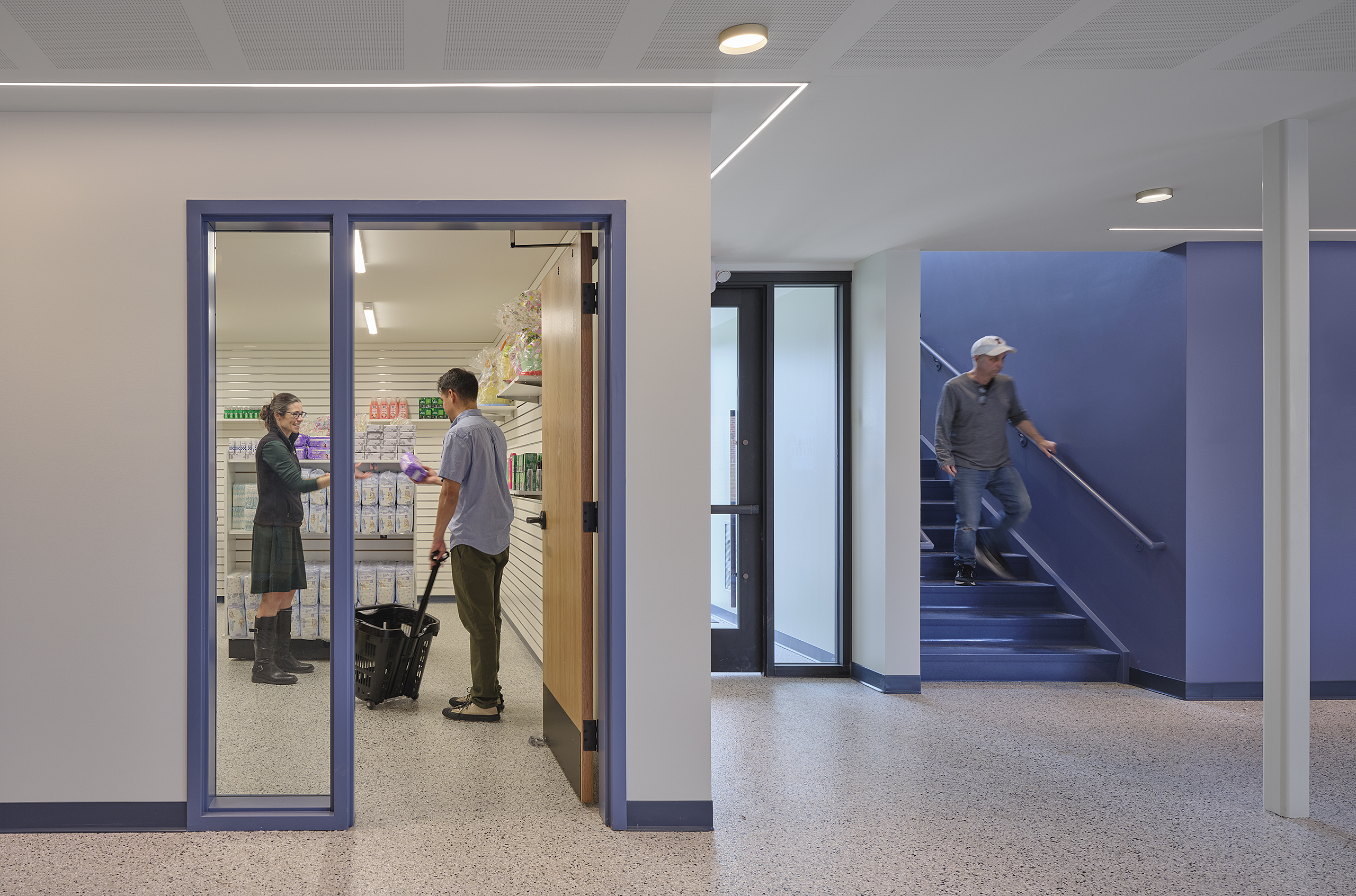
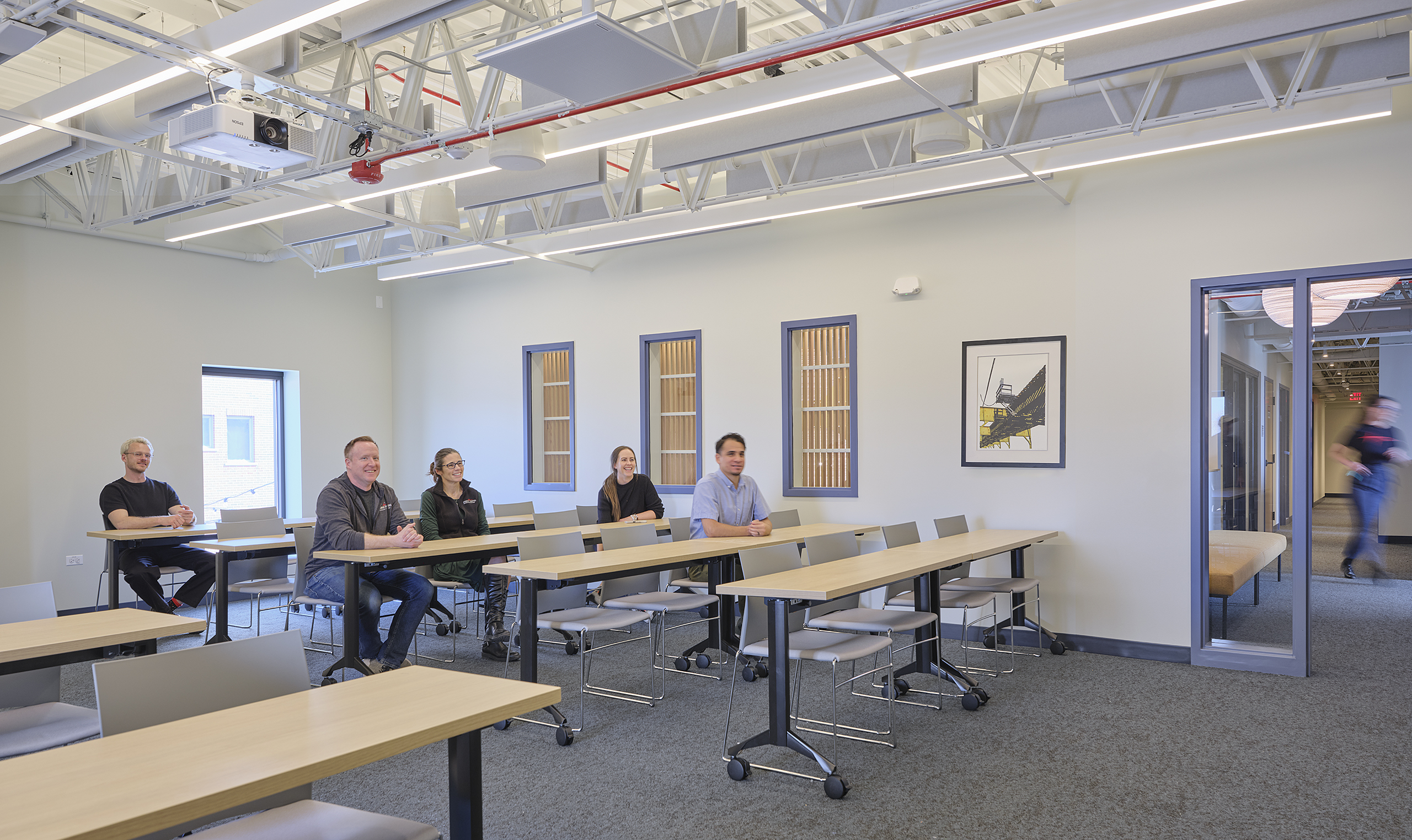
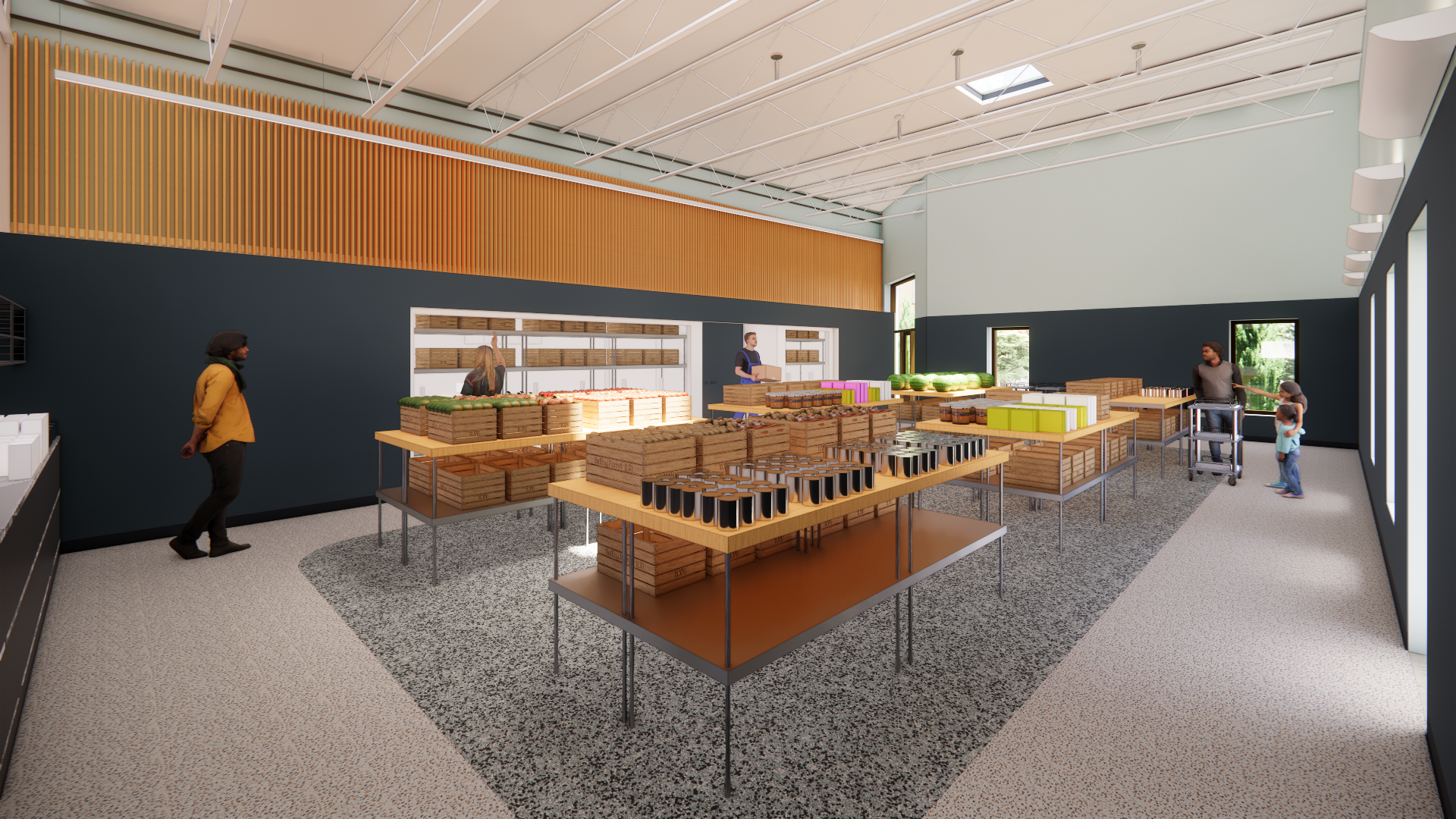
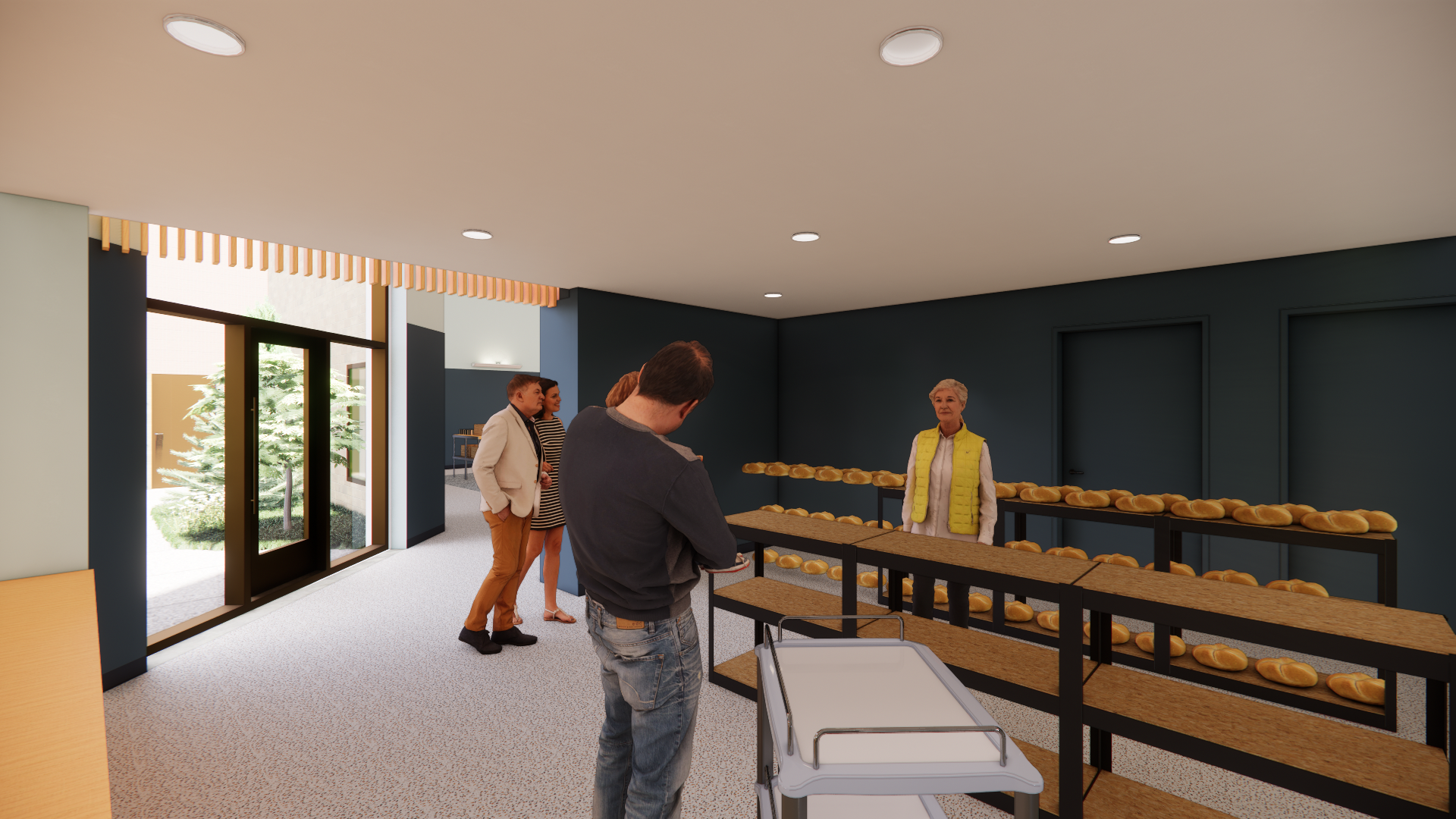
The program revolves around the primary services: a food pantry and a community room where hot-meals are served. The kitchen, basic-needs distribution room, classrooms for tutoring and job training, counseling suites, flexible meeting rooms, and spaces for partner agencies complete the plan and provide vital wrap-around services for clients.
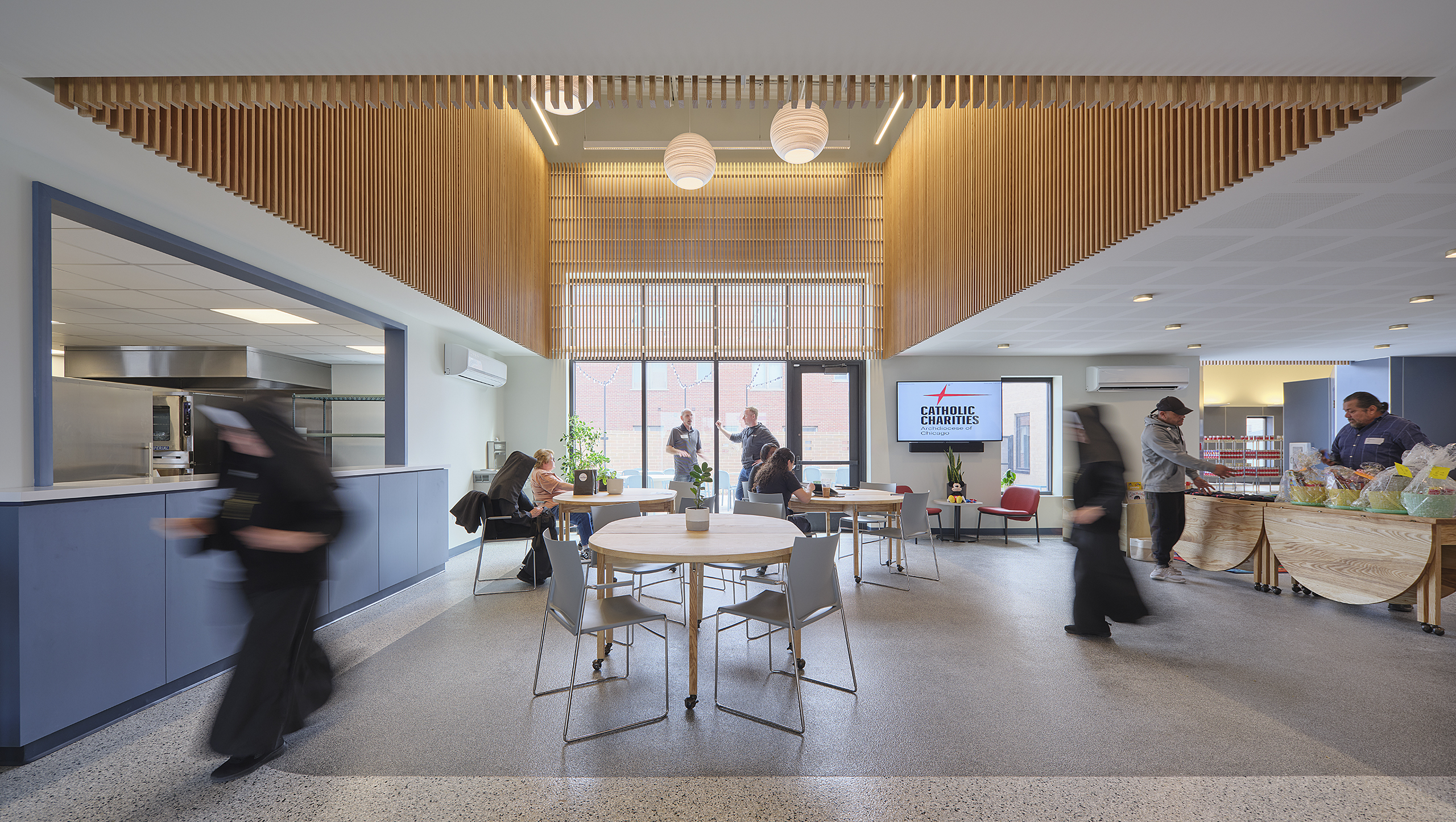
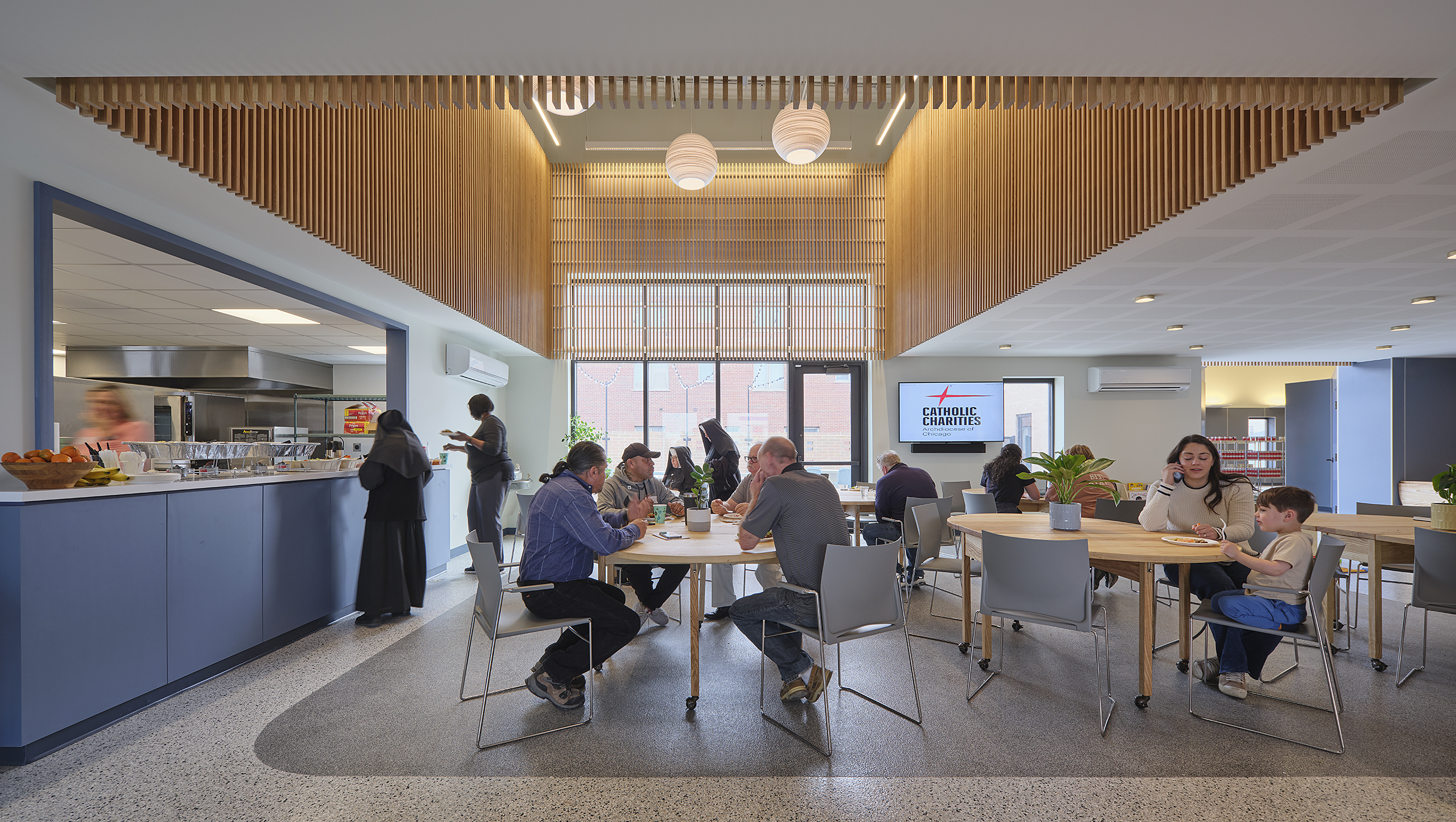
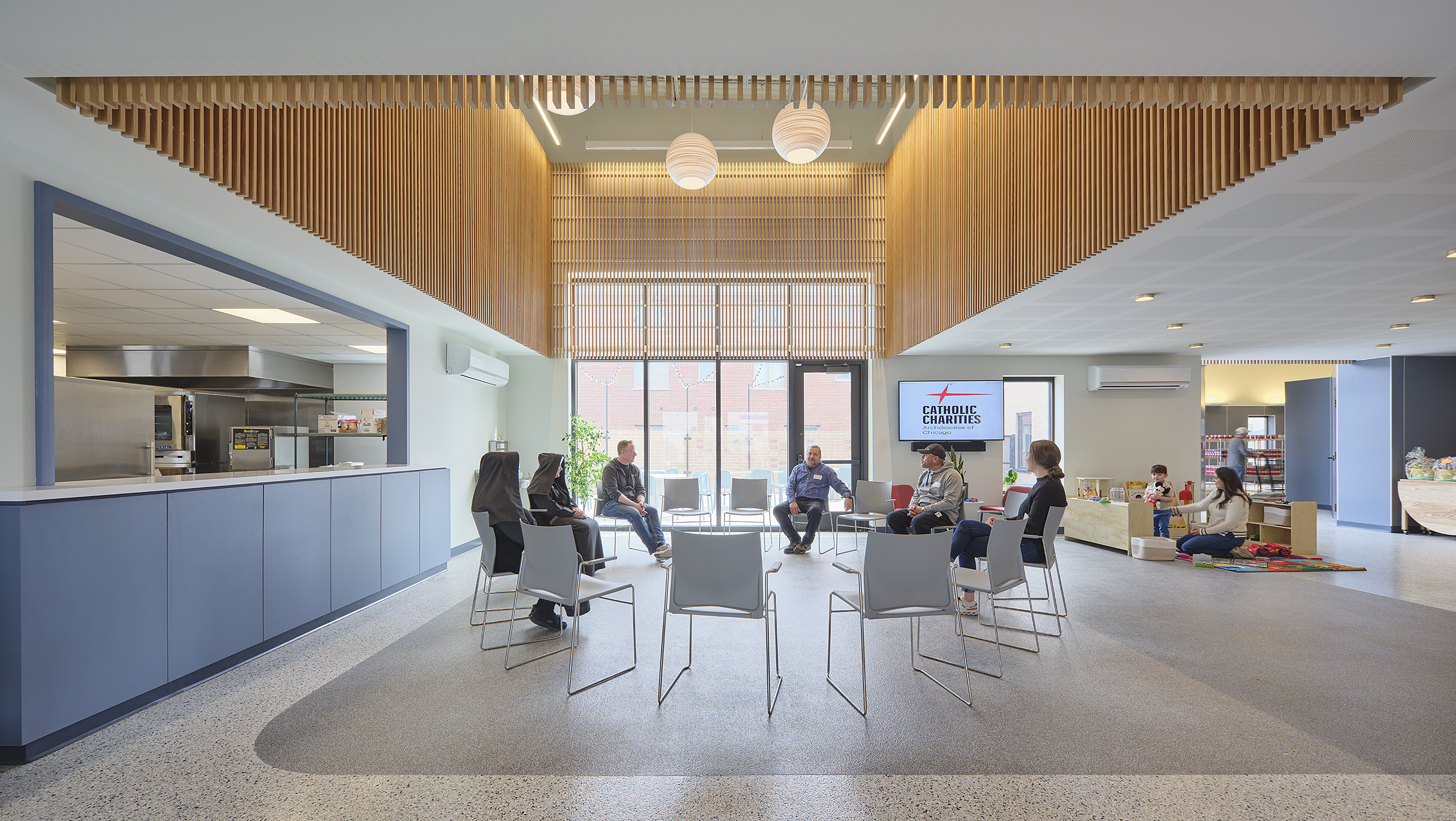
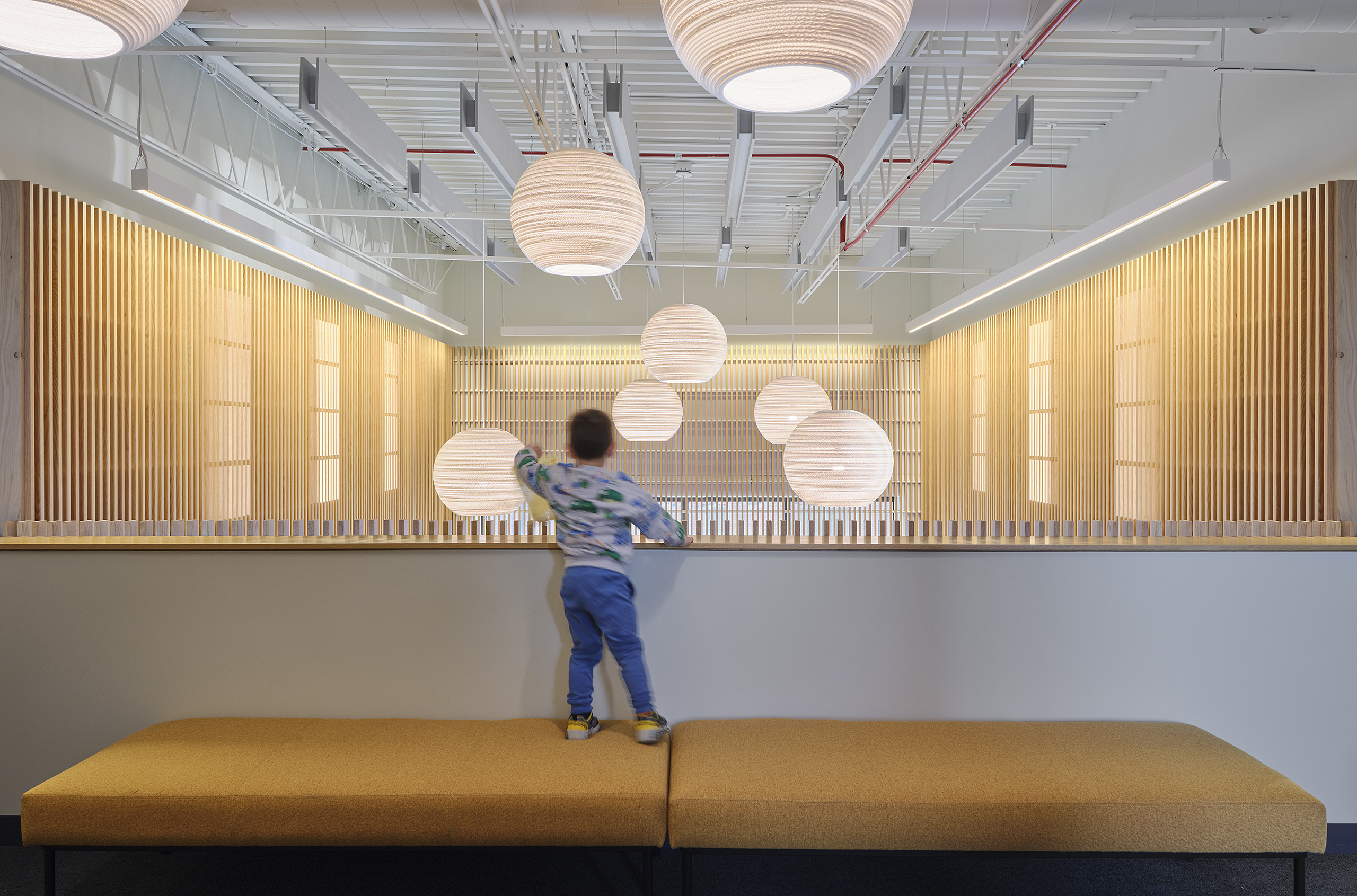
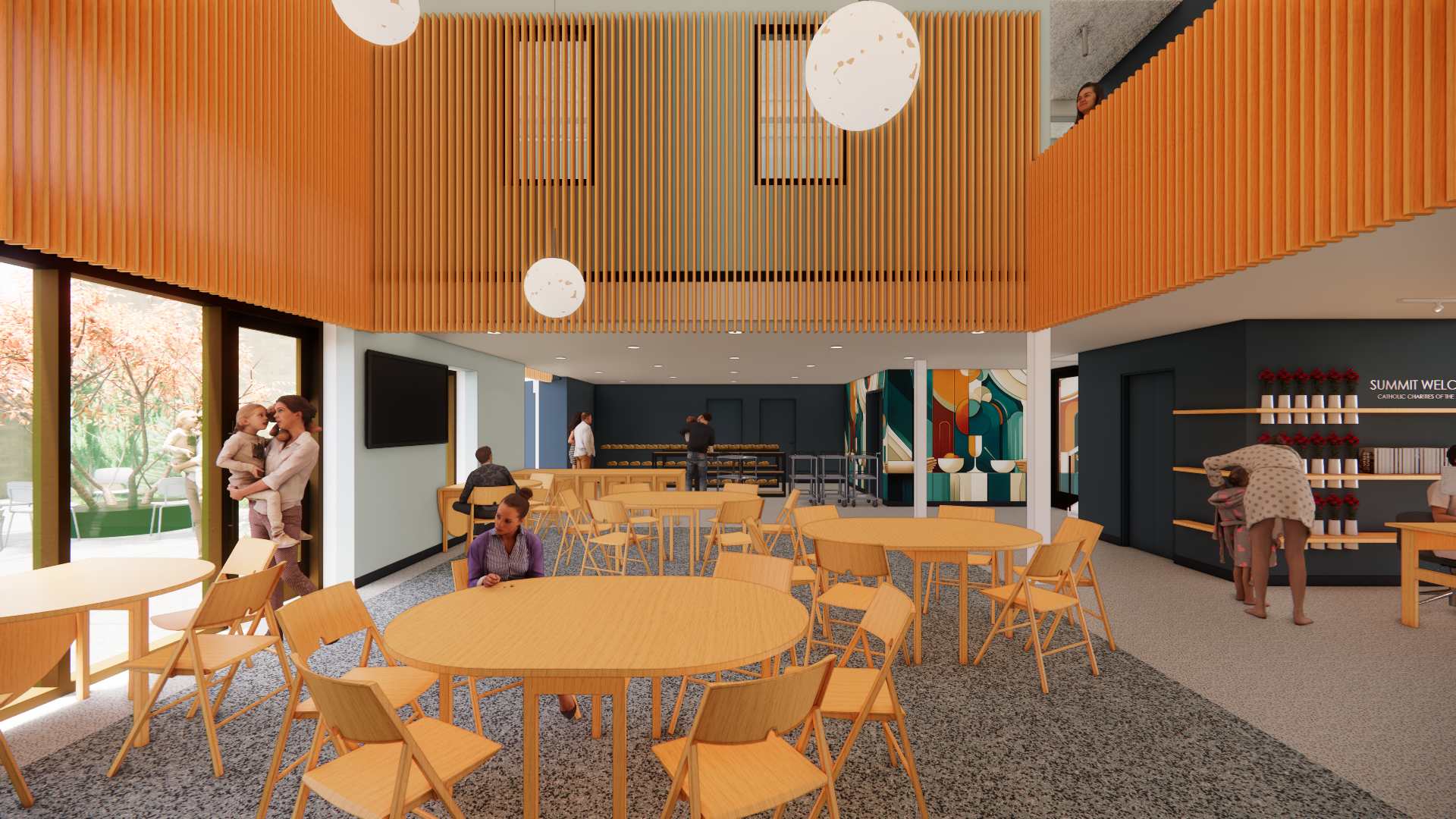
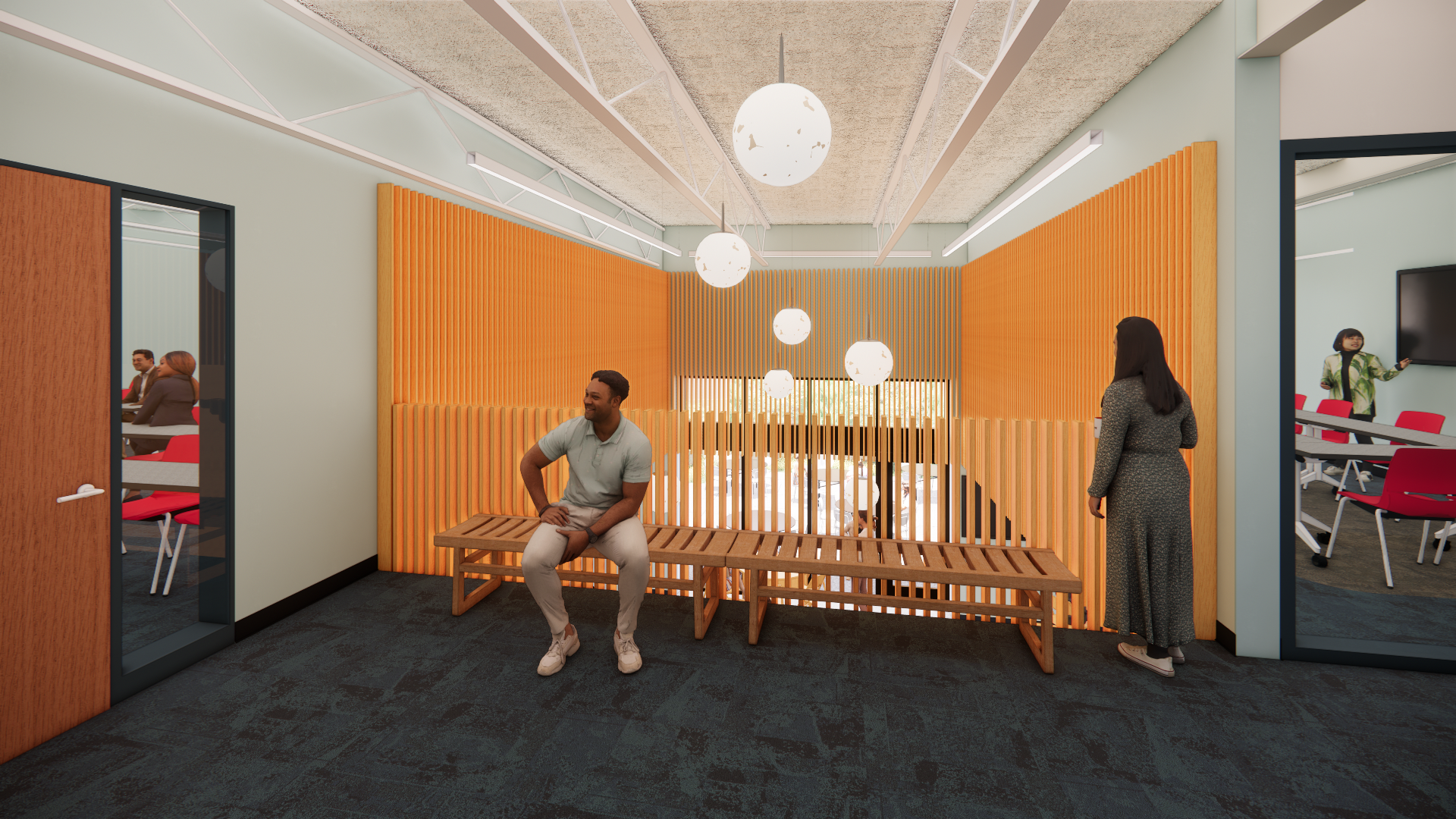
Double-height volumes mark the pantry and community room, filled with daylight and lined with acoustic wood slats that temper sound and scale.
The community room, located in a former loading dock, features a large window wall overlooking a new walled garden—an intentional landscape of quiet respite rarely associated with social-service buildings. The garden serves as a regulating landmark, visible from entry and public spaces, reinforcing orientation and calm.
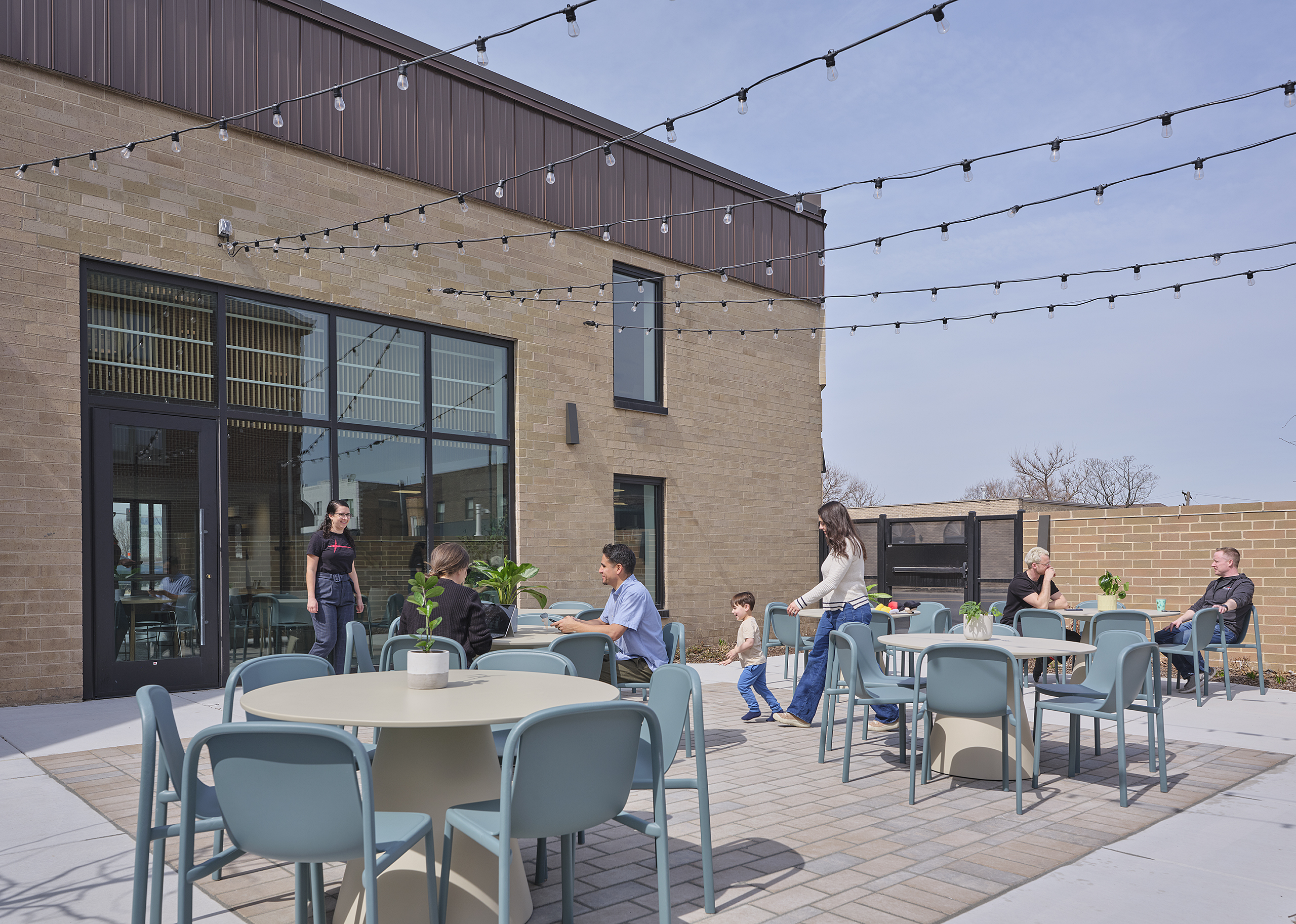
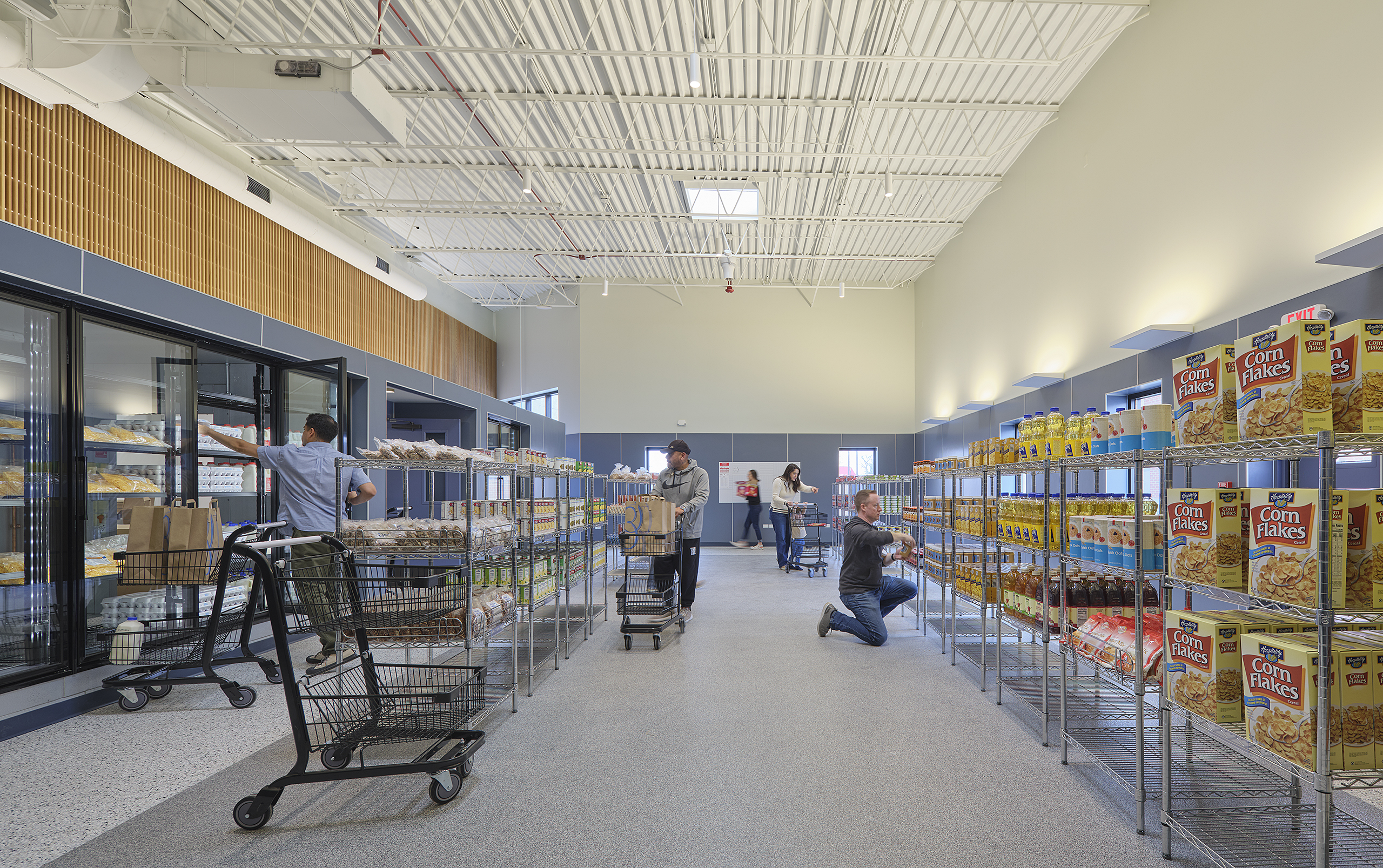
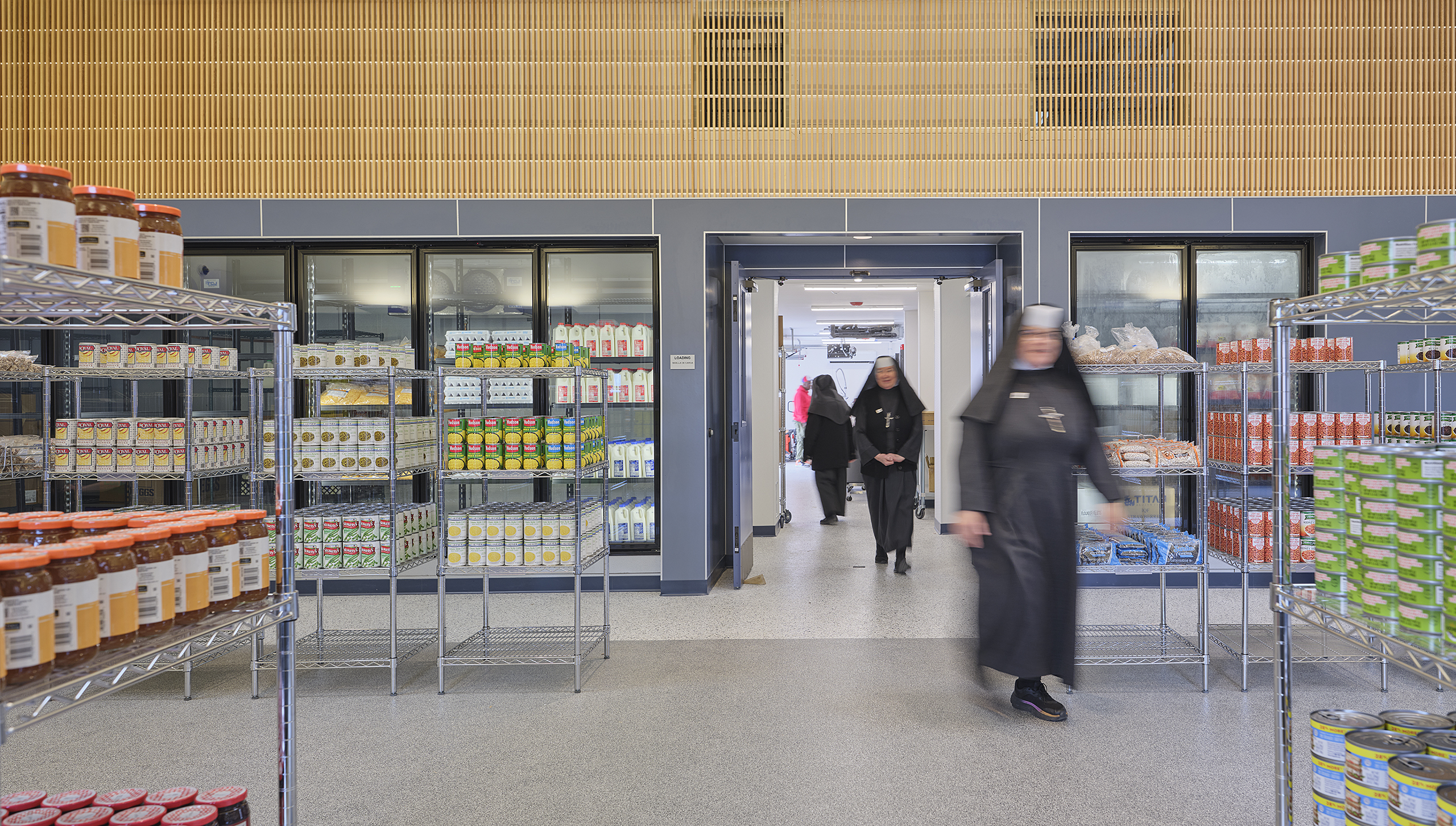
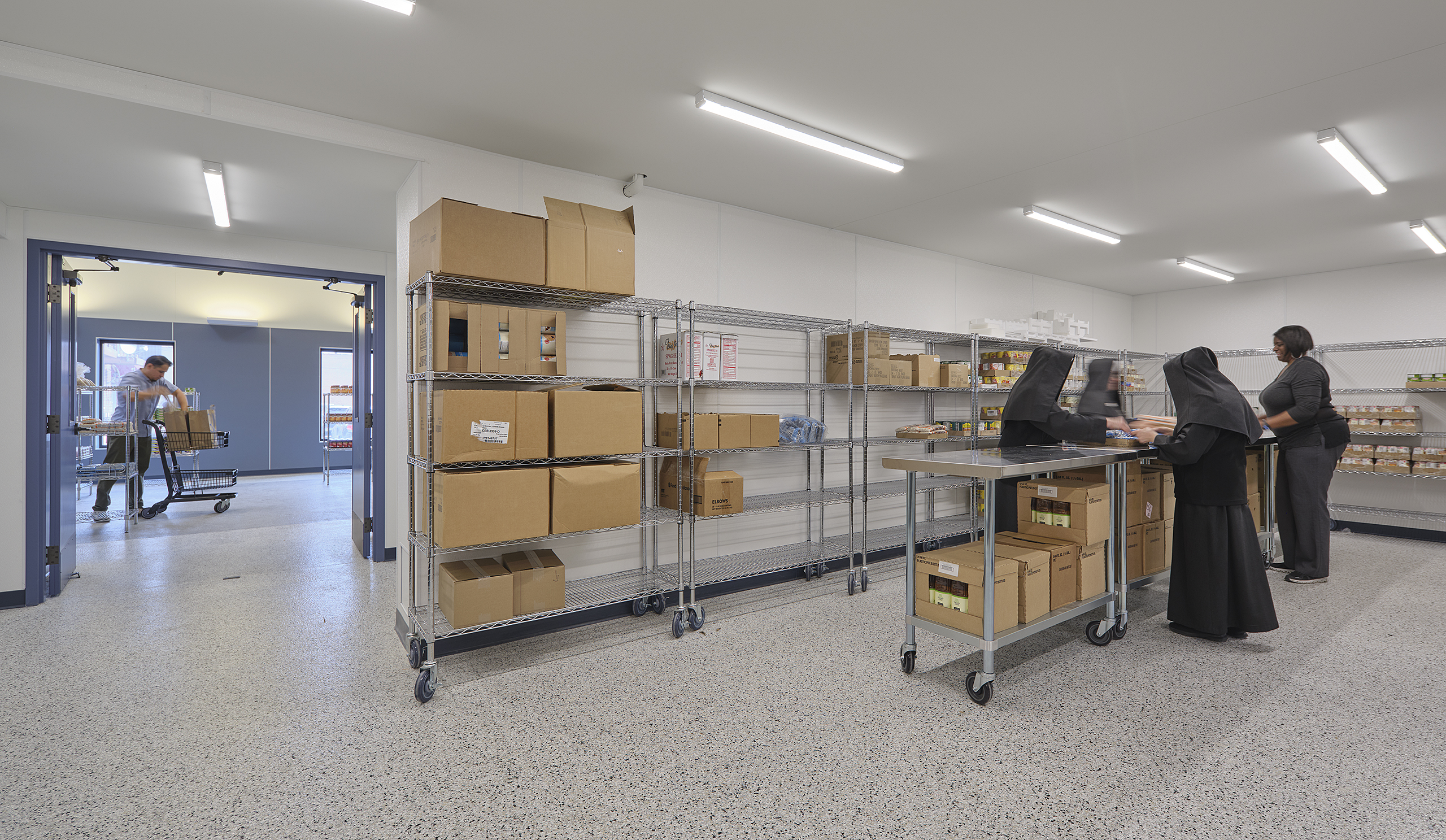
Material choices support warmth and durability, and a non-institutional aesthetic: wood ceilings with acoustic backing, consistent flooring for accessibility and maintenance, calm blue accents, and varied lighting tuned to programmatic needs.
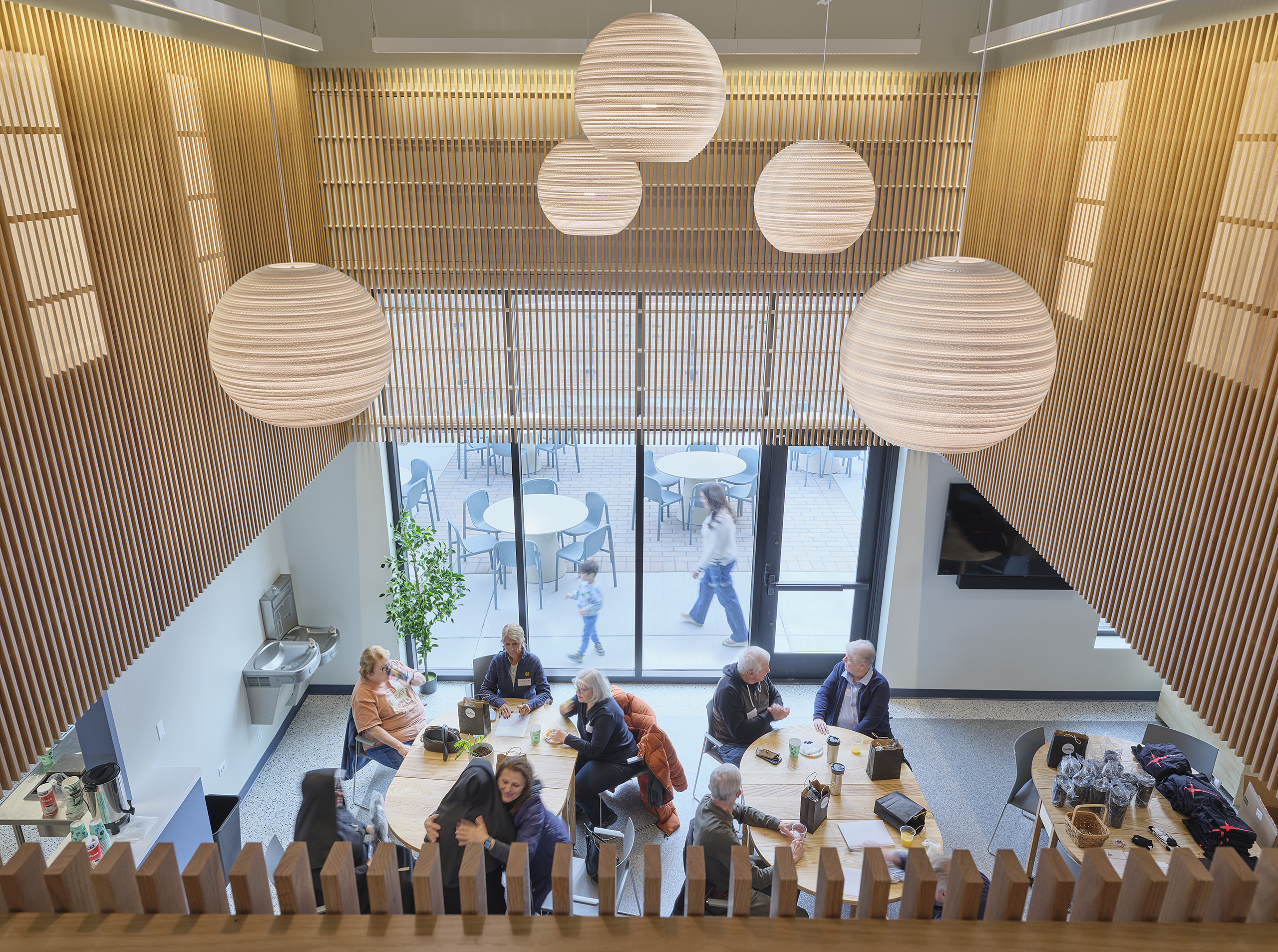
Here, architecture is not spectacle but shelter—a civic living room where ordinary acts of greeting, sharing a meal, or seeking counsel are given form. Through modest means, trauma-informed principles create humane, lasting, and compassionate spaces that invite, accompany, and serve families while quietly restoring agency and supporting healing.
Additional Images
Architecture: Wheeler Kearns Architects
Structural Engineer: CE Anderson & Associates
Design Build Mechanical Engineer: GT Mechanical Projects & Design, Inc.
Design Build Electrical Engineer: Connelly Electric
Design Build Plumbing Engineer: CJ Erickson Plumbing Co.
Landscape Architect: site design group
Civil Engineering: Terra Engineering
Food Service Consultant: Edge Associates
Lighting Design: Polymath Design
Photography: Tom Harris
Video: Alex Brescanu