
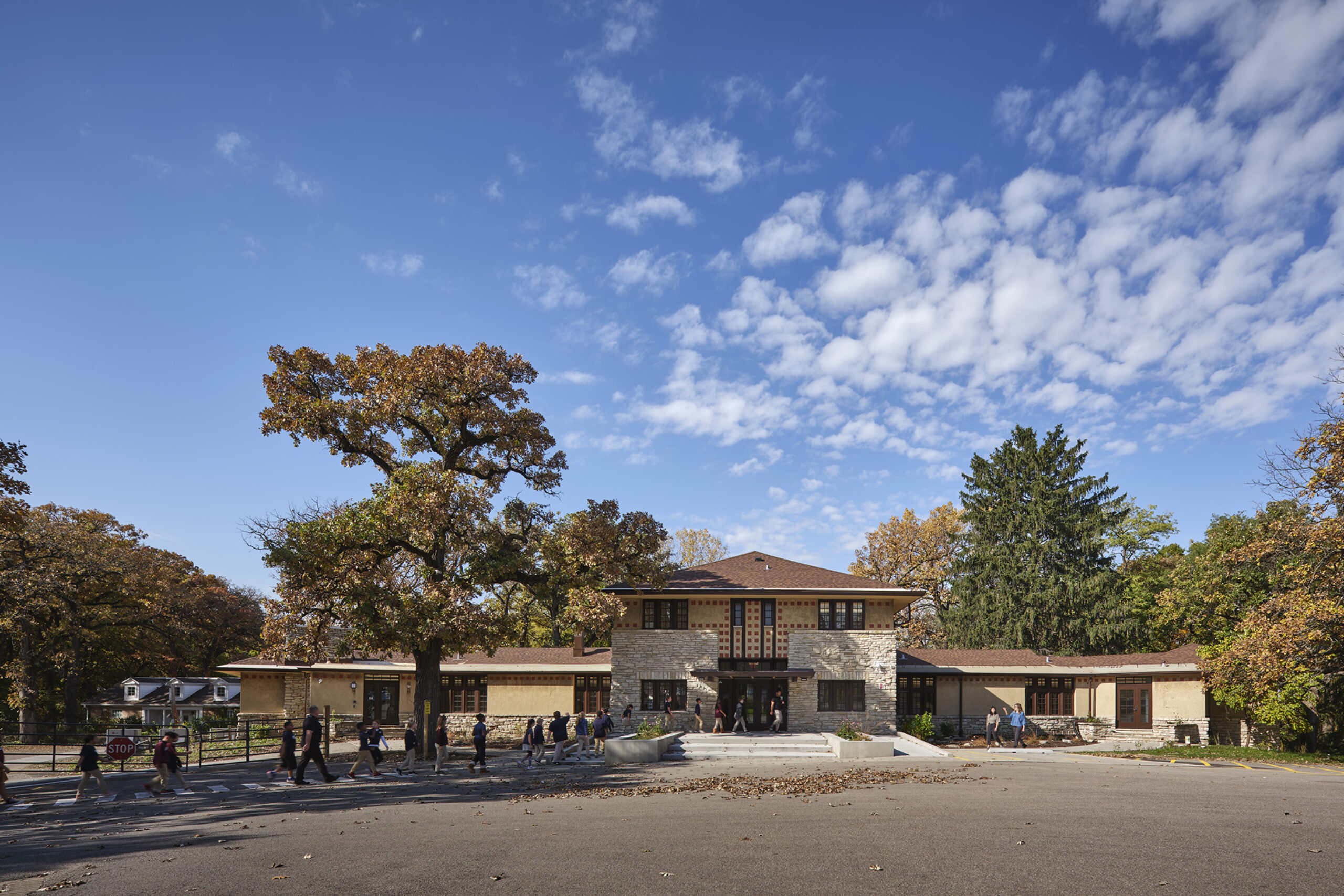
Situated on an exceptional 27-acre site designated as an Illinois Nature Preserve and formerly home to the Fox River Country Day School, the Elgin Math and Science Academy (EMSA) is dedicated to the careful restoration of the network of prairie-style buildings on-site to align with their Expeditionary Learning model.
The project began with a 2019 Master Plan, which explored options for growth by addressing campus structures in need of substantial repair while preserving the site’s rich legacy and fostering a distinctive, sustainable learning environment. Since then, EMSA has transformed its campus through a series of projects—including the Middle School + Gym, Art Barn, and Administration Building—creating a cohesive and forward-looking educational environment.
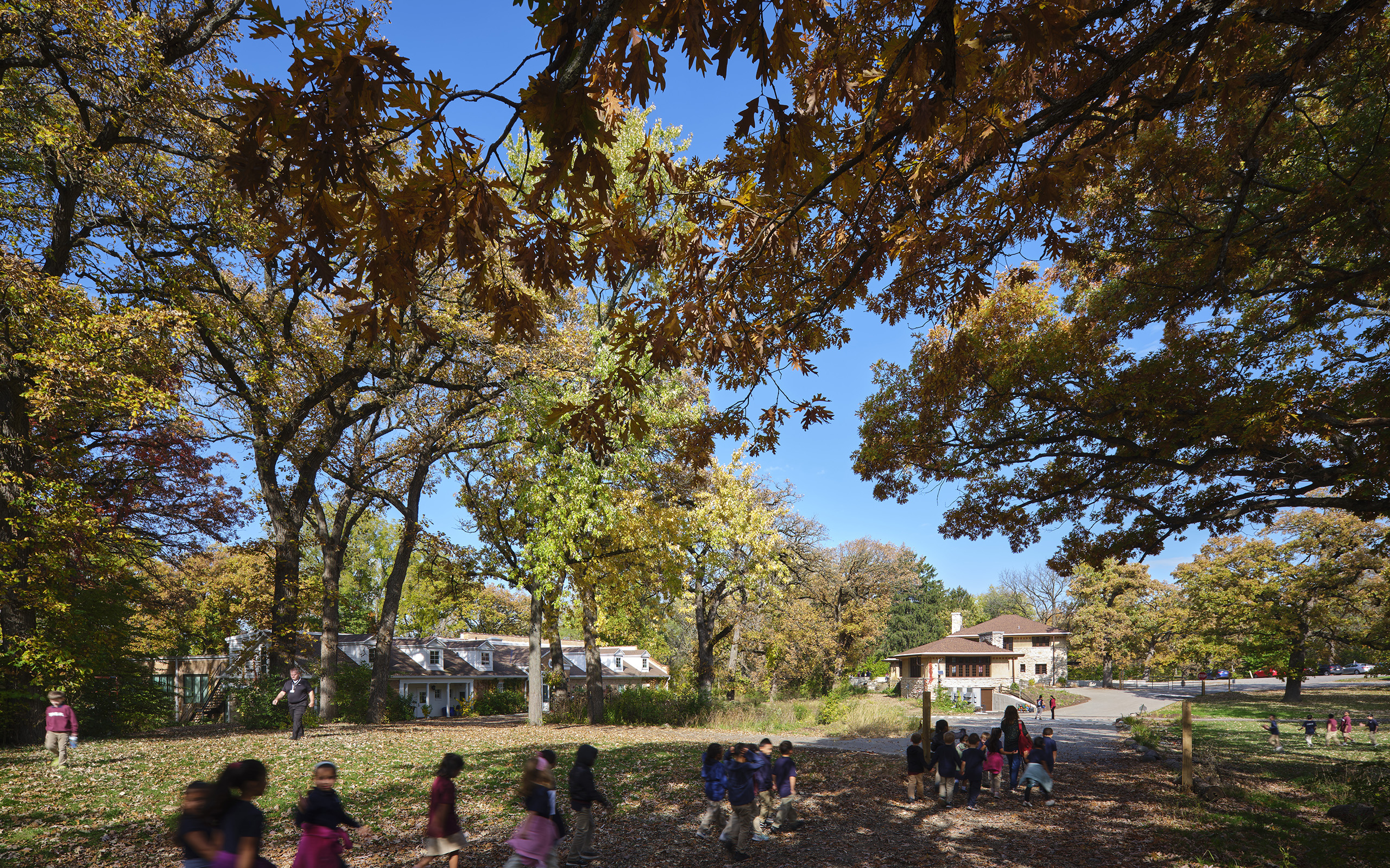
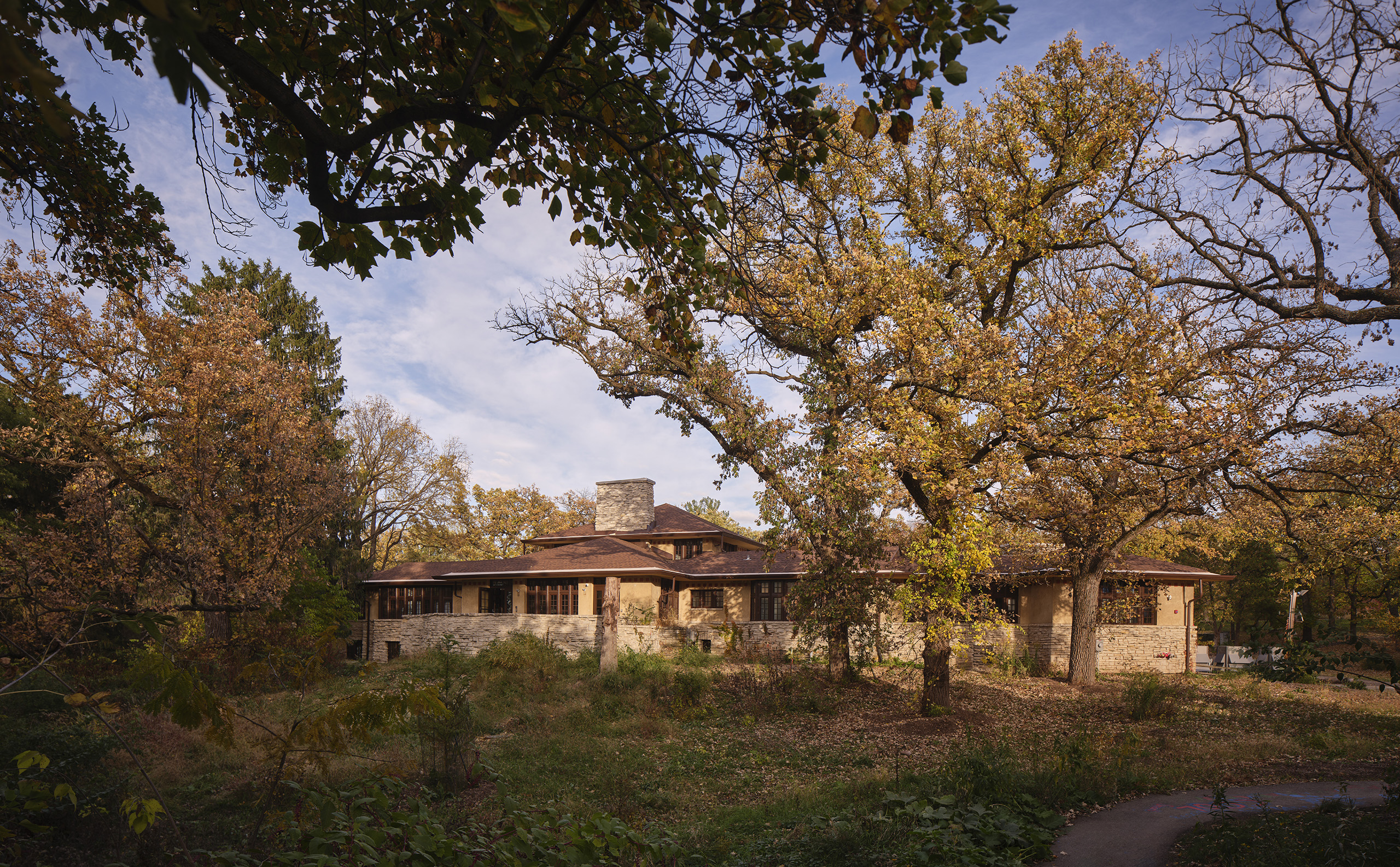
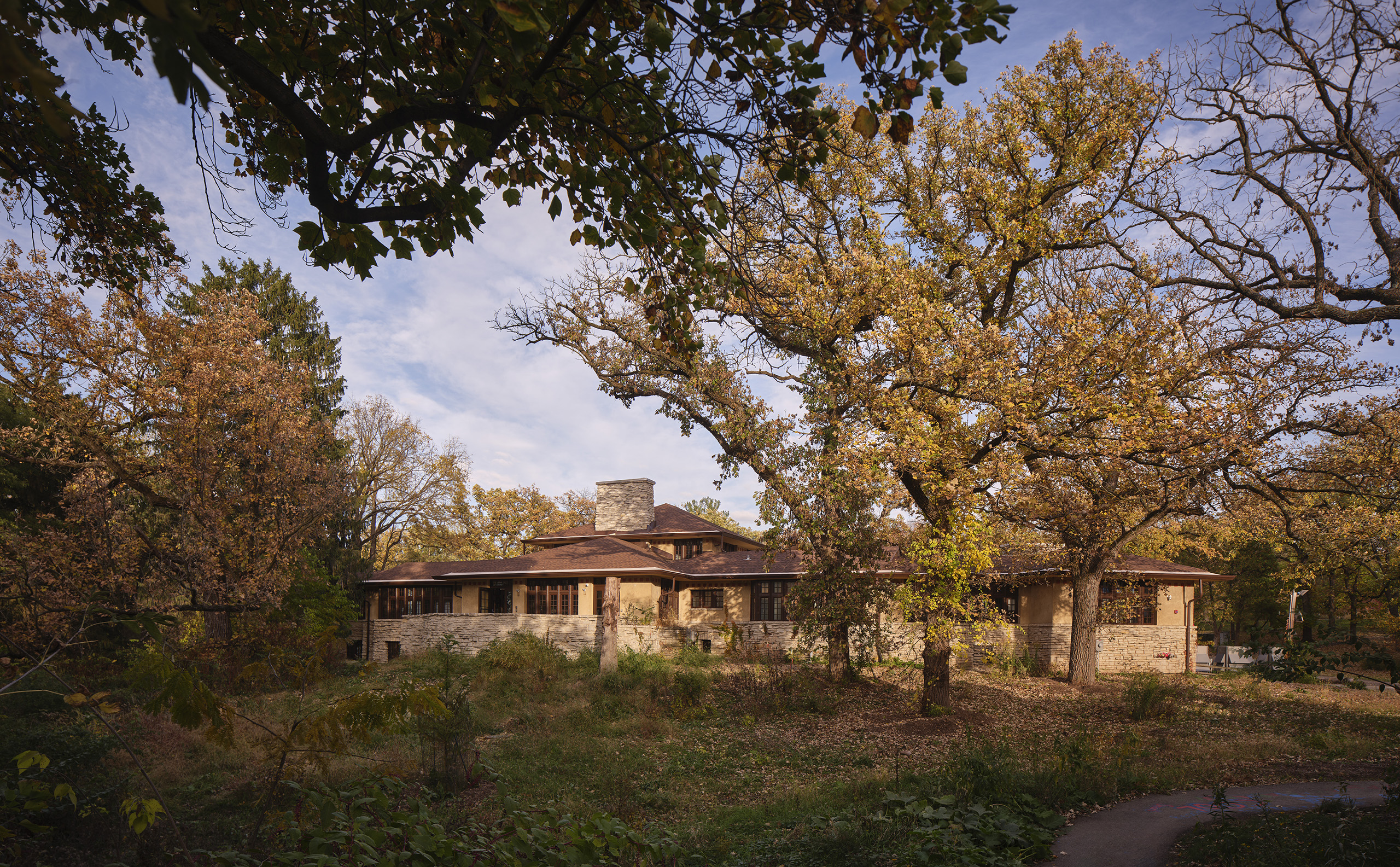
The Administration Building, a prairie-style structure dating back to 1928 and designed by John S. Van Bergen, an apprentice of Frank Lloyd Wright, has been carefully restored to house the school’s 7th and 8th grade classrooms and administration offices.
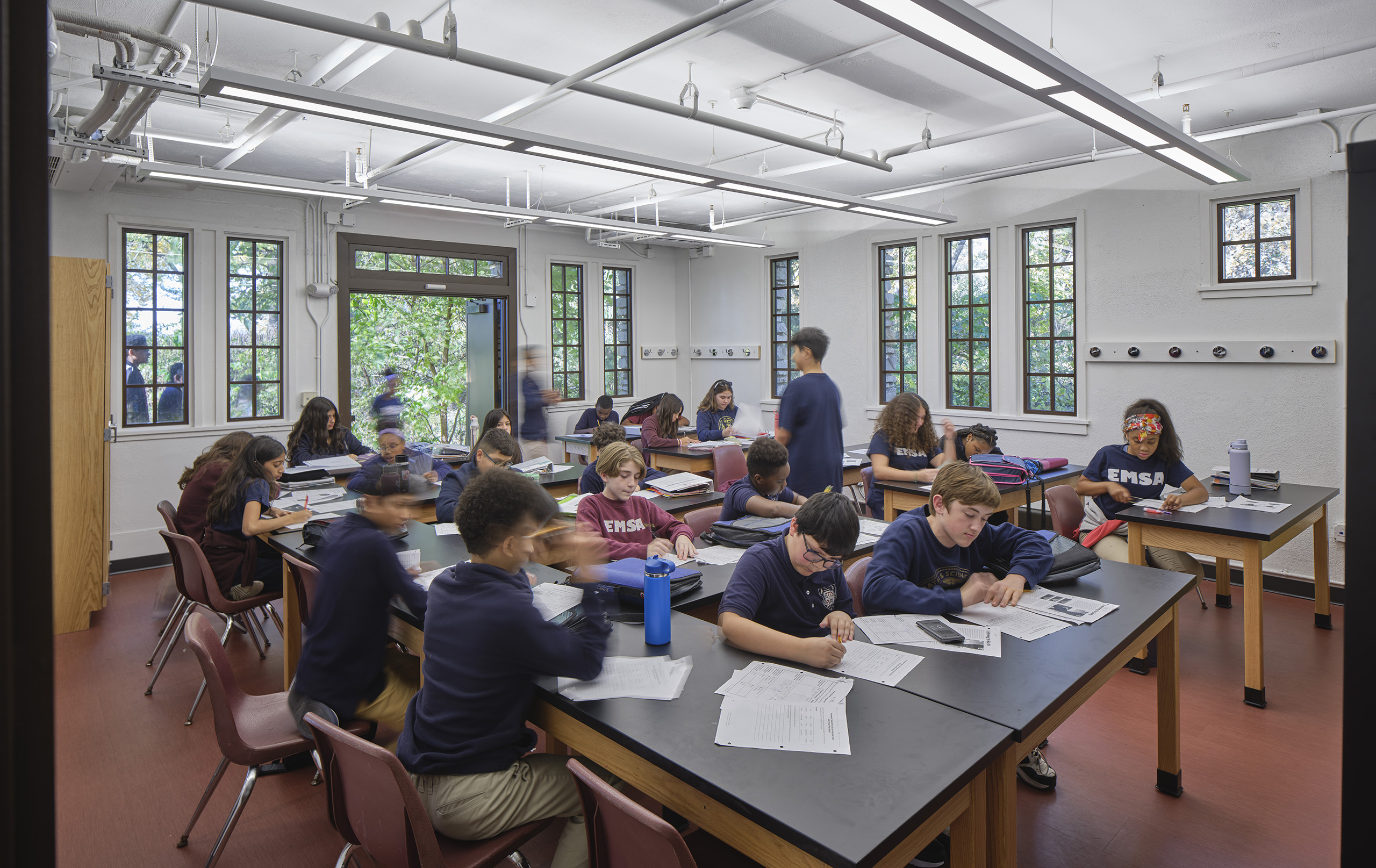
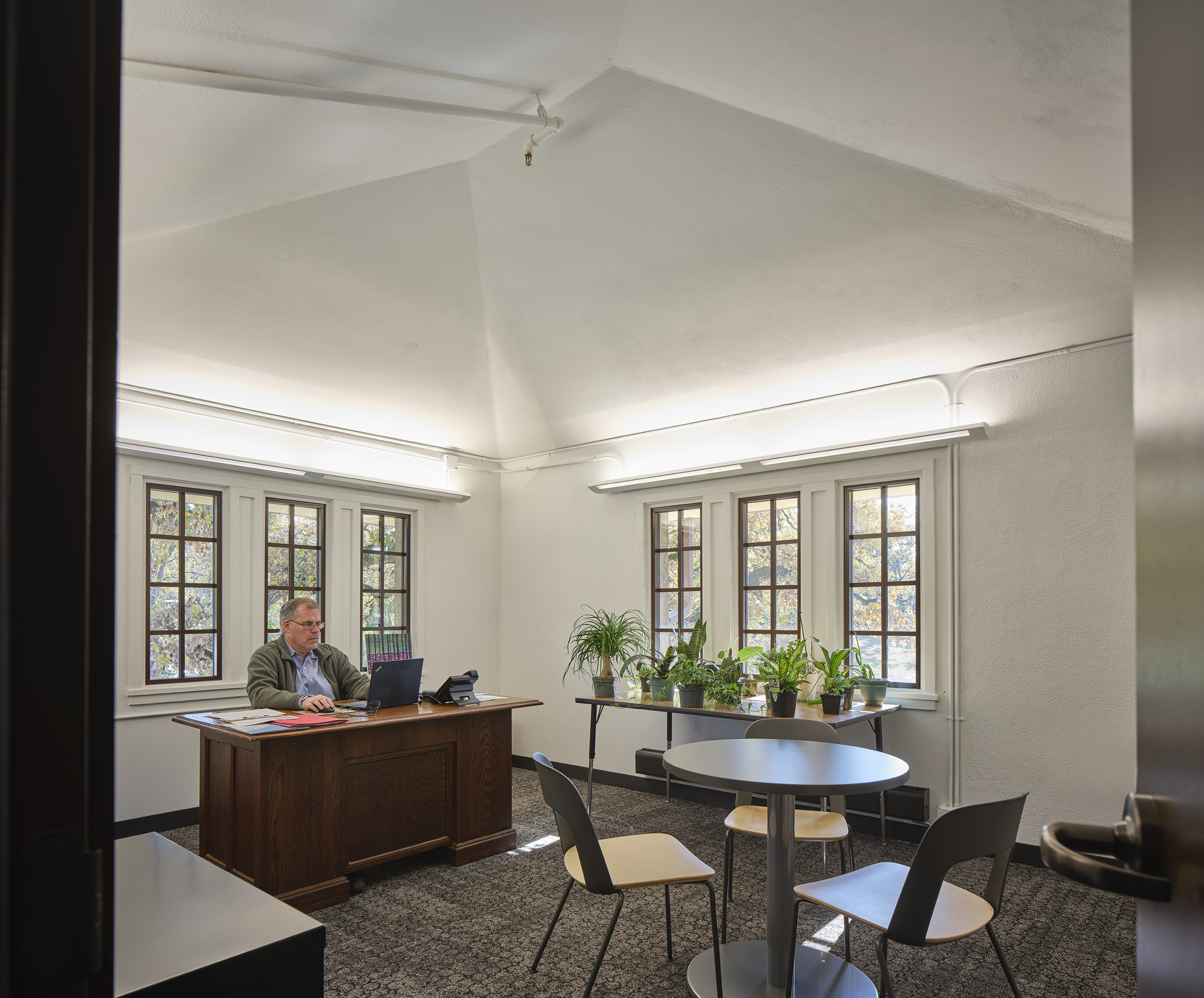
The renovation included two core classrooms, a seminar room, a science room, and smaller spaces for English Language Learners (ELL), Special Education, and six staff offices.

EMSA aspired to reinstate this structure as the welcoming face and symbolic ‘front door’ of their expanding campus. Despite the building being discovered in a state of disrepair, a carefully coordinated effort with the City and a historical consultant paved the way for a transformative project, preserving the building while aligning with code-mandated upgrades, enhancing accessibility, and catering to the unique needs of the school’s education model.
On the exterior, original features such as stacked limestone, stucco, and paint colors have been restored based on historic photographs. New thermally broken double-pane aluminum windows were custom-crafted to resemble the original steel windows, complete with chevron-shaped mullions. The front entrance was redesigned to include both a ramp and broad steps, creating a space for social interaction while ensuring full accessibility. New planters on both sides maintain symmetry while integrating native plants.
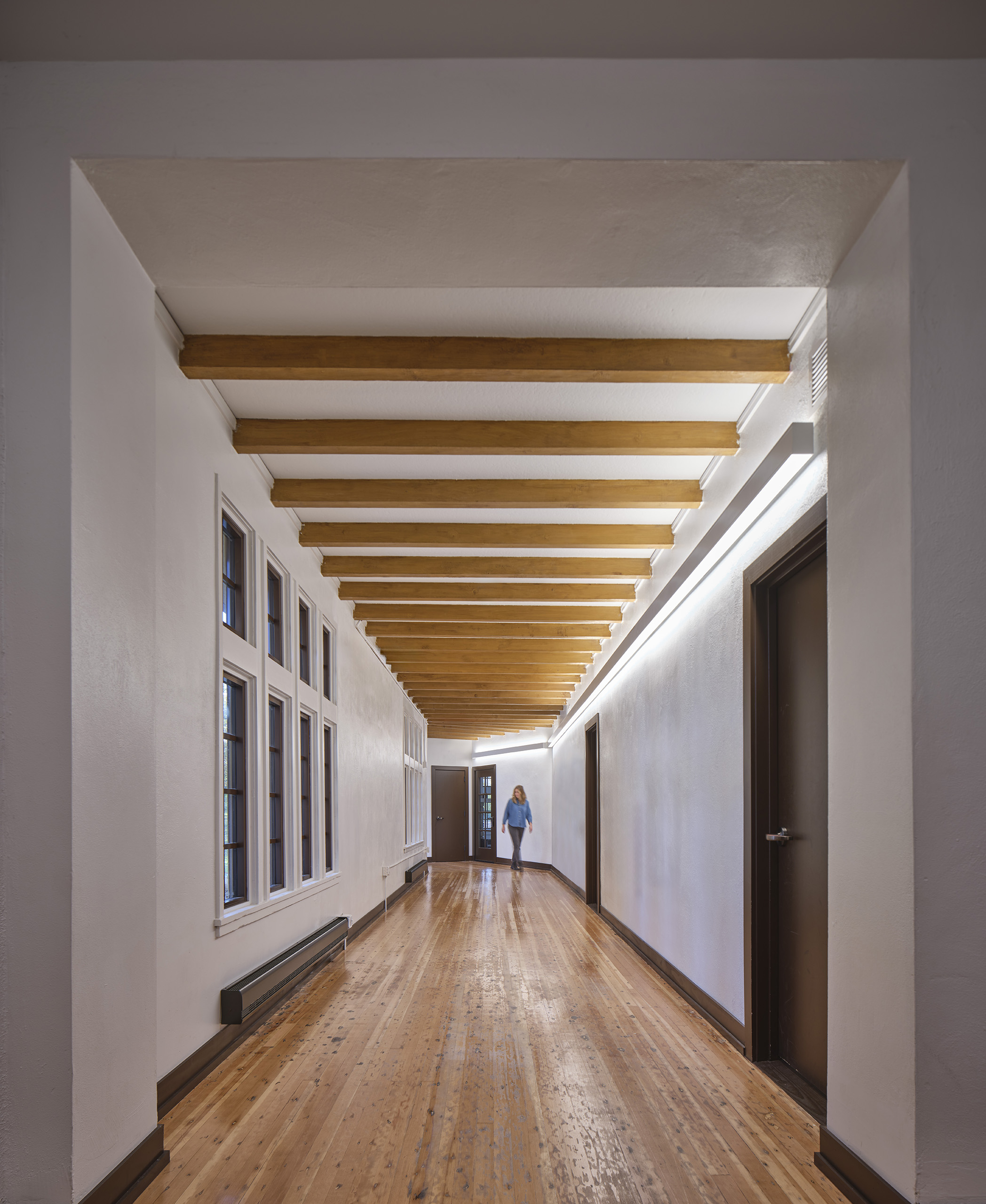

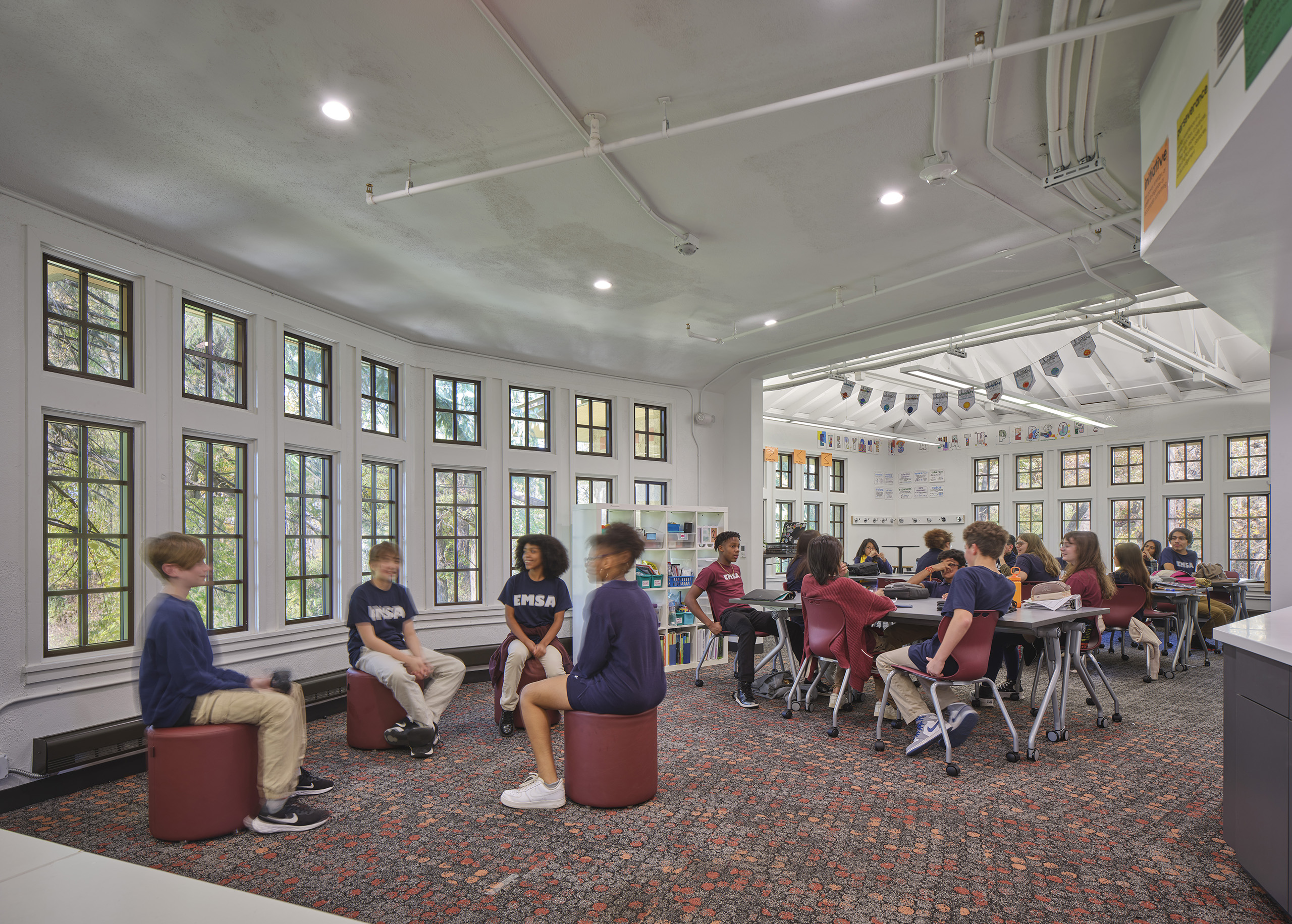
Inside, the project encountered the challenge of adapting the 1920s-era classrooms to meet EMSA’s modern needs, which required significantly more square footage per student and flexible breakout areas.
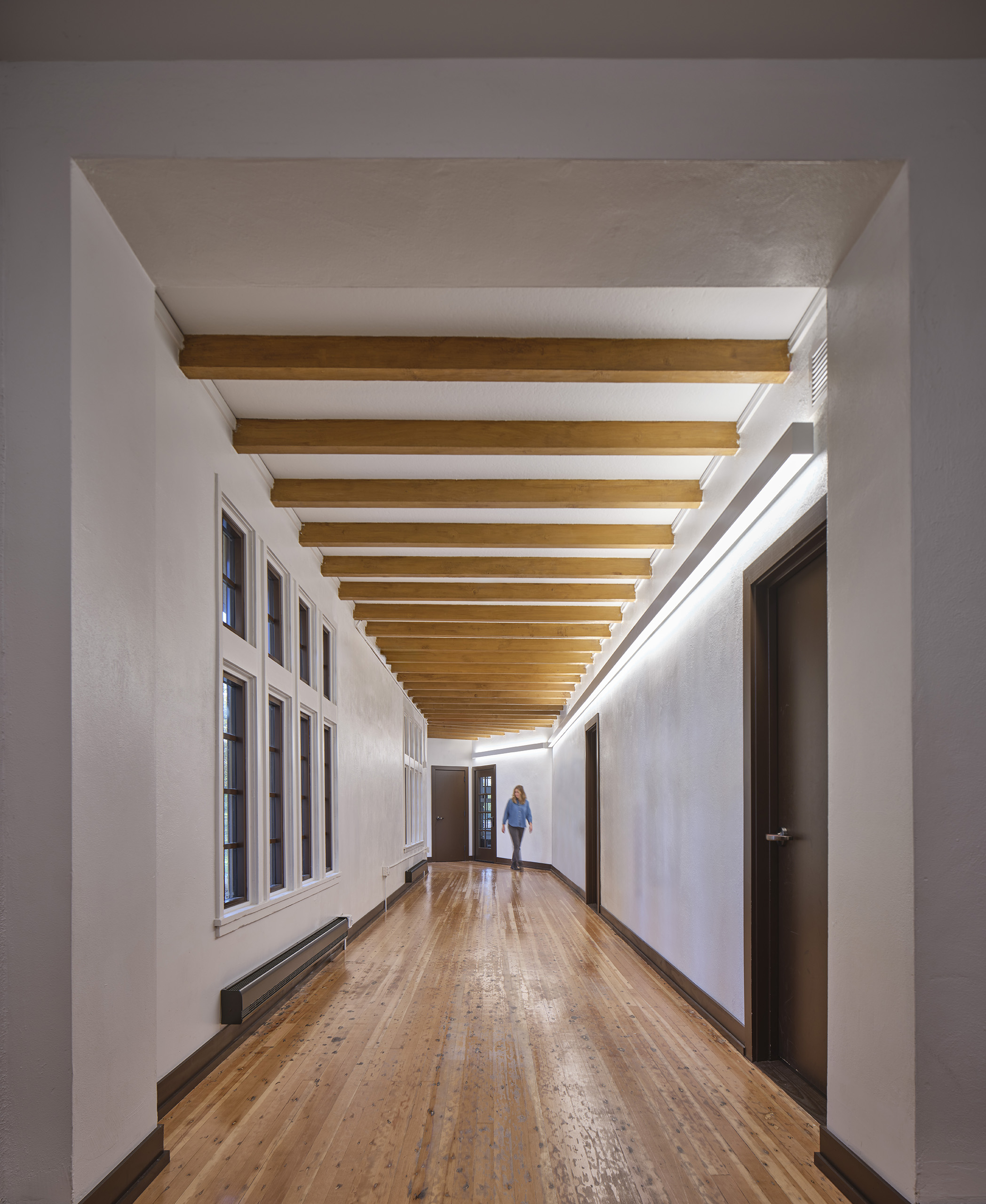
To create larger classrooms, a new lintel was strategically inserted in place of a former load-bearing wall, resulting in a spacious, wide opening that seamlessly combined areas with minimal disruption. New direct/indirect lighting now illuminates the ceiling and accentuates the existing architectural beams and millwork. New carpeting and furniture reflects the school’s colors and windows frame captivating views of the surrounding trees and ravine, creating an inspiring, treehouse-like learning environment.
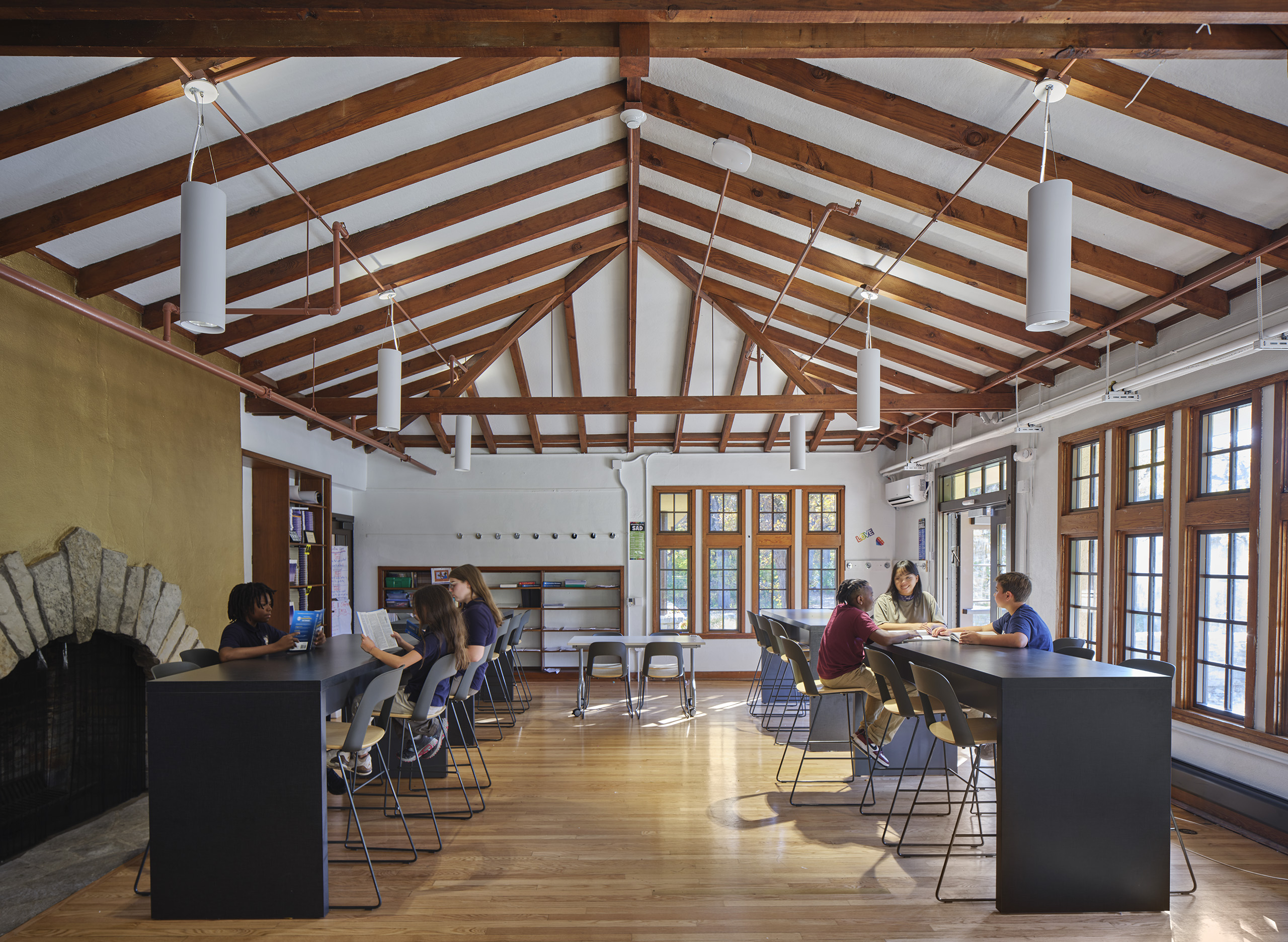
The seminar room was designed to facilitate interactive, peer-to-peer learning, with restored original beams and a fireplace, alongside new furnishings that promote interaction and learning.
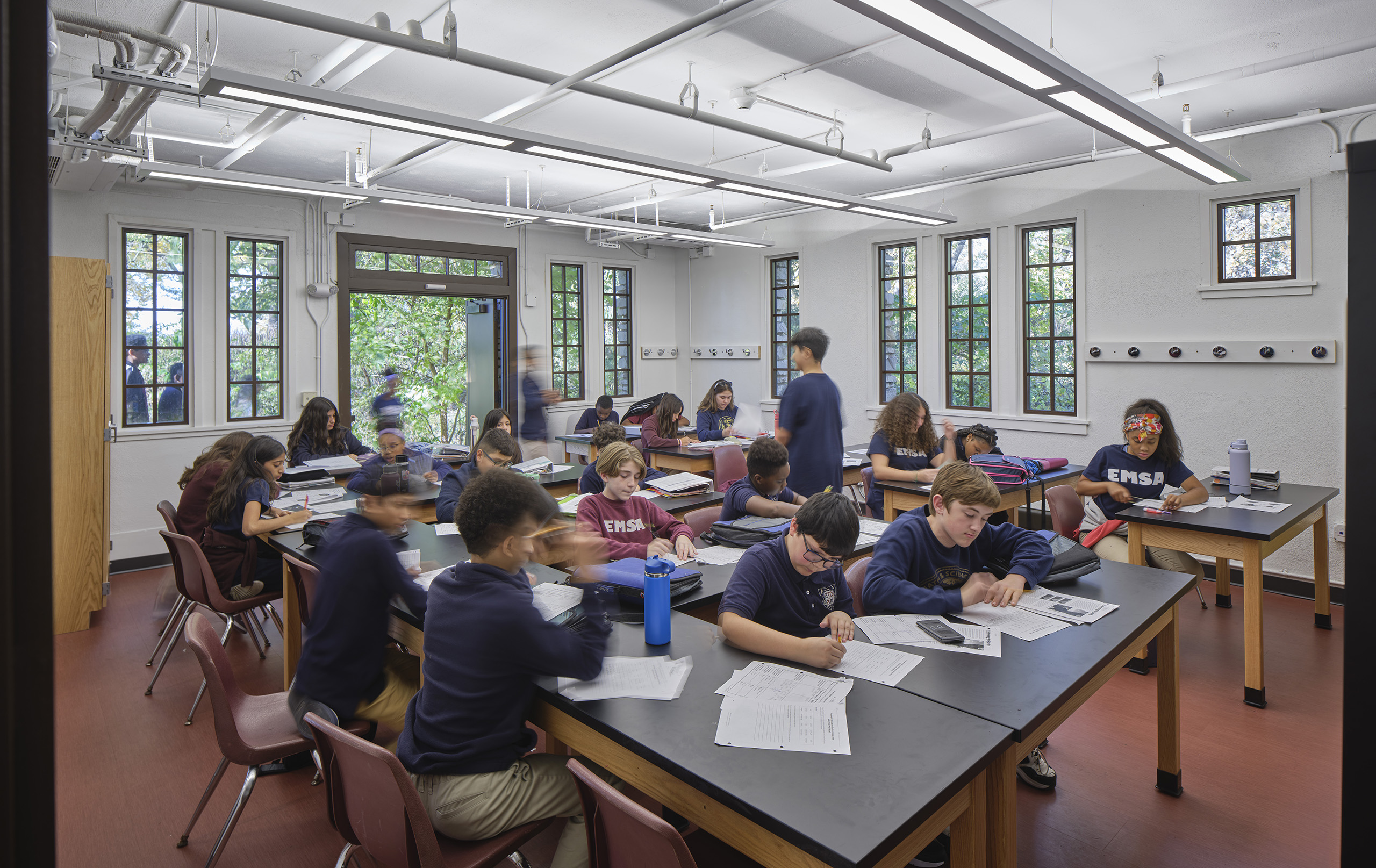
The science room, situated at basement level, allows direct access to the ravine for specimen collection and hands-on experiments.
A beacon of learning and heritage, welcoming students and visitors alike, the restored Administration building embodies EMSA’s vision of a dynamic, sustainable educational environment.
“I am a nonprofit leader with three decades of experience in the planning, financing, and construction of buildings serving nonprofit organizations in Chicago, and since 2005, particularly school buildings. I have worked with many different architectural firms over that span, but since 2008 and by my choice, only with Wheeler Kearns Architects—an outstanding firm which has proven itself in and for its diverse client base, contributing so much to our city, region, and nation.”
Dan Alexander, former COO at Elgin Math & Science Academy Charter School
Additional Images
Construction Manager: Bulley & Andrews
Structural Engineer: Enspect Engineers
MEP/FP Engineer: Design Build
Civil Engineer: Terra Engineering
Preservation Consultant: Revive Architecture
Photography: Tom Harris Architectural Photography