
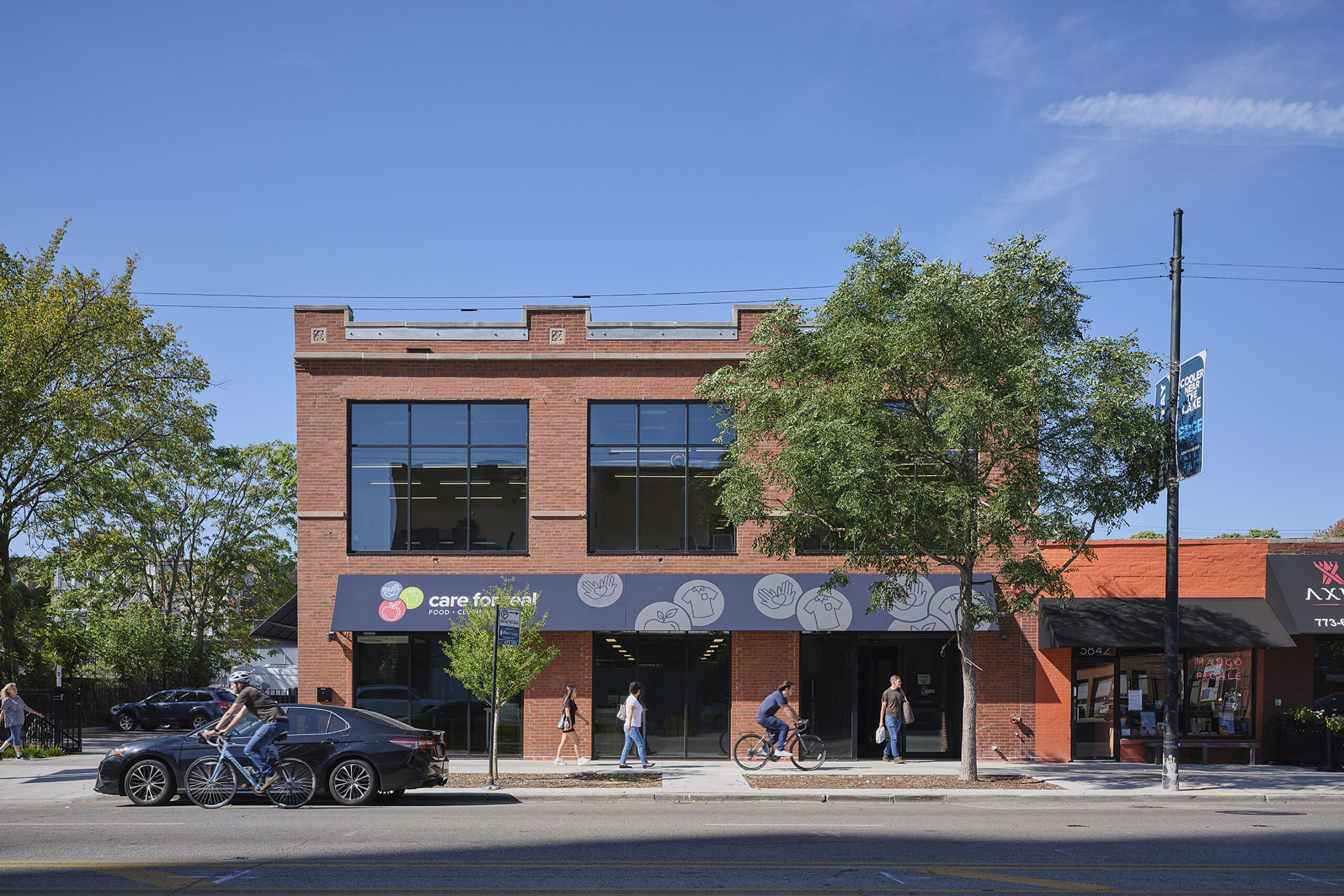
In 2019, Wheeler Kearns Architects partnered with the non-profit food and clothing pantry Care for Real on a modest renovation of its former leased facility, helping the organization improve service within a constrained footprint in a strip center. Six years later, that relationship evolved into a far more transformative effort: the creation of a new permanent home in Edgewater designed to meet dramatically increased demand while centering on delivering dignity, flexibility, and community to all.
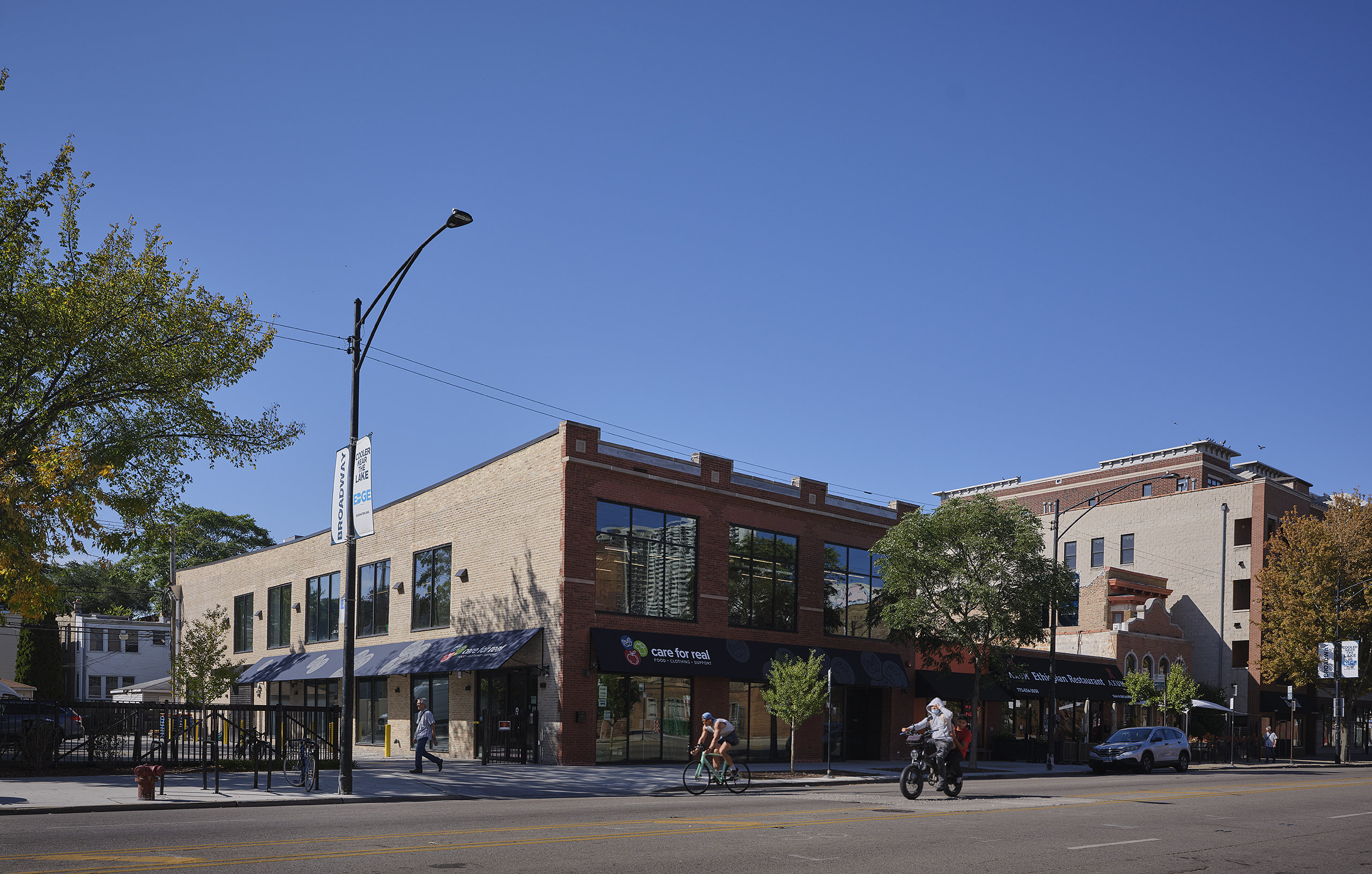
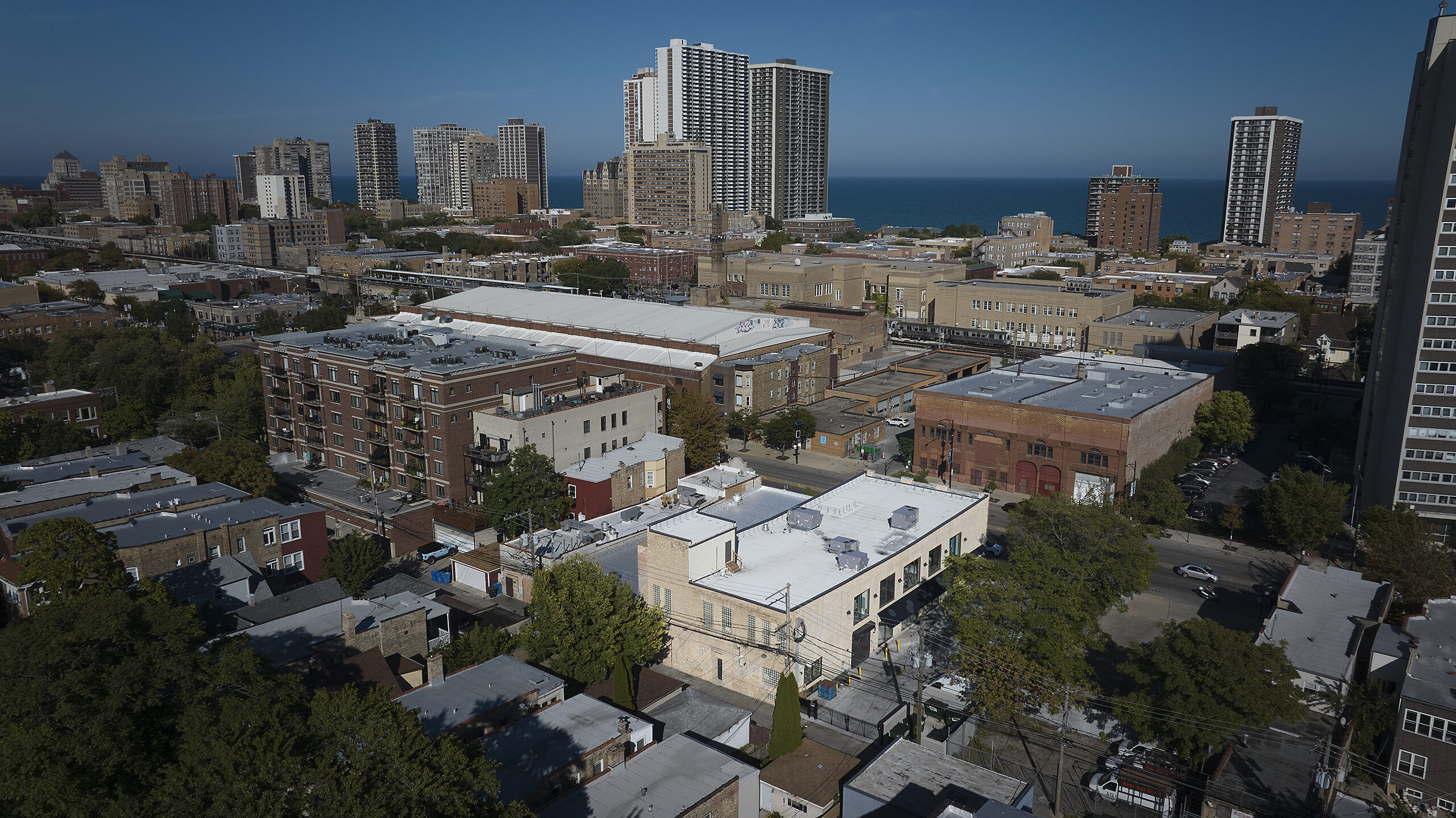
Care for Real’s new home at 5840 N. Broadway occupies a building with exceptionally strong “bones.” Formerly home to a variety of uses—most recently a gym—the structure offered generous floor-to-floor heights, a robust envelope, and an abundance of natural light. The adjacent parking lot to the south allows daylight to flood deep into the building, once gutted creating bright, welcoming interiors that fundamentally shape the experience for clients, volunteers, and staff alike. Rather than fighting the existing building, the design embraces and amplifies these inherent qualities.
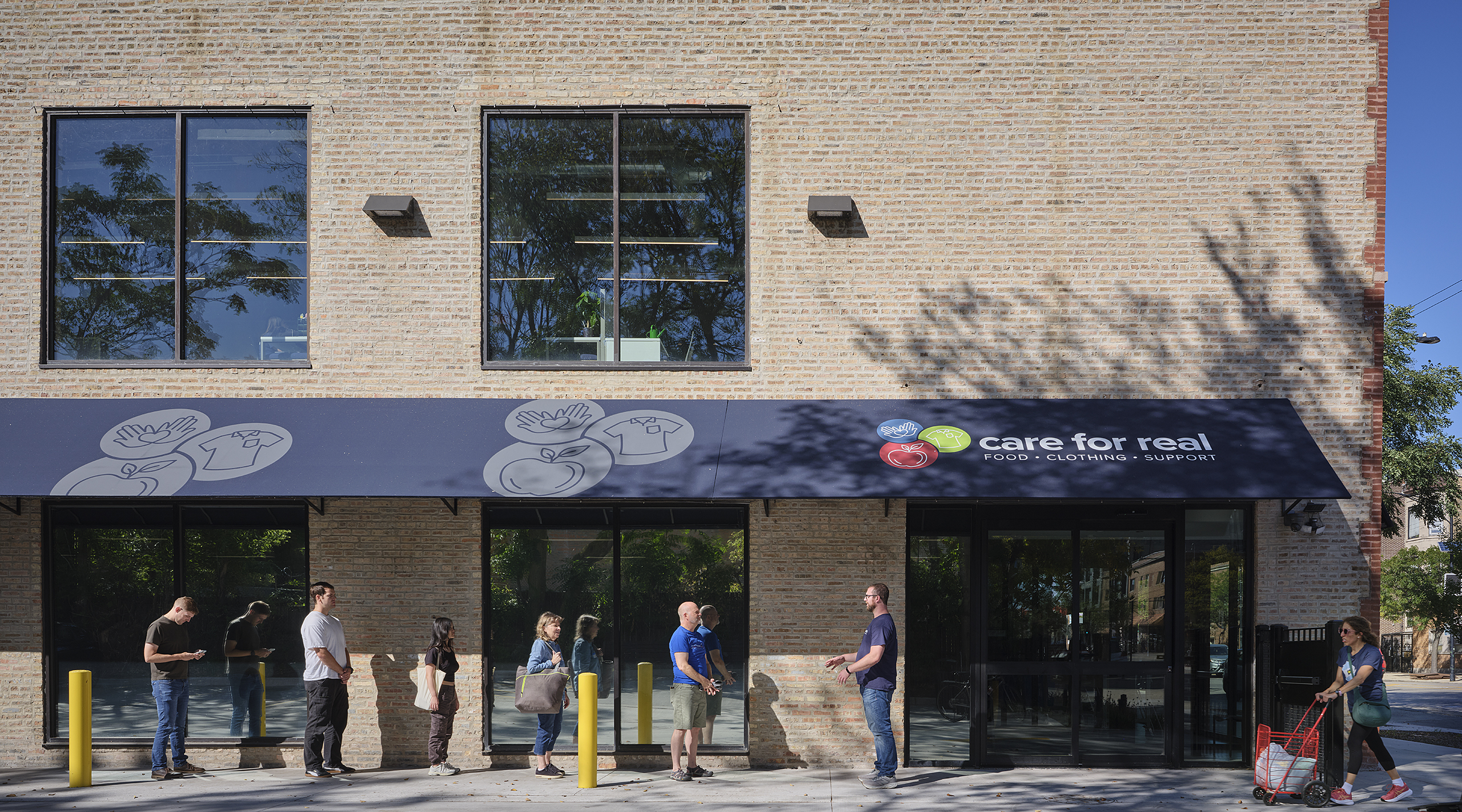
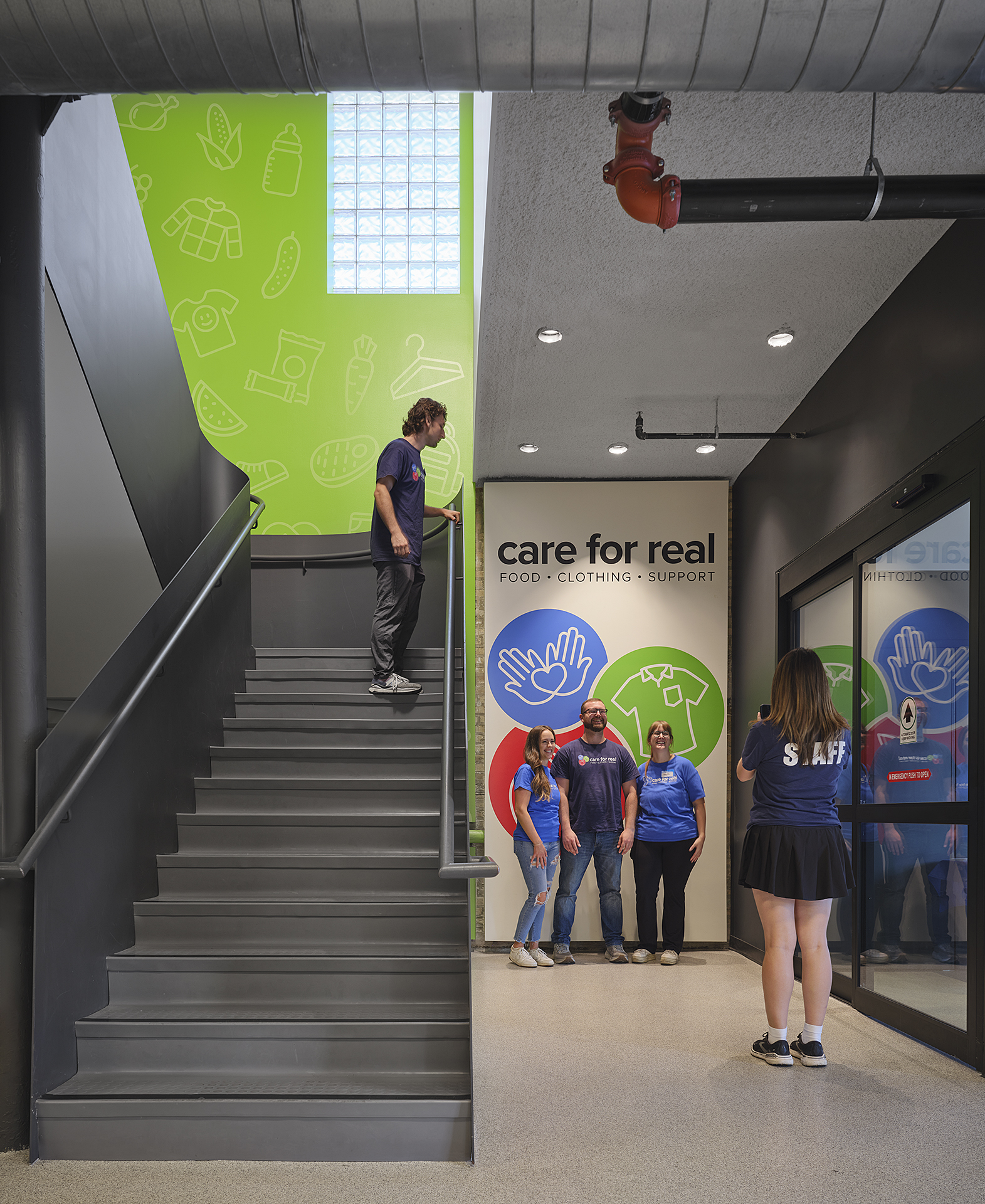
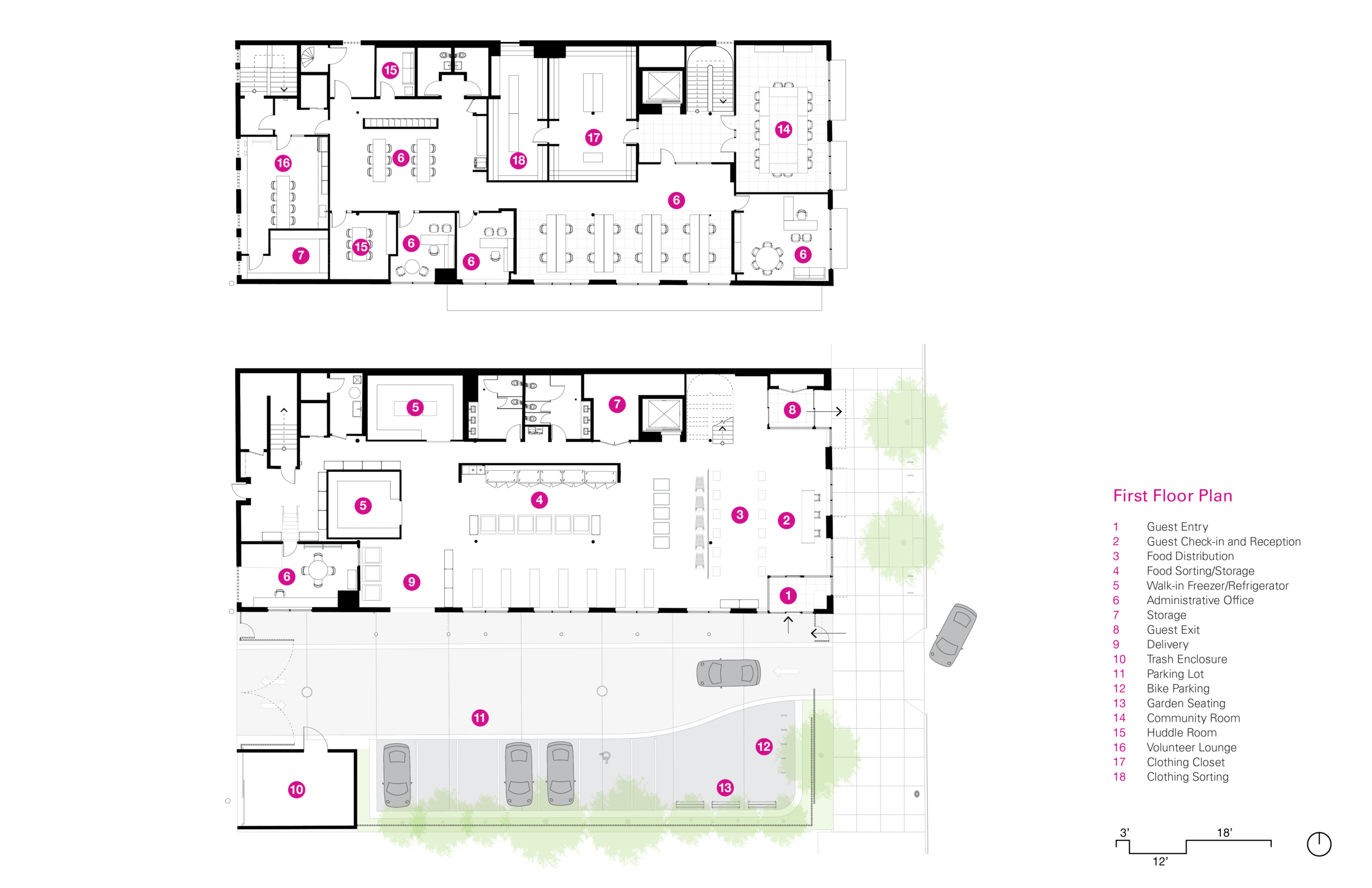
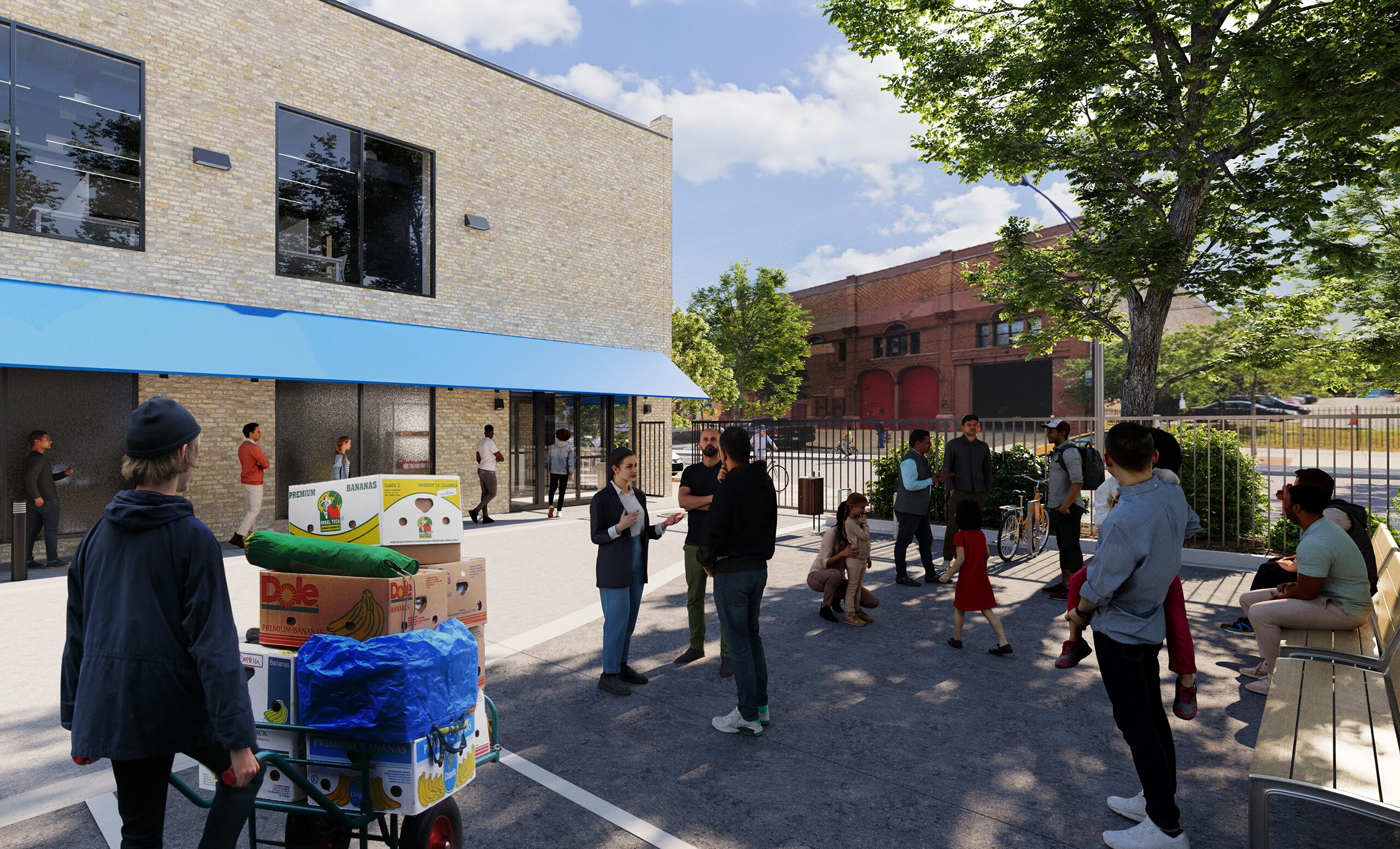
Arrival and entry were carefully considered as part of the architectural response. The primary entrance is located along the side of the building, beneath a new covered awning that provides solar shading and protection from the elements. The side entry allows neighborhood clientele to gather away from the busy street, providing a sense of privacy and calm as they wait. Upon entry, clients are immediately greeted by a check-in desk and a smiling face, reinforcing Care for Real’s values from the very first moment. Exiting occurs at the front of the building along Broadway, establishing a clear and intuitive flow through the facility.
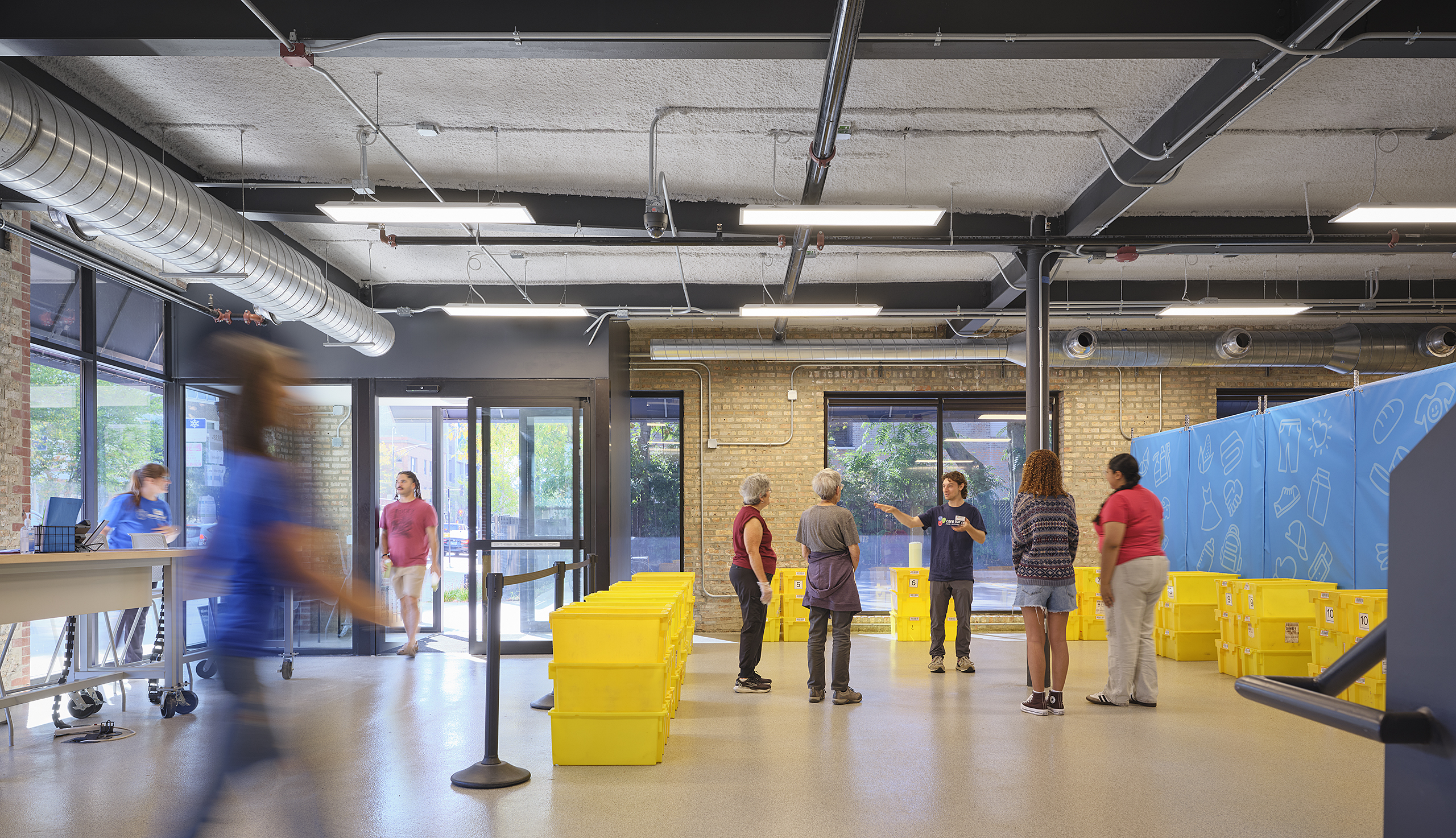
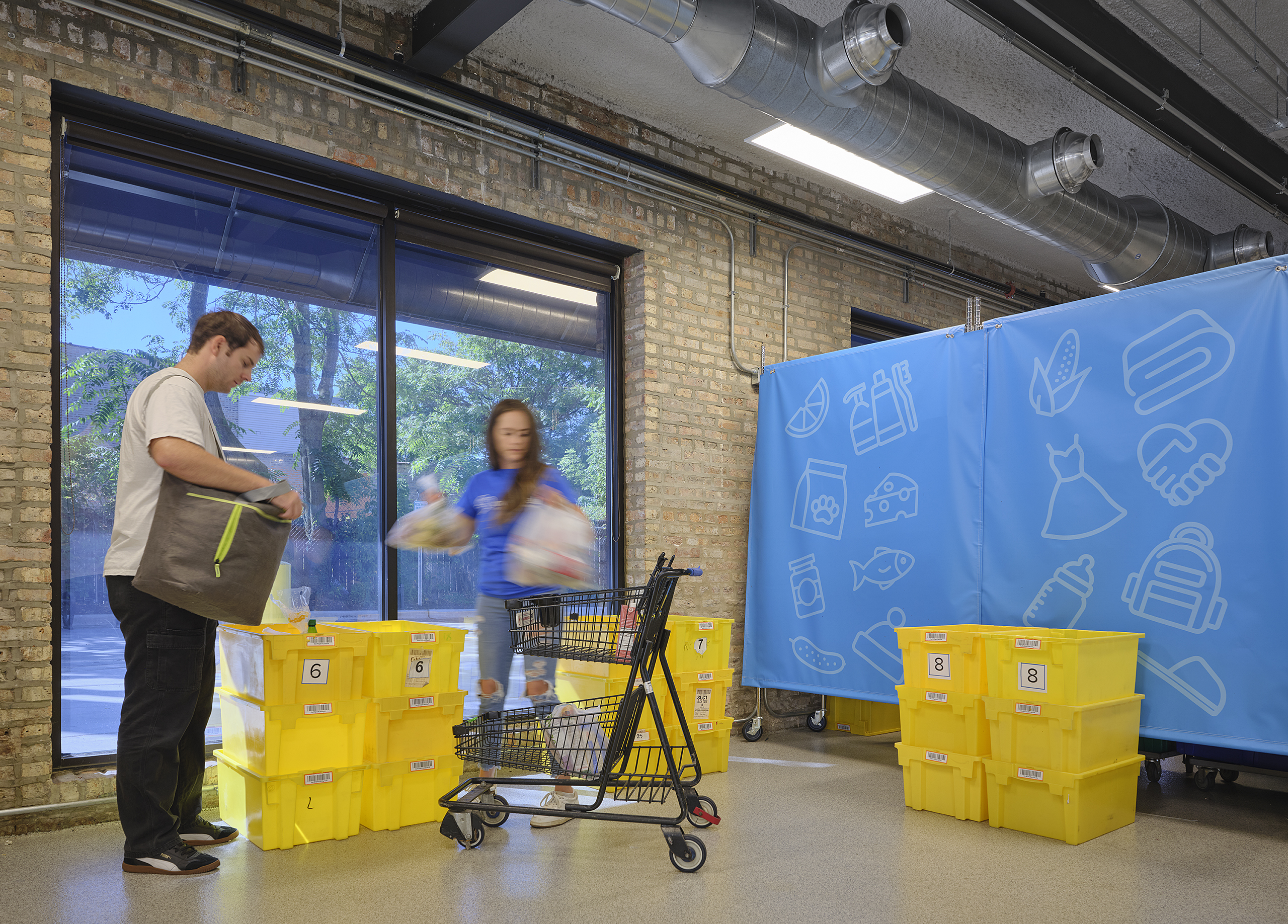
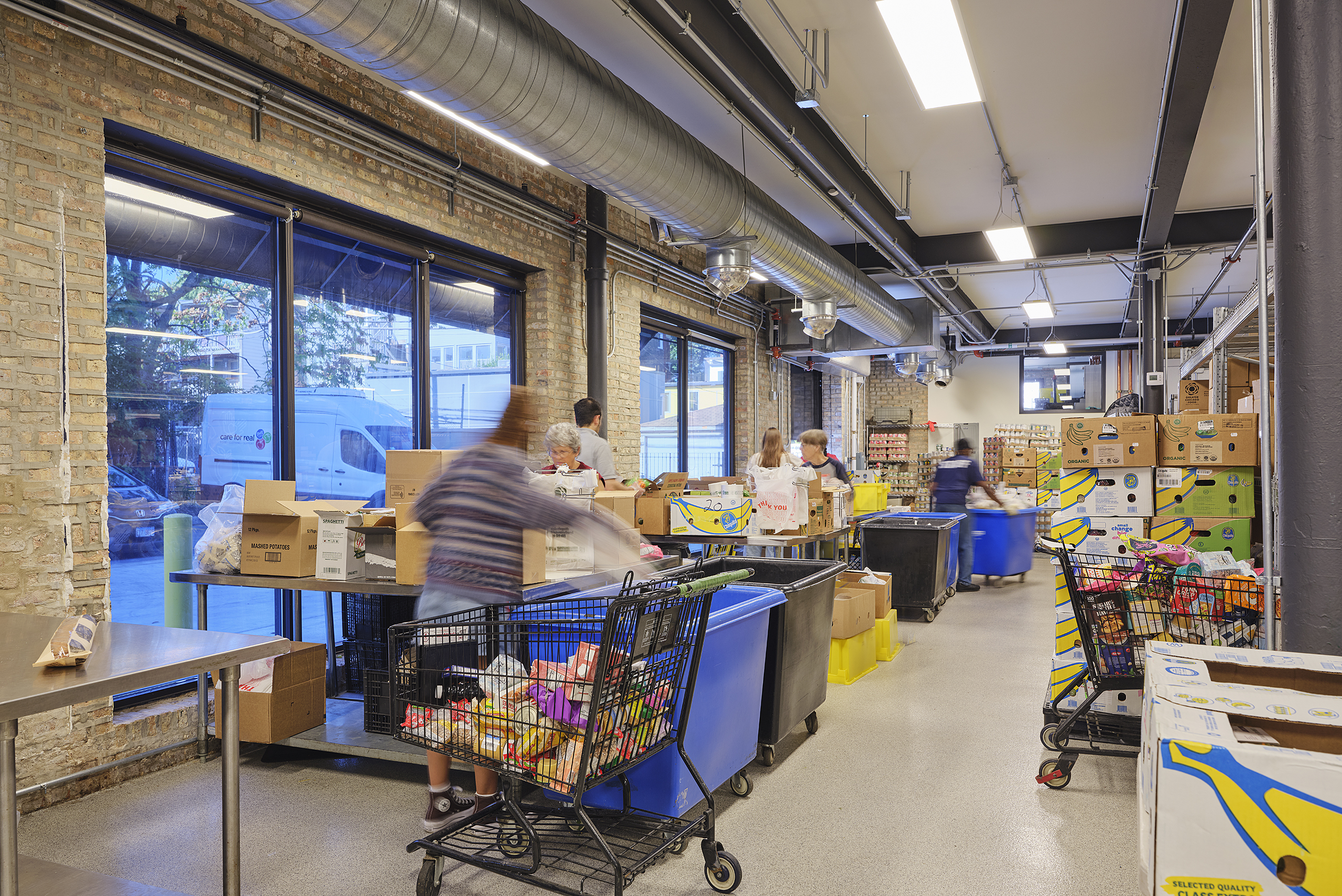
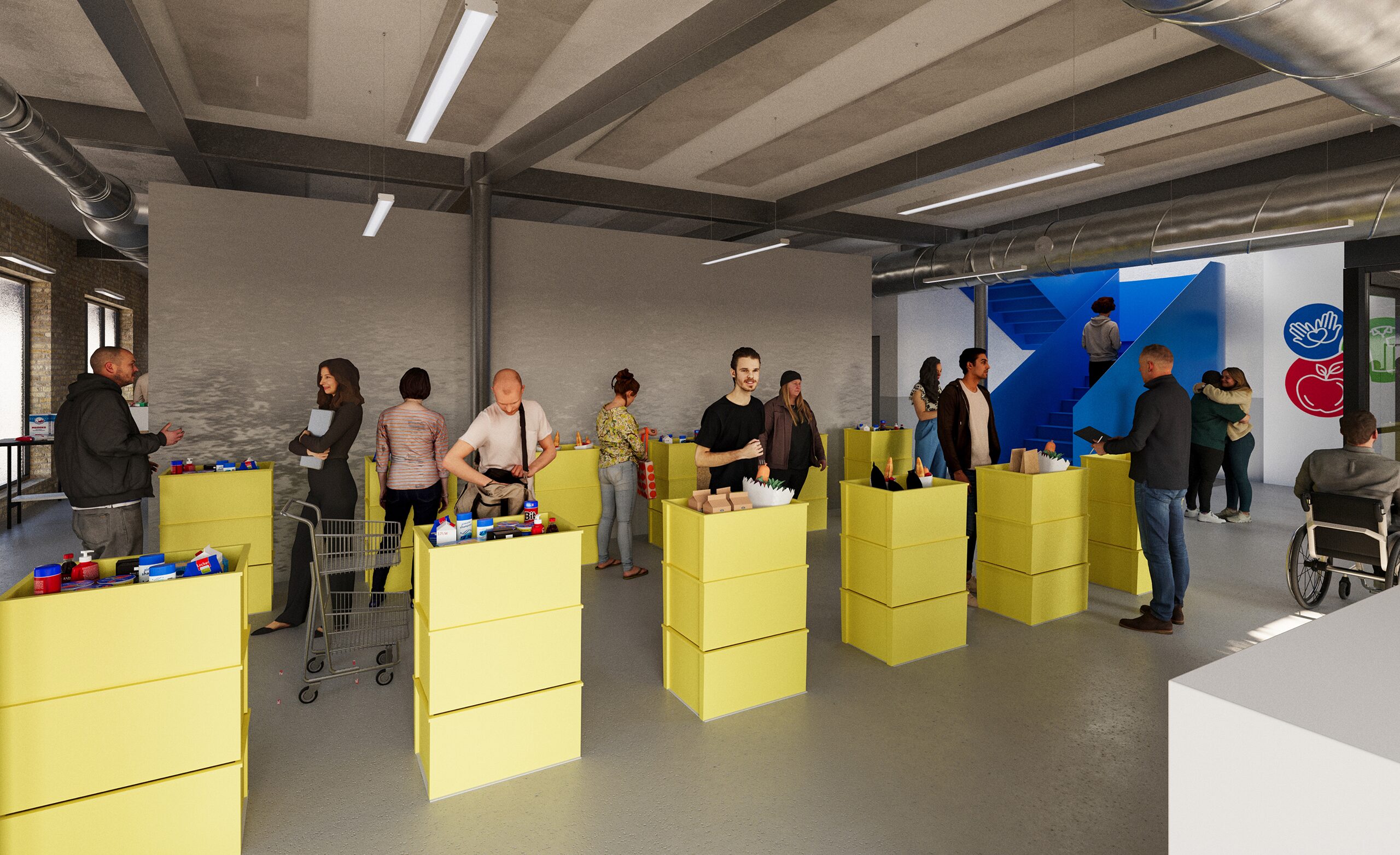
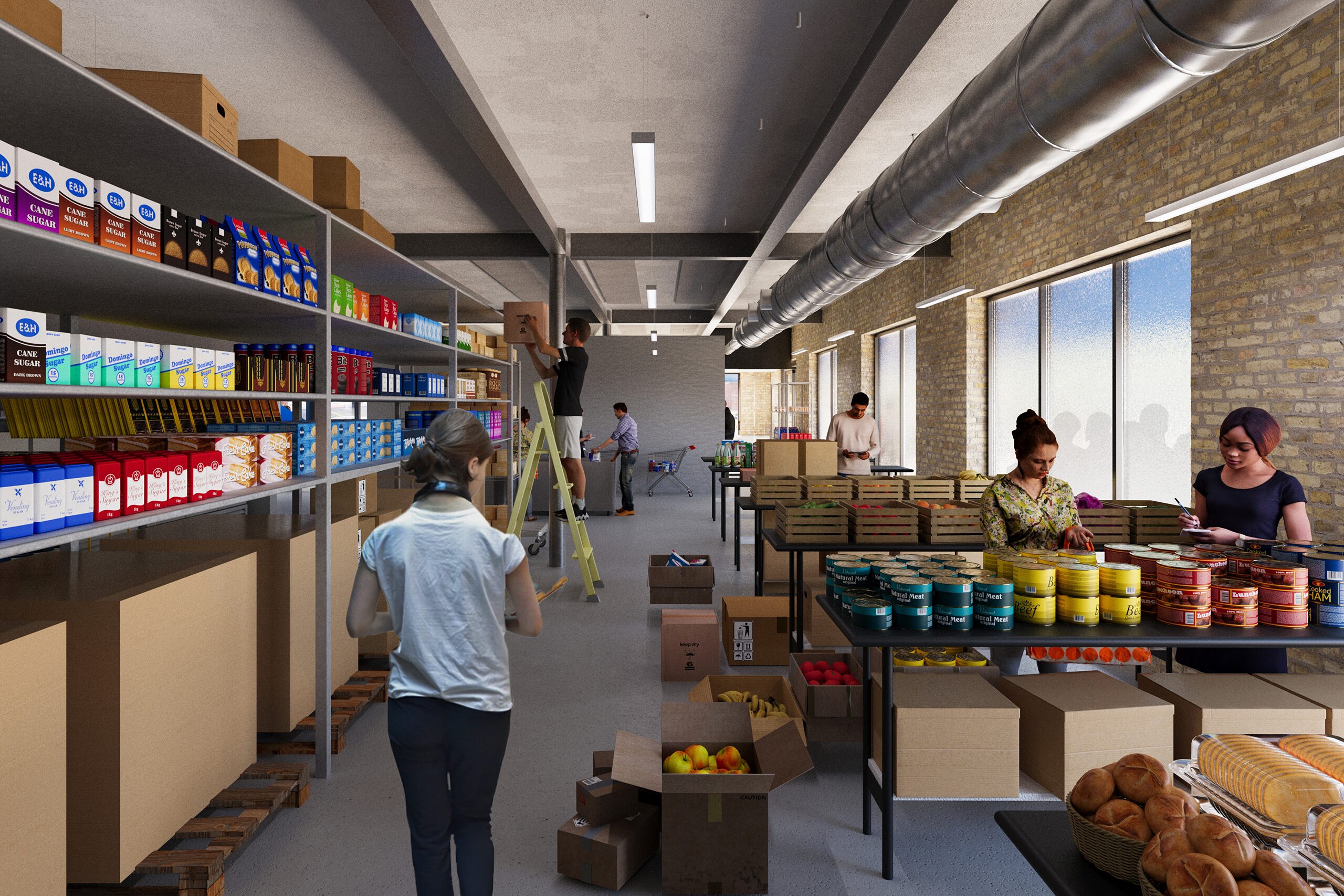
The first floor is organized as a large, open, and highly flexible pantry space. High ceilings and clear spans support a service model that can evolve over time, a lesson reinforced by the COVID-19 pandemic. Today, the client experience is both deeply personal and remarkably efficient: a greeter welcomes each neighbor, guides them to a dedicated station, and brings groceries directly to them where they can choose what items to take. Mobile shelving and open sightlines allow staff to adapt circulation, queuing, and distribution methods as needs change, while maintaining safe and dignified movement throughout the space.
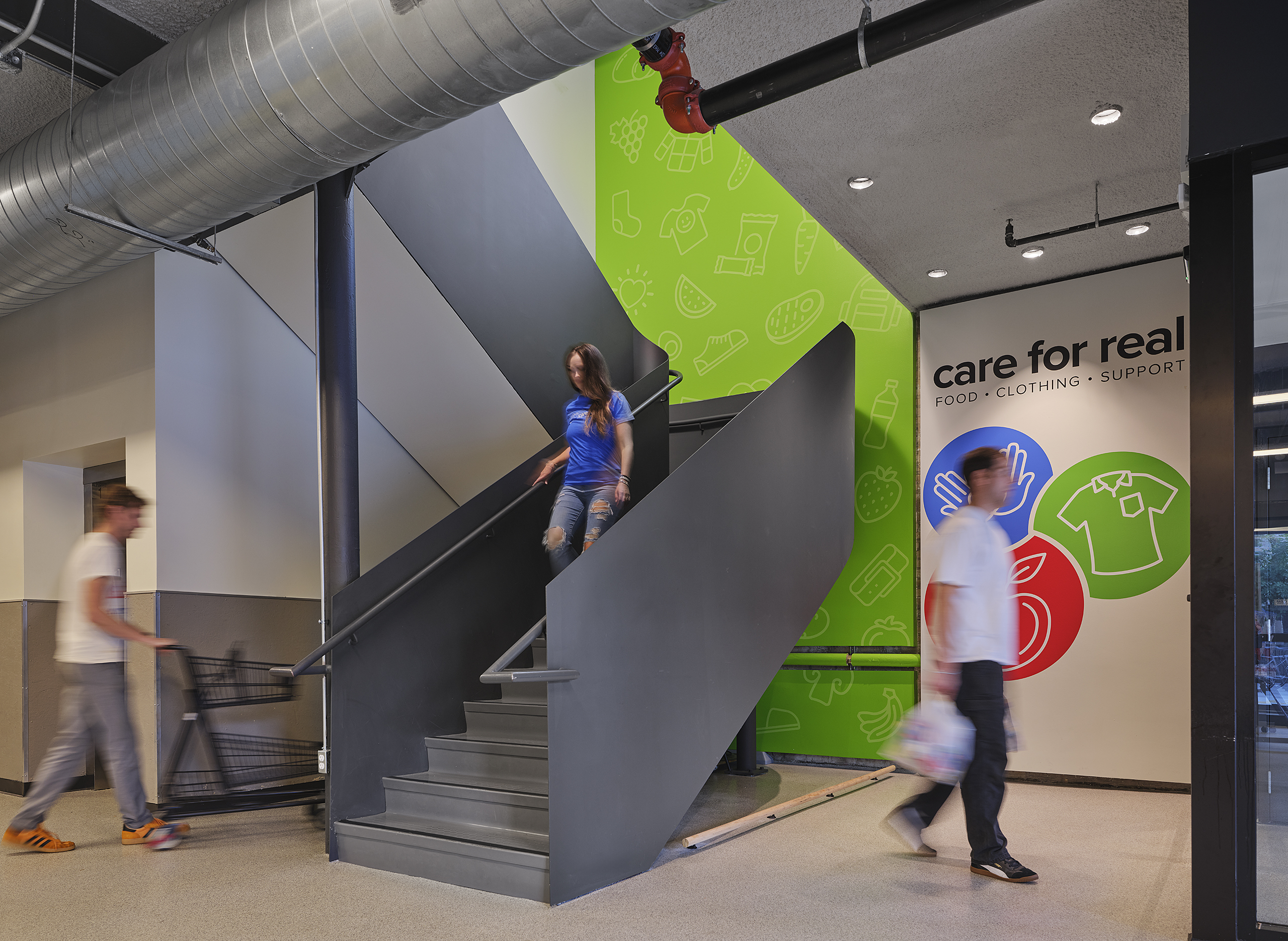
A new elevator and open steel stair is inserted into the building to connect the first-floor pantry with the second-floor clothing closet and community meeting room. This vertical connection is both functional and symbolic, linking essential services within a cohesive, accessible environment.
The upstairs clothing closet is significantly larger and more spacious than before, enhancing comfort, choice, and dignity for clients.
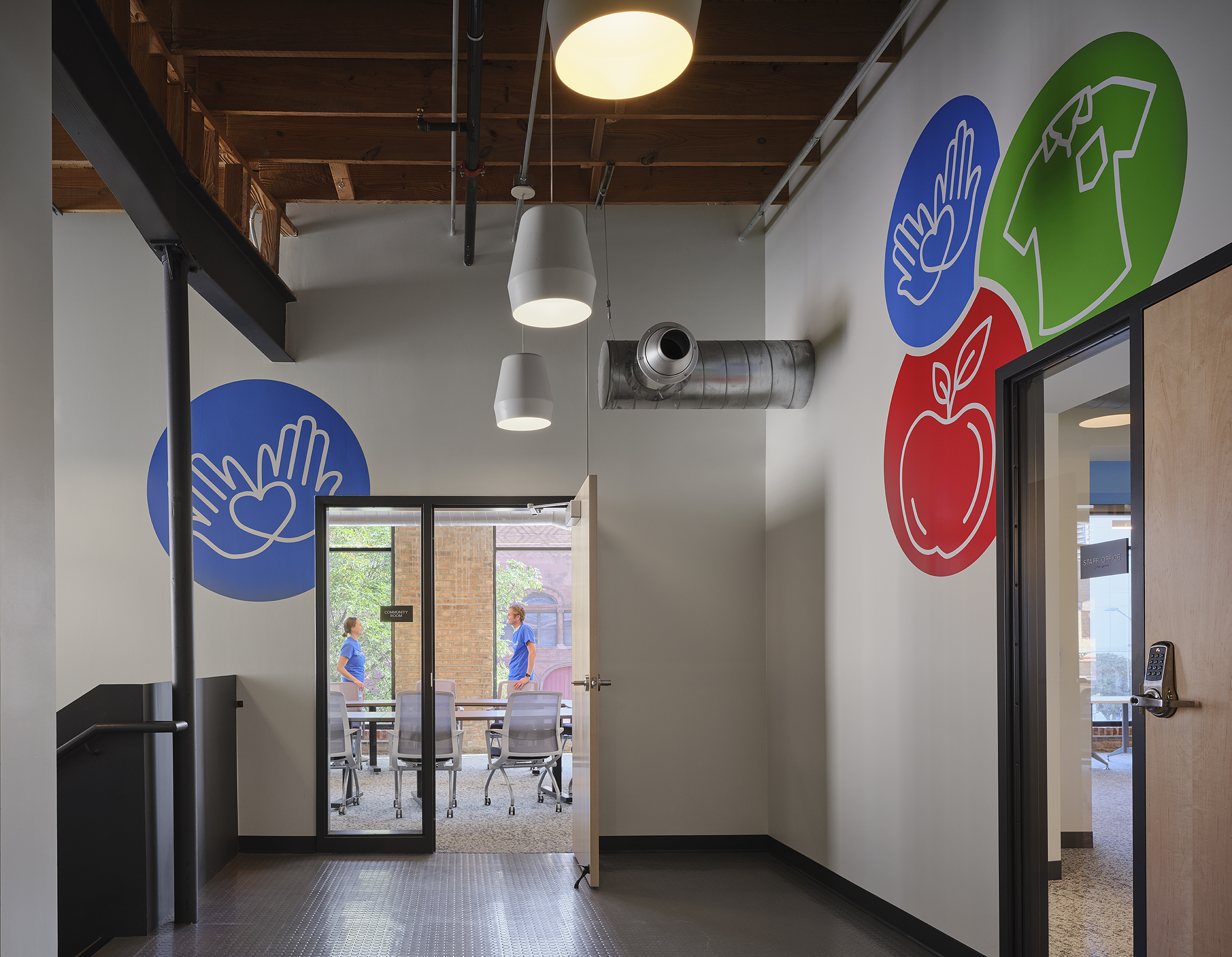
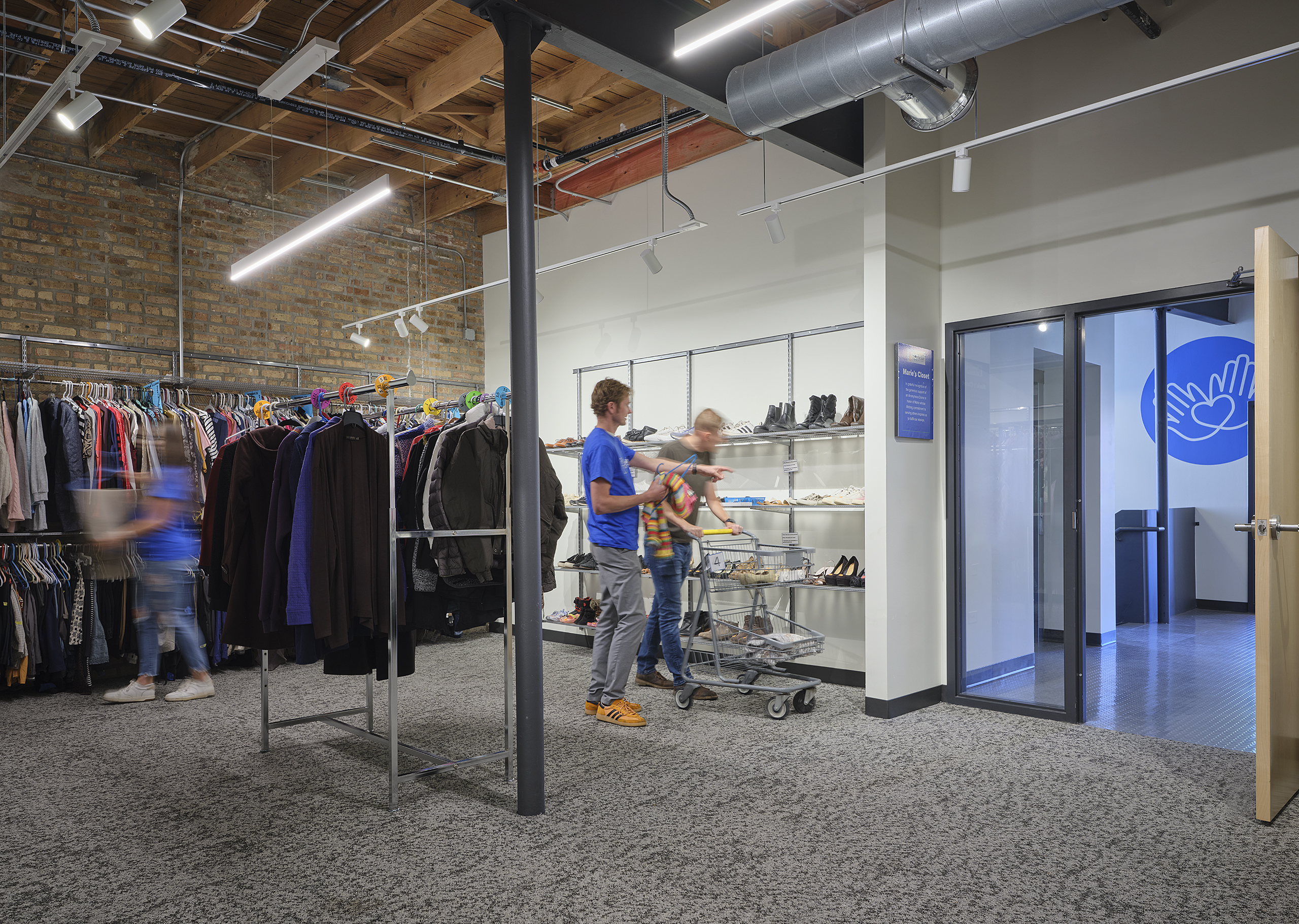
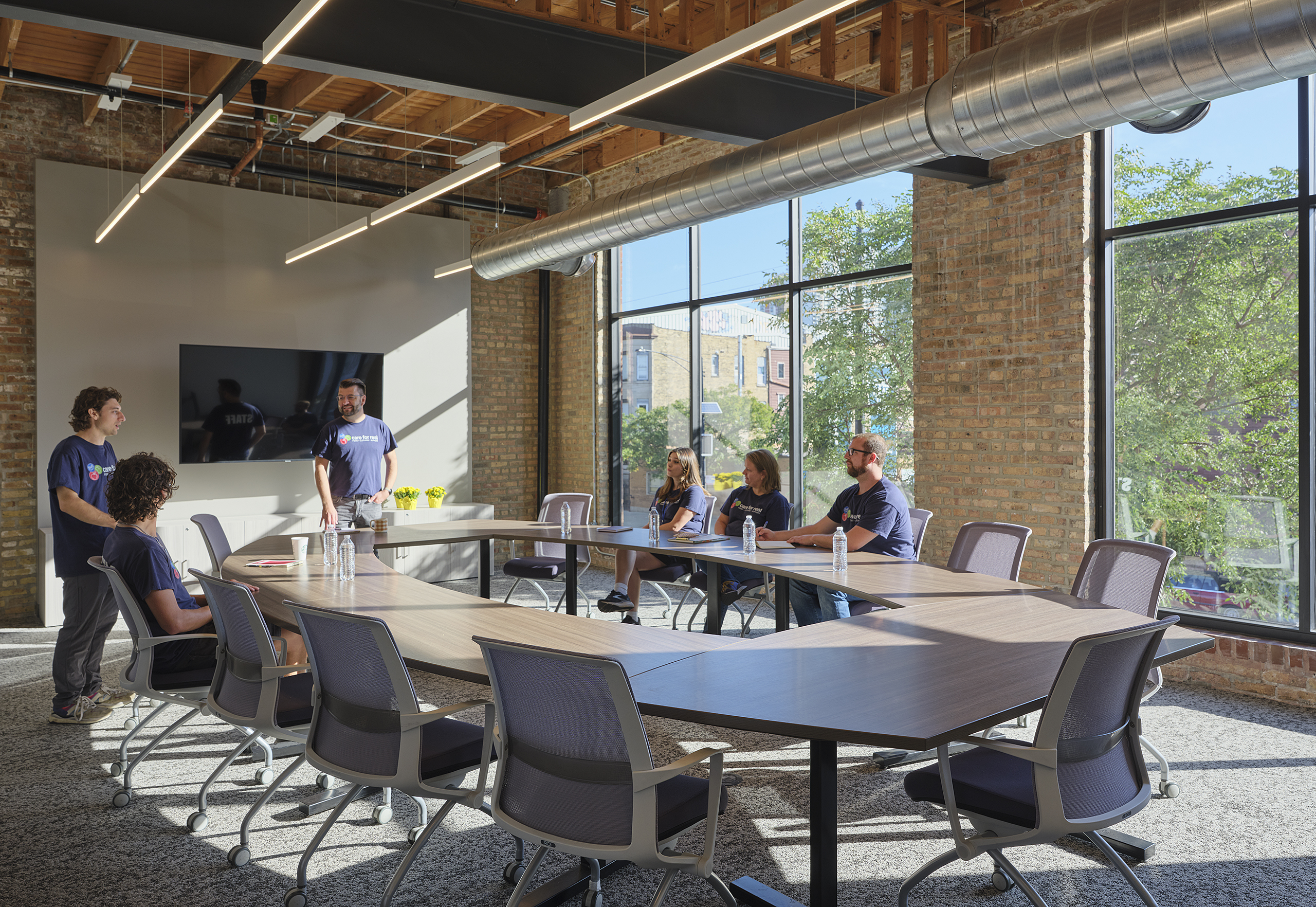
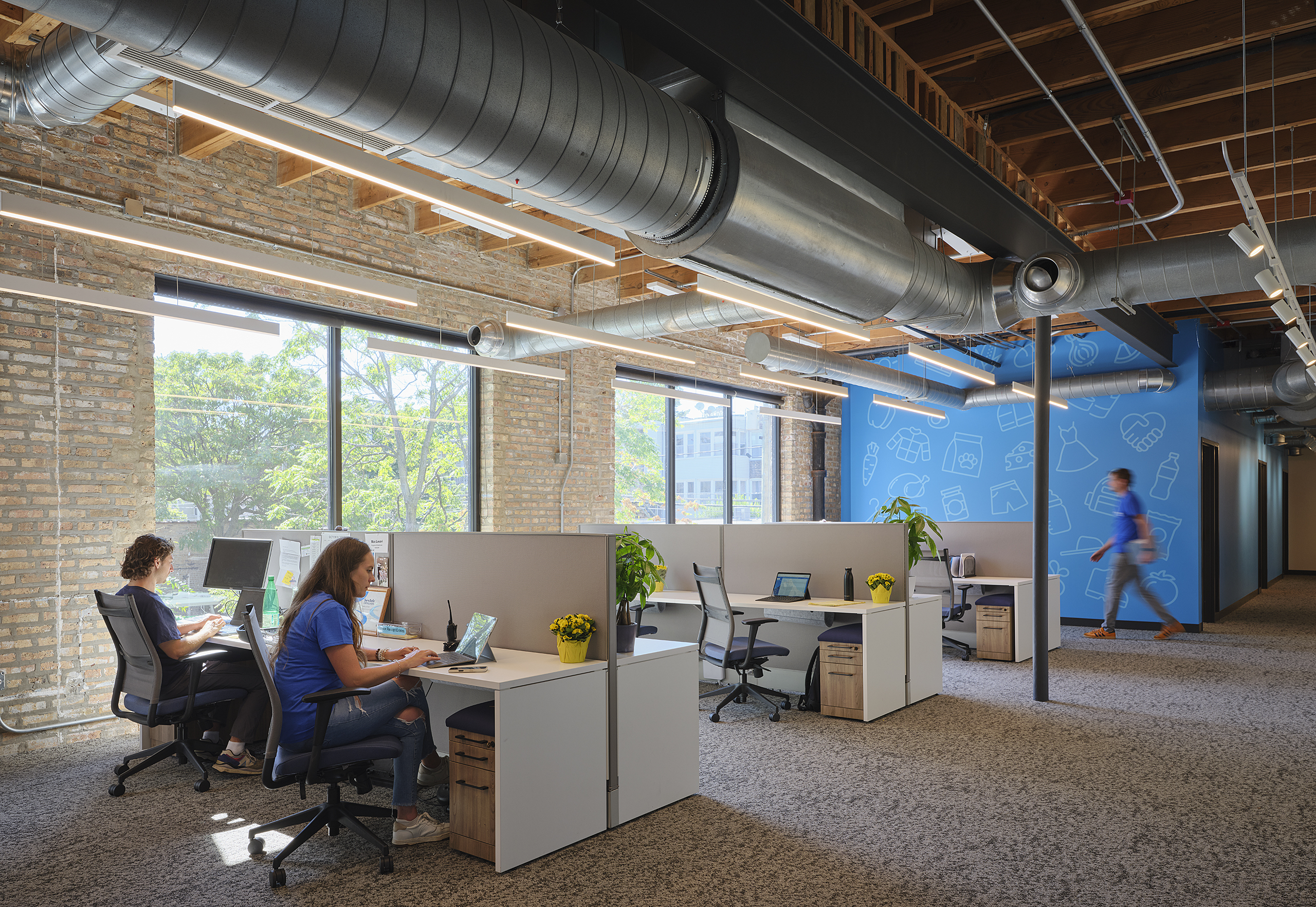
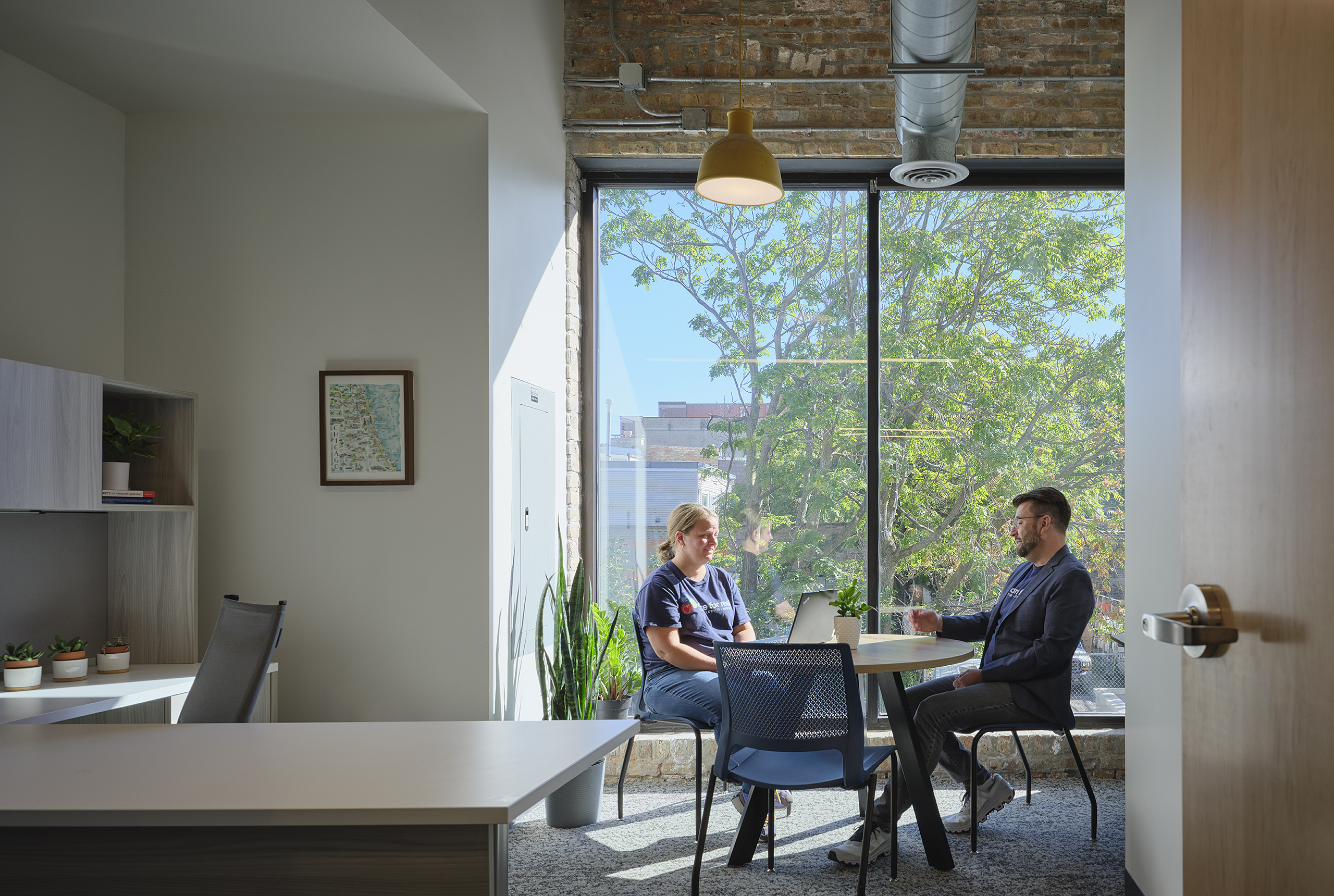
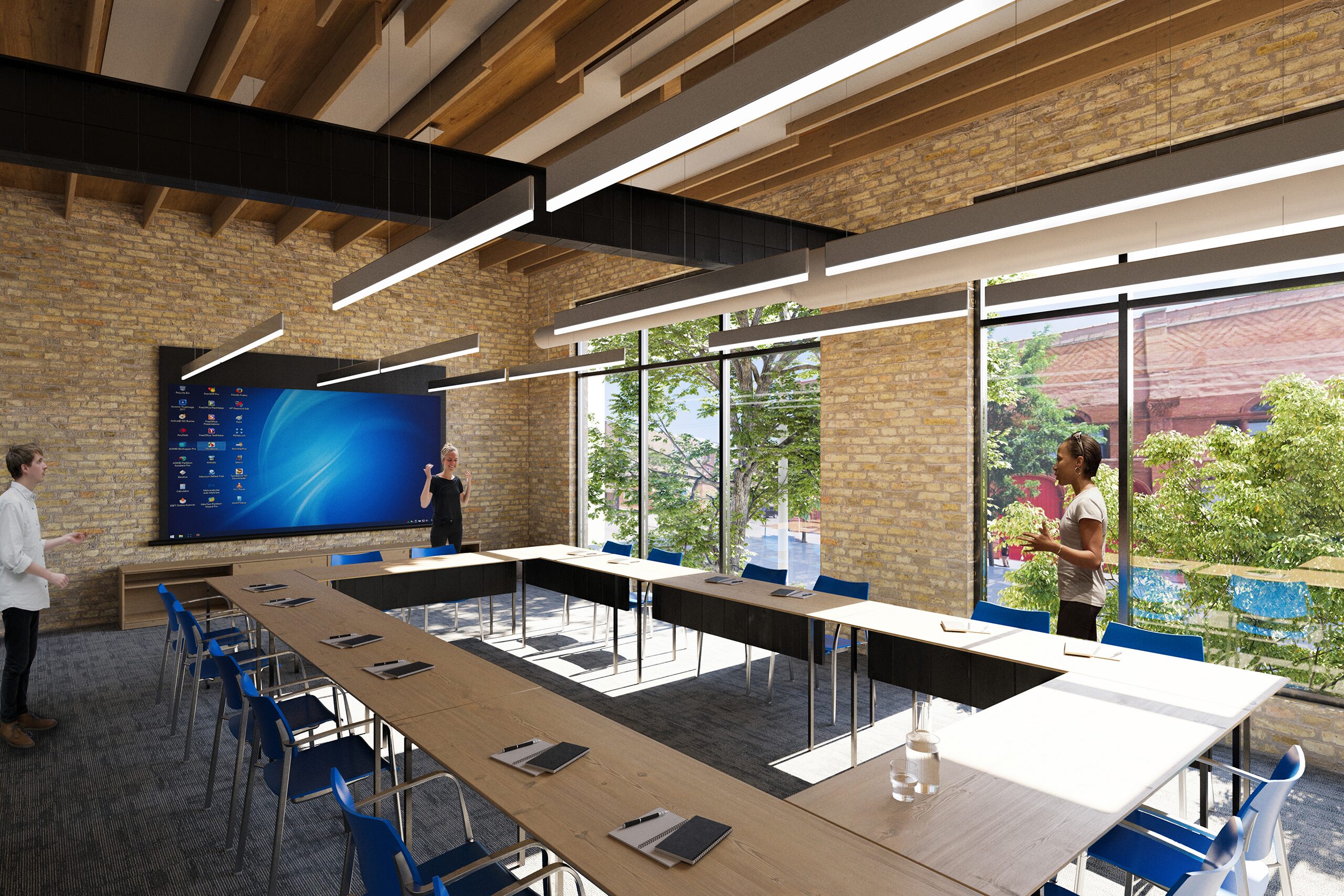
The second floor also houses staff offices, meeting rooms, and support spaces, all bathed in natural light from floor-to-ceiling windows. For the first time, Care for Real’s volunteers and employees have a dedicated kitchen, locker, check-in, and gathering area—a space intentionally designed to support rest, connection, and fellowship, recognizing that caring for those who serve is essential to sustaining care for others. Private offices and ample meeting spaces support focused work, collaboration, and partnerships with other community organizations, extending the building’s impact beyond food distribution alone.
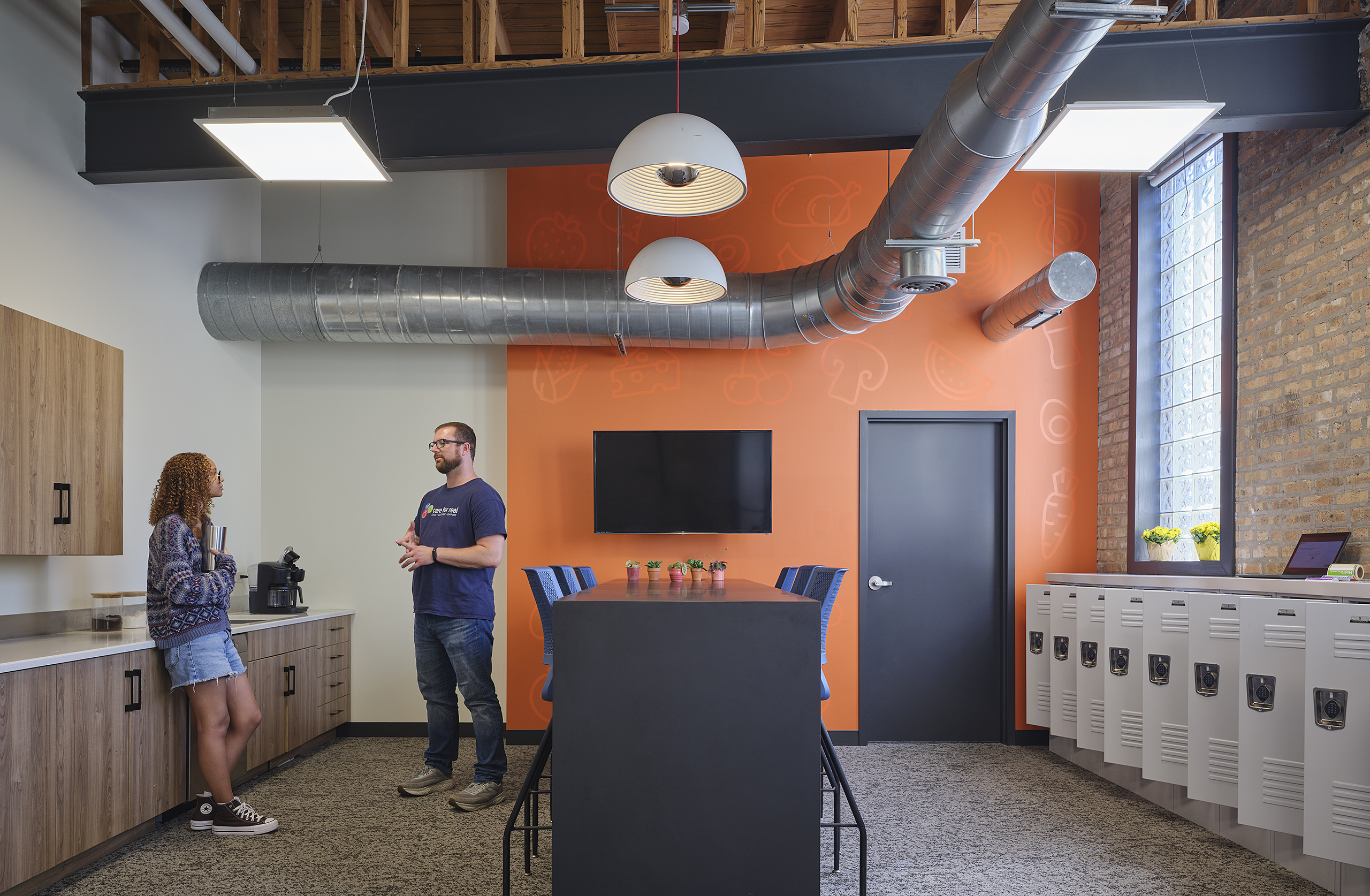
Together, these architectural interventions transform an existing structure into a purpose-driven community resource. By leveraging the building’s inherent strengths—light, volume, and adaptability—Care for Real’s new home provides a flexible, dignified, and welcoming environment that is fully aligned with its mission to care for neighbors today and into the future.
Additional Images
Architecture: Wheeler Kearns Architects
Construction Manager: Executive Construction INC
Structural Engineer: Meyer Borgman Johnson (MBJ)
MEP Engineer: Building Engineering Systems, LLC
Landscape Architect: Terra Engineering
Civil Engineer: Terra Engineering
Photography: Tom Harris